
The Logic Behind the Order
Skincare products aren't interchangeable steps — each formula is designed to work at a specific depth in the skin. Layering them in the wrong sequence is a bit like putting on a raincoat before your sweater: the outer layer blocks what's underneath from doing its job.
The foundational principle is simple: lightest to heaviest. Water-based formulas (think toners, essences, lightweight serums) have smaller molecules that can penetrate more easily. Thicker emulsions and occlusive creams are designed to sit on top and seal moisture in — exactly why they belong at the end of your routine, not the beginning.
This isn't about following a rigid 10-step system. Whether your routine has three steps or seven, the sequence logic stays the same. If you're just getting started, our beginner skincare routine guide lays out a realistic foundation without the overwhelm.
A Quick Rule You Can Always Fall Back On
If you're ever unsure where a new product fits in your routine, check its texture. Water-thin? It goes early. Thick cream or oil? It goes toward the end. This single rule of thumb handles most layering decisions without any guesswork.
The Core Sequence, Step by Step
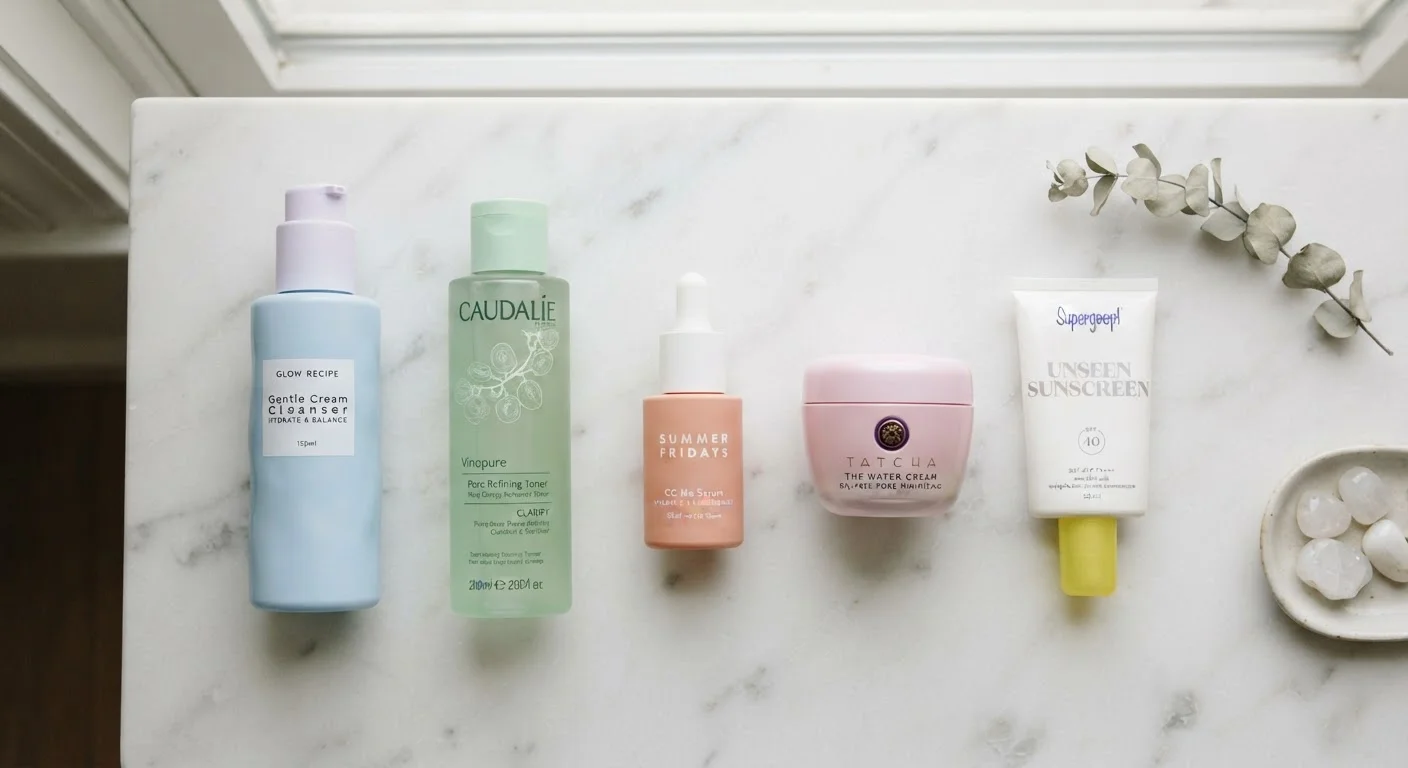
Here's how a standard daytime routine lines up — and why each step earns its place:
- Cleanser — Always the first step. Clean skin absorbs everything that follows more effectively. Cleansing technique matters too: harsh soaps strip the skin barrier and interfere with the steps that come after.
- Toner or Essence — These water-based liquids rebalance skin's pH after cleansing and prep the surface for absorption. Pat on with hands or a cotton pad, then give it 30–60 seconds before moving on.
- Serum — This is where targeted actives live: vitamin C, niacinamide, hyaluronic acid, and others. Serums are concentrated and lightweight, so they go on before anything heavier. Check our guide to introducing new actives before adding multiple treatments at once.
- Eye Cream (if using) — Apply around the orbital bone using a ring finger. Thinner than most moisturizers, it goes here before heavier creams.
- Moisturizer — Seals in all the hydration and active ingredients beneath it. Don't skip this even if your skin is oily — it helps regulate moisture balance.
- SPF (daytime only) — The non-negotiable final step in any morning routine. Nothing goes on top. Decoding SPF labels can help you choose the right protection level for your needs.
~30 sec
Recommended wait between skincare layers
Dermatologists generally recommend a brief pause between steps to allow water-based products to absorb and reduce product pilling.
SPF Last
Position of sunscreen in any morning routine
Applying anything on top of sunscreen after it's been applied can disrupt its protective film and reduce effectiveness, according to broad dermatological guidance.
Common Layering Mistakes to Avoid
Even with the best products, a few missteps can undercut your results:
- Applying SPF mid-routine. Once anything sits on top of your sunscreen, its UV-filtering film is compromised. SPF is always last.
- Stacking oils before water-based products. Facial oils are occlusive — they block what comes after. Use them as the second-to-last step, just before SPF or as the final step in an evening routine.
- Mixing incompatible actives. Some ingredient combinations cause irritation or cancel each other out. Common ingredient conflicts are worth knowing before you build a multi-serum routine.
- Rushing between steps. Applying the next product immediately after the last one can cause pilling (those little flakes of product that ball up on your skin). A brief pause goes a long way.
Fragrance and Skin Sensitivity
Some people experience irritation from fragranced products, which can be amplified when multiple layers are stacked on skin. If you notice redness or stinging after layering, fragrance may be a factor. Our fragrance in skincare explainer walks through what the research actually shows.
When Primers and Treatments Enter the Picture
If you use makeup, primer comes after skincare and before foundation — bridging the two routines. Different primer types (mattifying vs. hydrating) can change how your skin looks under makeup, but they don't change the skincare layering logic beneath them. See our primer comparison guide for more on choosing the right formula for your skin type.
For nighttime routines, the sequence stays thin-to-thick, but you swap SPF for richer treatments: retinoids, exfoliating acids, or overnight masks, depending on what your skin needs. Because your skin goes into repair mode during sleep, this is the ideal window for certain actives. Our nighttime routine walkthrough covers exactly how to structure that sequence.
One more note worth keeping in mind: not every product needs to appear every day. Exfoliants, for example, are typically used a few times per week rather than daily. A consistent, well-ordered routine — even a short one — will always deliver better results than an elaborate routine applied in the wrong sequence.