
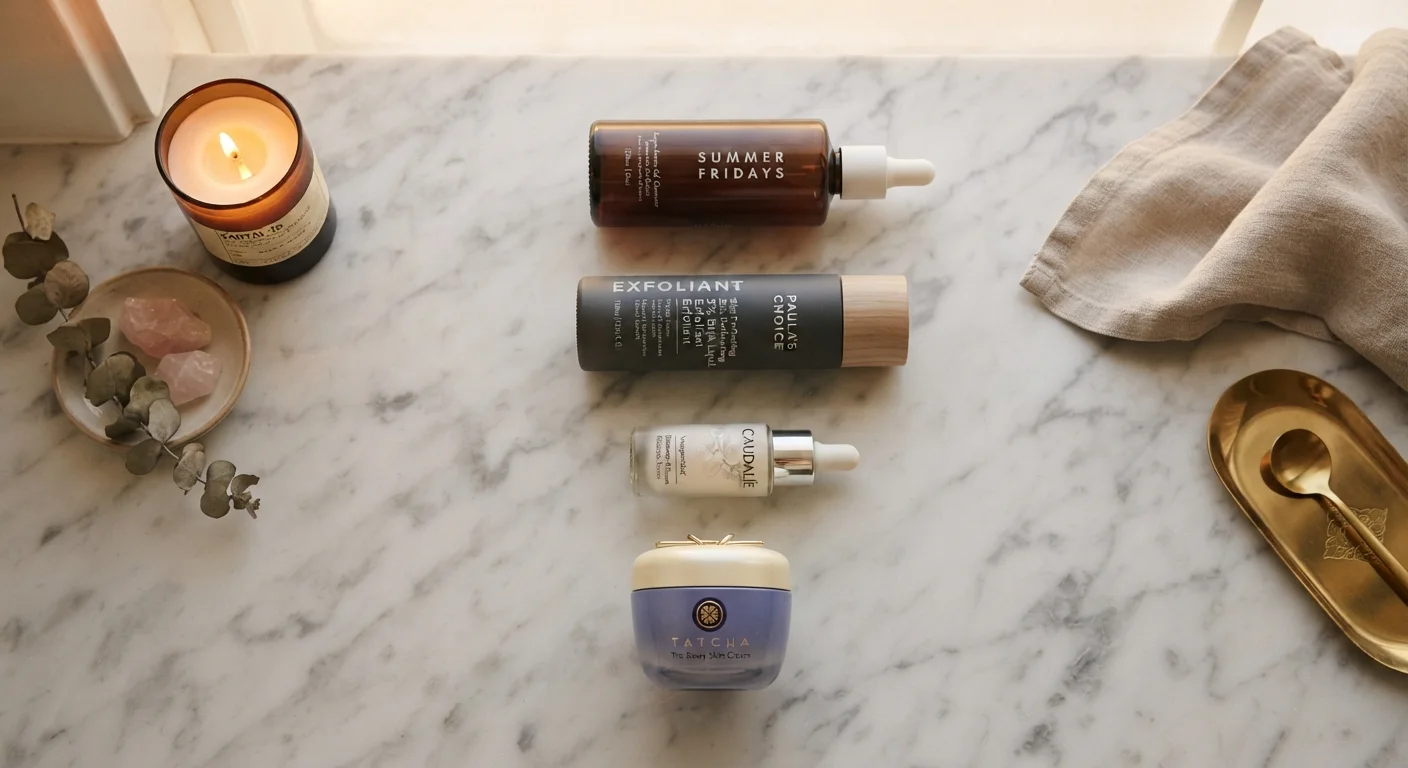
Why Nighttime Is Prime Time for Your Skin
While you sleep, your body — including your skin — shifts into recovery mode. Cell turnover accelerates, collagen production ramps up, and your skin barrier works to repair daily damage from UV exposure, pollution, and environmental stress. That biological window is exactly why building a dedicated nighttime routine is worth your time.
Unlike your morning routine, which is largely about protection (think SPF and antioxidants), your evening routine is about restoration. You're removing the day's buildup and giving your skin the ingredients it needs to do its best repair work. If you've ever wondered why certain products — like retinol or exfoliating acids — are recommended for nighttime use, this is why: those actives can increase sun sensitivity and work most efficiently when they're not competing with sunscreen or daytime exposure.
For a deeper look at how product sequencing affects results, check out our guide to skincare layering order — it breaks down the logic so every step you take actually counts.
What you will need
Your Step-by-Step Nighttime Routine
The steps below are designed to work for most skin types. You don't need every single product listed — start with the essentials and build from there as your skin and budget allow.
Remove Makeup and Sunscreen (Double Cleanse if Needed)
Start by removing any makeup, SPF, and surface-level grime with a cleansing oil, micellar water, or balm. This first cleanse lifts oil-based buildup that a regular cleanser can't fully dissolve on its own. If you skipped makeup and SPF that day, you can move straight to step 2.
Wash With Your Regular Cleanser
Follow with a water-based cleanser to remove any remaining residue, sweat, and daily pollution. Use lukewarm water — hot water can disrupt your skin barrier — and pat (don't rub) your face dry with a clean towel.
Apply Toner (Optional)
If toner is part of your routine, apply it to a slightly damp face using a cotton pad or clean hands. Hydrating toners add a layer of moisture; exfoliating toners (those containing AHAs or BHAs) help with texture and tone. Don't use both types in the same routine.
Use Your Treatment Serum or Active
This is the heart of your nighttime routine. Serums deliver concentrated active ingredients — think vitamin C, niacinamide, peptides, or retinol — directly into skin. Apply a pea-sized amount and allow it to absorb for 1–2 minutes before the next step.
If you use retinol or a prescription retinoid, nighttime is the right time. Start with a lower frequency (2–3 nights per week) if your skin is new to it, and always follow with moisturizer.
Moisturize to Seal Everything In
Nighttime moisturizers are typically richer than their daytime counterparts, which makes sense — you're not going out in the sun, and your skin is ready to absorb deeper hydration. Apply a generous, even layer across your face and neck. Look for ingredients like ceramides, shea butter, or peptides for skin-barrier support.
Finish With Eye Cream (If You Use One)
The skin around the eyes is thinner and more delicate than the rest of your face, so it benefits from a targeted formula. Use your ring finger to gently tap (never drag) a small amount of eye cream along the orbital bone. This step is optional but can be meaningful for those addressing fine lines or dark circles over time.
Consistency Beats Complexity Every Time
You don't need a ten-step routine to see real results. A steady three-step routine — cleanse, treat, moisturize — practiced nightly will outperform an elaborate routine done sporadically. Give any new routine at least four to six weeks before judging its results; skin cycles take time.
Troubleshooting and Seasonal Adjustments
Even a well-designed routine needs occasional tweaking. If your skin feels tight or flaky after a few weeks, your moisturizer may not be rich enough — especially in colder months when indoor heating strips humidity from the air. Our article on why your moisturizer stops working in winter walks through exactly how to adapt.
If you're breaking out after introducing a new active like retinol, that's sometimes a normal adjustment period — but persistent irritation is a signal to scale back frequency or consult a dermatologist. Skin is individual, and general routines are a starting point, not a prescription.
Introducing New Actives Too Quickly
Adding multiple new products at once makes it nearly impossible to identify what's causing a reaction. Introduce one new product at a time and wait one to two weeks before adding another. If redness, burning, or breakouts appear, scale back and consult a dermatologist before continuing.
This article is for general informational and educational purposes only. It is not a substitute for professional dermatological advice. If you have a skin condition, persistent irritation, or concerns about your skin health, please consult a qualified healthcare professional.