
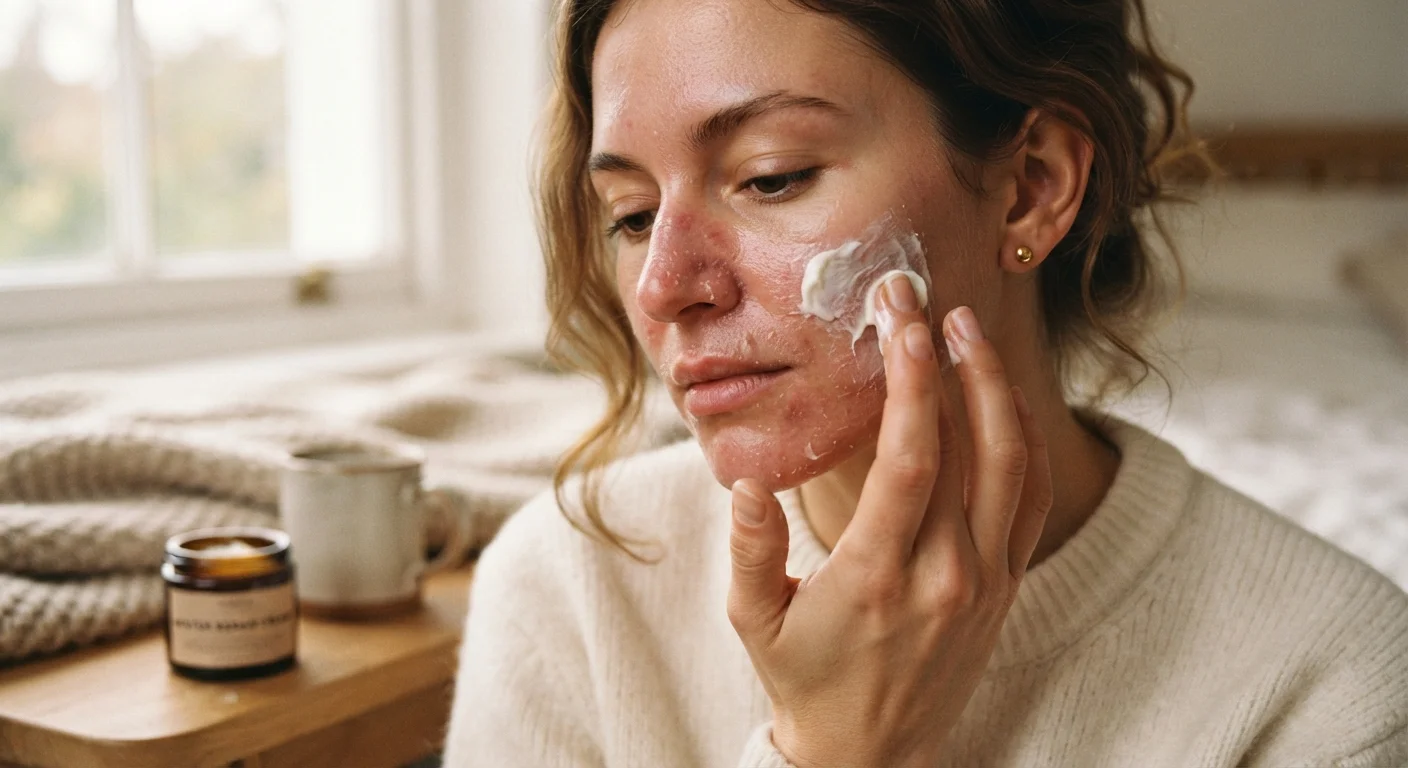
What Actually Changes in Winter (It's Not Just the Temperature)
When cold weather arrives, two forces work against your skin simultaneously. Outdoor air loses humidity dramatically in winter, and indoor heating strips what little moisture remains in the air inside your home. Together, they create a low-humidity environment your skin wasn't dealing with just a few months ago.
Here's the part most people miss: your skin's barrier function — the outermost layer that holds water in and irritants out — behaves differently under these conditions. It produces slightly less natural oil, transepidermal water loss (the technical term for moisture evaporating through the skin) increases, and cell turnover can slow. That means the moisturizer that worked perfectly in September is now facing a fundamentally different skin situation in January. It's not failing; the job description changed.
~30%
Drop in indoor relative humidity from heating
Heating systems can reduce indoor relative humidity to around 20–30%, well below the 40–60% range generally considered comfortable for skin.
2x
Increased transepidermal water loss in winter
Research published in dermatology literature suggests transepidermal water loss can increase significantly in cold, low-humidity conditions compared to temperate months.
The Most Common Moisturizer Mistakes in Winter
Understanding the science is one thing — but the real fix is recognizing the everyday habits that quietly undermine your routine. Here are the mistakes worth correcting first.
Sticking with the same lightweight moisturizer you used all summer.
Why it happens: If a product worked well for months, it feels unnecessary — even wasteful — to switch. Most people don't realize the formula requirements genuinely change with the season.
Applying moisturizer to fully dry skin instead of damp skin.
Why it happens: Most product instructions say "apply to clean skin," which people interpret as fully towel-dried. The timing subtlety rarely appears on packaging.
Skipping SPF because it's cloudy or cold outside.
Why it happens: SPF feels like a summer product, and the logic of 'less sun = less need' seems reasonable — but UV rays penetrate cloud cover year-round.
Over-exfoliating to combat flakiness.
Why it happens: Dry, flaky skin looks like a texture problem, and exfoliation seems like the obvious fix. But in winter, the barrier is already stressed.
Ignoring the role of indoor air quality and humidity.
Why it happens: Skincare is product-focused by habit, so environmental factors like heating systems get overlooked entirely.
Getting your product layering right also matters. If you're unsure which steps go in which order, the skincare layering order guide breaks down the logic clearly so every product actually does its job.
Simple Seasonal Swaps That Make a Real Difference
You don't need a 10-step overhaul. A few deliberate adjustments go a long way.
- Switch to a cream or balm formula. Lightweight gels and water-based lotions work beautifully in summer but often can't form enough of an occlusive seal in winter. Look for formulas with ingredients like shea butter, petrolatum, or ceramides — these help lock water into the skin.
- Apply to damp skin. Moisturizer applied within 60 seconds of patting skin dry traps that surface moisture. Waiting until skin is completely dry means there's less water to seal in.
- Lower your shower temperature. Hot showers feel amazing in cold weather, but hot water disrupts the skin's lipid barrier. Lukewarm is genuinely better for your skin.
- Add a hydrating serum underneath. Hyaluronic acid serums draw water to the skin, which your moisturizer then seals over — a reliable one-two punch for dry winter skin.
Your nighttime routine is especially worth revisiting in winter since skin repair happens while you sleep. The nighttime skincare routine guide walks through exactly how to sequence those steps for maximum benefit.
Don't Mistake Irritation for Dryness
Redness, stinging, or a burning sensation when applying moisturizer in winter isn't always just sensitivity to cold. It can signal a compromised skin barrier or a reaction to a specific ingredient. If your skin consistently stings or flares when you apply products, scale back to the simplest possible routine and consider speaking with a dermatologist before adding new products.
This article is for general informational purposes only and does not constitute medical or dermatological advice. If you experience persistent skin irritation, significant dryness, or other skin concerns, consult a qualified healthcare or dermatology professional.