Why Care Labels Actually Matter
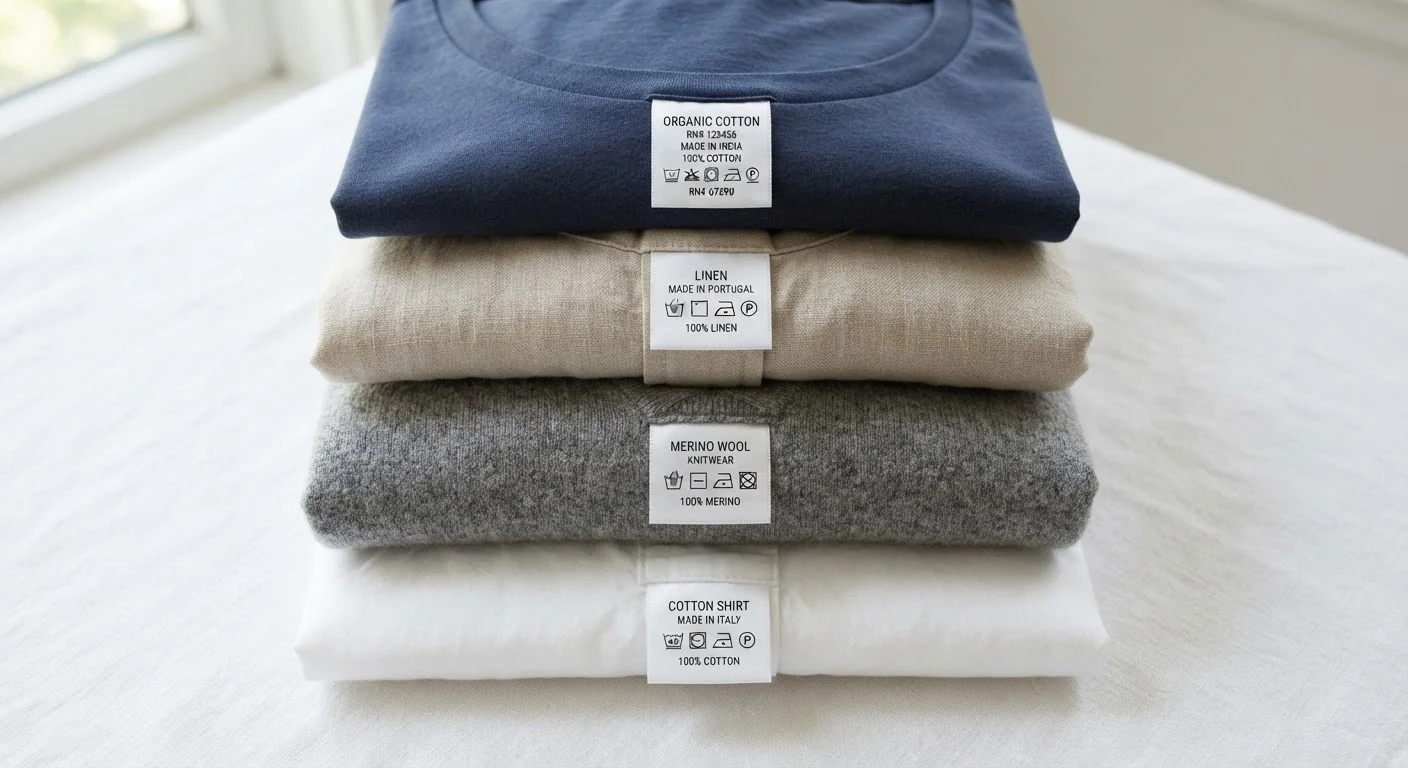
That scratchy little tag tucked inside your collar isn't just there to irritate you — it's a maintenance manual in miniature. In the U.S., the Federal Trade Commission (FTC) requires most clothing manufacturers to attach a permanent care label with instructions for washing, drying, ironing, and dry cleaning. Ignore those instructions and you risk shrinkage, color bleeding, pilling, or fabric damage that no amount of re-washing can undo.
Think of care labels as the garment's own voice telling you exactly how it wants to be treated. Once you learn the symbol language, you'll protect your investment and stretch the life of every piece in your wardrobe. As our guide on why clothes wear out faster than they should explains, most premature wardrobe damage traces directly back to avoidable washing and handling mistakes.
| U.S. Regulatory Body | Federal Trade Commission (FTC) (FTC Care Labeling Rule) |
| Symbol Standards Organization | ASTM International (ASTM D5489 standard) |
| Care Categories Covered | Washing, drying, ironing, bleaching, dry cleaning |
| Most Common Damage Cause | Incorrect water temperature during washing |
| "Do Not Wash" Symbol | Tub with an X through it |
| Bleach-Safe Indicator | Empty triangle (any bleach) or striped triangle (non-chlorine only) |
Decoding the Symbol System
U.S. care labels use a set of standardized symbols developed by ASTM International (the American Society for Testing and Materials). Each icon represents a category of garment care, and small additions — dots, lines, crosses, or hand drawings — refine the instruction within that category.
ASTM International
A globally recognized standards organization that publishes the technical guidelines behind U.S. clothing care symbols. Manufacturers follow ASTM standards to ensure care labels communicate consistently across brands.
Tumble dry
A machine drying method in which garments rotate inside a heated drum. The heat level and duration should match the garment's fiber content to prevent shrinkage or damage.
Dry flat
A drying method where a wet garment is laid horizontally on a clean surface rather than hung. Used for knits and loosely woven fabrics to prevent stretching caused by gravity pulling on wet fibers.
Non-chlorine bleach
An oxygen-based bleaching agent that whitens and brightens fabric without the harsh chemical reaction of chlorine bleach. It is safe for most colored and delicate fabrics when the label permits.
Dry cleaning
A professional cleaning process that uses liquid chemical solvents rather than water to clean fabrics. Required for structured garments and fabrics that cannot tolerate water without losing shape or shrinking.
Permanent care label
A label required by the FTC to be permanently attached to most clothing sold in the U.S., providing at least one complete method for safe cleaning and care of the garment.
Washing Symbols
A tub of water means the item is machine washable. The number inside the tub (or dots in some versions) indicates the maximum water temperature: one dot or 30°C means cold/cool; two dots or 40°C means warm; three dots or higher means hot. An X through the tub means do not wash with water at all — dry cleaning only. A hand dipping into a tub means hand wash only, gently.
Drying Symbols
A square represents drying. A circle inside the square means tumble dry. Dots inside that circle control heat: no dot means any heat, one dot is low, two dots is medium, three is high. A circle with an X means do not tumble dry. Lines inside the square (but outside a circle) signal alternative drying methods: a single horizontal line means dry flat, diagonal lines mean drip dry, and three vertical lines indicate hang to dry.
Ironing Symbols
An iron icon tells you whether and how to iron. One dot inside means low heat (synthetics), two dots mean medium (wool, polyester blends), and three dots mean high heat (cotton, linen). An X through the iron means no ironing. An X over the iron's steam vents means iron without steam.
Dry Cleaning and Bleaching
A circle alone represents professional dry cleaning; letters inside (P, F, W) tell the cleaner which solvents to use. An X through the circle means do not dry clean. A triangle signals bleaching instructions: an empty triangle means any bleach is fine, diagonal lines inside mean only non-chlorine bleach, and an X through it means no bleach at all.
Common Mistakes and How to Avoid Them
Even careful people misread labels. Here are the most frequent slip-ups:
- Ignoring "dry flat" instructions. Hanging a wet knit or loosely woven garment causes it to stretch under its own weight. Always support those pieces on a clean, dry towel laid flat.
- Assuming "hand wash" means any gentle cycle. Some delicate fabrics (silk, structured knitwear) cannot handle the agitation of any machine spin, even on a delicate setting. When in doubt, follow the label literally.
- Using too-hot water. Heat is the most common cause of shrinkage and color loss. Even if a label permits warm water, cold water is gentler and often equally effective for lightly soiled garments.
- Skipping the bleach warning. Chlorine bleach can permanently yellow protein fibers like wool, silk, and nylon. Always check the triangle before reaching for bleach.
When the Label Has Worn Off
Labels fade over time, especially on older or frequently worn pieces. If you can no longer read the care symbols, treat the garment as if it were delicate: cold water, gentle cycle, low or no heat drying, and no bleach. When in doubt, hand wash and lay flat. This conservative approach protects most fiber types without risking damage.
Understanding fabric content alongside care symbols gives you even more context. Our article on fit, fabric, and finish breaks down how different textiles behave so you can make smarter decisions at the wash cycle — and the clothing rack.