
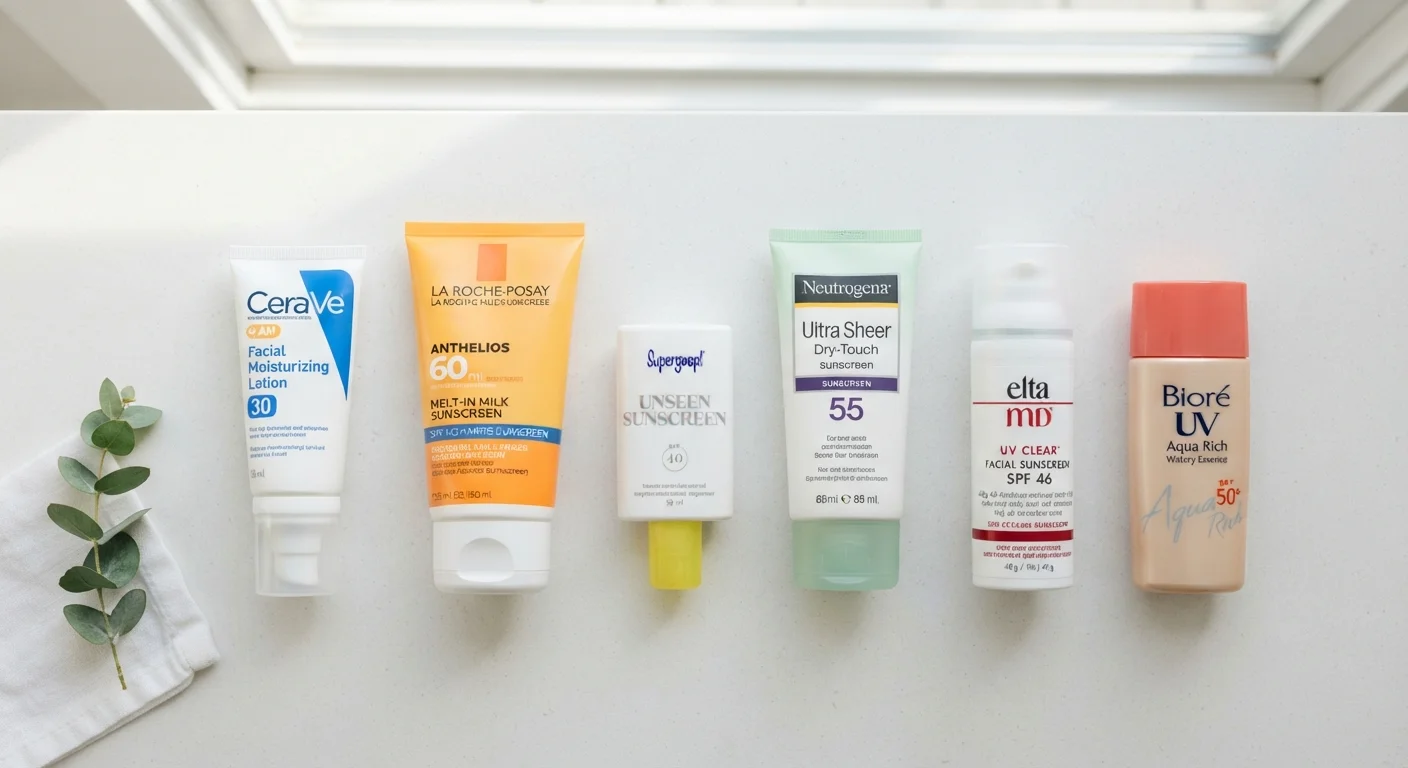
The SPF Number: More Math Than Magic
SPF — Sun Protection Factor — measures how well a sunscreen shields skin from UVB rays, the wavelength primarily responsible for sunburn and a known contributor to skin cancer risk. The number is often misread as a simple strength scale, but it actually describes a ratio of time.
Technically, SPF 30 means it would theoretically take 30 times longer for protected skin to redden than unprotected skin under the same sun exposure. In practical terms:
- SPF 15 blocks roughly 93% of UVB rays
- SPF 30 blocks roughly 97% of UVB rays
- SPF 50 blocks roughly 98% of UVB rays
- SPF 100 blocks roughly 99% of UVB rays
Notice those numbers get closer together as SPF climbs. The gap between SPF 30 and SPF 100 is smaller than most people expect — about 2 percentage points. That said, dermatology organizations generally recommend at least SPF 30 for daily use and SPF 50 for extended outdoor time. Higher numbers do offer a modest buffer, especially when application is uneven or less generous than the tested amount.
One important caveat: SPF numbers assume you apply 2 mg per square centimeter of skin — roughly a full shot glass worth for the entire body. Most people apply far less, which effectively drops the real-world protection level.
Broad Spectrum: The UVA Half of the Story
UVB isn't the only ultraviolet concern. UVA rays penetrate deeper into the skin and are strongly associated with premature aging, hyperpigmentation, and long-term cellular damage — and they're present year-round, even on cloudy days and through windows.
A sunscreen labeled Broad Spectrum has passed a standardized test confirming it protects against both UVA and UVB radiation. In the United States, the FDA regulates this claim — a product can only print "Broad Spectrum" on its label if it meets the required UVA protection threshold relative to its overall SPF.
If a label shows only an SPF number with no "Broad Spectrum" designation, that product is not tested or confirmed for UVA coverage. For full daily protection, look for both descriptors together: Broad Spectrum SPF 30 (or higher).
Choosing the right sunscreen is one step in a larger routine. See our guide to skincare layering order for where SPF fits among your other products — it matters more than you might think.
SPF (Sun Protection Factor)
A measure of how well a sunscreen protects against UVB rays, expressed as a ratio of protected to unprotected sun exposure time before reddening occurs. Higher numbers block a slightly greater percentage of UVB radiation.
UVB Rays
Short-wave ultraviolet light that causes sunburn and contributes to skin cancer risk. SPF numbers specifically measure protection against UVB radiation.
UVA Rays
Long-wave ultraviolet light that penetrates deeper into the skin. UVA is associated with premature aging, pigmentation changes, and cellular damage, and it reaches skin even through glass and on overcast days.
Broad Spectrum
An FDA-regulated label claim confirming a sunscreen offers protection against both UVA and UVB rays. A product must pass a standardized critical wavelength test to use this term on its label.
PA Rating
A UVA protection grading system used predominantly on Asian-market sunscreens, indicated by plus signs (PA+ through PA++++). More plus signs indicate stronger UVA protection based on Persistent Pigment Darkening measurements.
PPD (Persistent Pigment Darkening)
The measurement method underlying PA ratings. It quantifies how much UVA exposure causes lasting skin darkening, with higher PPD values corresponding to greater UVA protection.
PA Ratings: The Asian Market's UVA System
If you shop Japanese, Korean, or other Asian-market skincare, you've likely spotted a PA rating — a system developed in Japan to specifically grade UVA protection. It uses plus signs to indicate strength:
- PA+ — Some UVA protection
- PA++ — Moderate UVA protection
- PA+++ — High UVA protection
- PA++++ — Extremely high UVA protection (added to the scale in 2013)
The PA rating is based on the Persistent Pigment Darkening (PPD) method, which measures skin darkening after UVA exposure. A higher PPD value = more plus signs. While the U.S. "Broad Spectrum" label confirms UVA coverage exists, the PA system gives you a more granular sense of how much UVA protection is present.
Neither system is objectively superior — they measure protection differently, and a product can carry both. For everyday city use, PA+++ or PA++++ combined with Broad Spectrum SPF 30+ covers most bases well. Just as product labels in other categories carry layered meanings, understanding certification systems helps you shop more confidently across the board.
Water-Resistant Doesn't Mean Waterproof
U.S. regulations prohibit sunscreens from claiming to be "waterproof" or "sweat-proof." Products labeled "water-resistant" must specify whether protection holds for 40 or 80 minutes of water activity. After that window — or after toweling off — reapplication is needed to maintain coverage.
This article provides general skincare education and is not a substitute for personalized advice from a licensed dermatologist. If you have concerns about sun damage, skin changes, or a specific skin condition, consult a qualified healthcare professional.