
Why Less Really Is More
Walk into any beauty aisle and the options are genuinely overwhelming — essences, acids, retinoids, eye creams, facial oils. For anyone starting from scratch, that volume of choice can make skincare feel like an exclusive club with a complicated entry quiz. It isn't. The honest truth is that a thoughtful, consistent three-step routine will do more for your skin than a haphazard 12-product shelf you give up on by week two.
Skincare is a habit before it's a hobby. The goal at the beginning isn't perfection — it's repetition. A simple daily routine practiced consistently will outperform an elaborate one practiced occasionally every single time. So let's build something you'll actually keep doing.
Start With What You'll Actually Use
The 'best' skincare products are the ones you'll reach for every day. Prioritize simplicity and ease of use when you're starting out — a routine you'll stick to is worth far more than a sophisticated one you abandon. You can always build complexity later.
The Three Steps Every Routine Needs
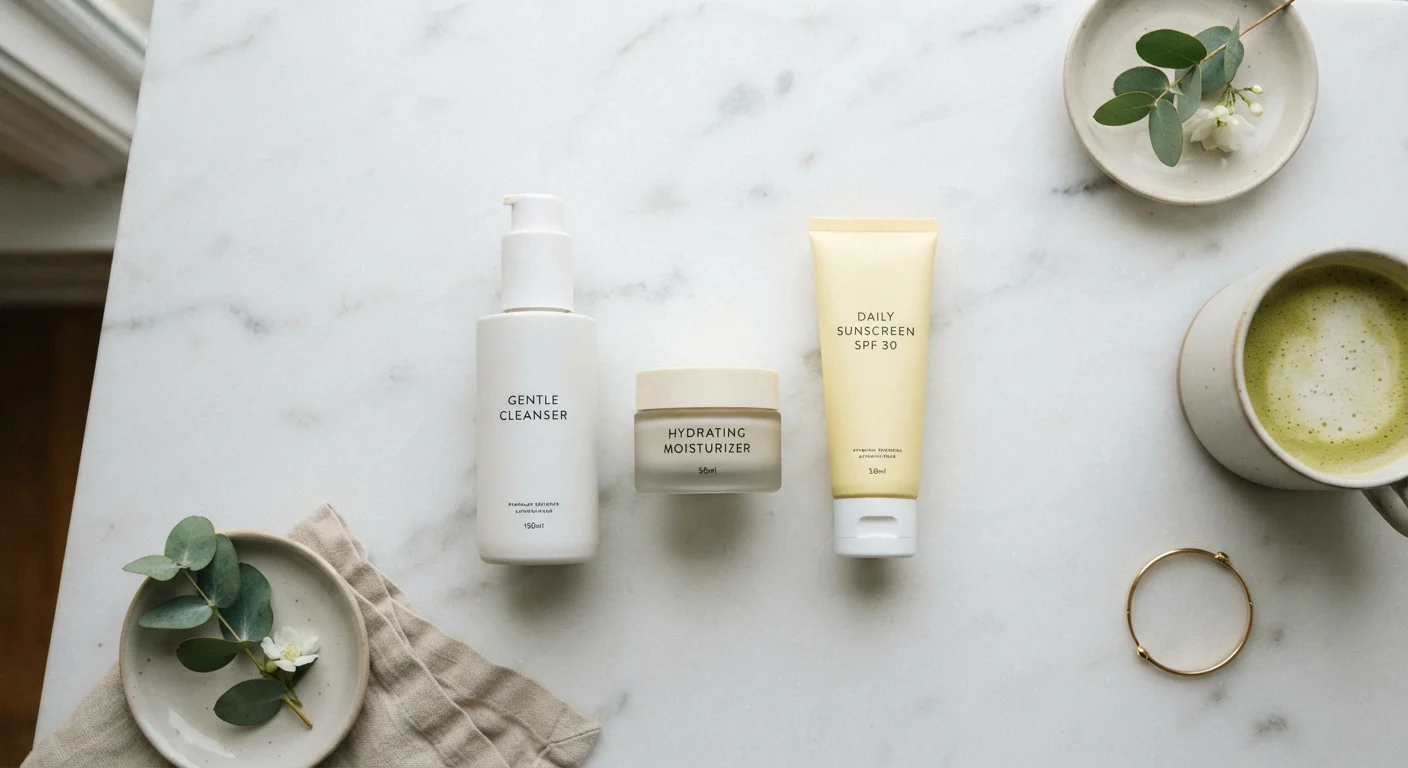
No matter your skin type, budget, or lifestyle, a foundational routine comes down to three non-negotiables:
- Cleanser: Washing your face removes sweat, excess oil, pollution, and anything else that's accumulated on your skin. Use a gentle, non-stripping formula — morning and night. Aggressive cleansers that leave your skin feeling tight are doing more harm than good.
- Moisturizer: Every skin type — including oily — benefits from hydration. Moisturizer helps maintain your skin's natural barrier, which keeps irritants out and moisture in. Lighter gel textures suit oilier skin; richer creams tend to work better for dry or combination skin.
- Sunscreen (AM only): Daily broad-spectrum SPF is one of the most well-supported steps in skincare. UV exposure is a primary contributor to premature aging and skin damage, and it happens year-round. Apply it as the last step of your morning routine.
That's it. Cleanse, moisturize, protect. Once those three steps feel automatic, you have a real foundation to build on. For a closer look at how products work together, our skincare layering guide breaks down the logic behind application order.
Skin barrier
The outermost layer of your skin that acts as a protective shield, keeping moisture in and irritants out. A healthy skin barrier is the foundation of good skin health.
Non-comedogenic
A term used on product labels to indicate that the formula is designed not to clog pores — generally a helpful feature for oily or acne-prone skin types.
Broad-spectrum SPF
Sunscreen that protects against both UVA rays (linked to aging) and UVB rays (linked to burning). 'Broad-spectrum' on a label means both types of UV radiation are addressed.
Emollient
An ingredient or product that softens and smooths the skin by filling in the spaces between skin cells, helping to lock in moisture. Common in richer creams and balms.
T-zone
The forehead, nose, and chin area of the face, which form a T-shape. This zone tends to produce more oil than the cheeks and is a common reference point when discussing combination skin.
How to Know What Your Skin Actually Needs
Products work differently depending on your skin type, so having a rough sense of yours helps — even if it's just a starting point. Skin types can shift with seasons, hormones, and age, so think of this as a working hypothesis, not a permanent label.
- Oily skin tends to look shiny and feel greasy, especially in the T-zone (forehead, nose, chin). Lightweight, non-comedogenic (won't clog pores) products generally work well.
- Dry skin may feel tight, look dull, or flake. Richer, more emollient formulas help restore and retain moisture.
- Combination skin is oily in some areas and dry or normal in others. You may need to adjust product amounts by zone, or find a balanced middle-ground formula.
- Sensitive skin reacts easily to ingredients and environmental factors. Fragrance-free, minimal-ingredient products are usually safer bets when starting out.
Not sure where you fall? Wash your face, skip all products, wait an hour, and simply observe how your skin feels. That reaction — tight, shiny, balanced, or patchy — tells you a lot.
Skin Type Can Change Over Time
Your skin type isn't fixed for life. Hormonal shifts, climate changes, aging, diet, and stress can all influence how your skin behaves from season to season or year to year. Revisiting your skin type assessment every few months keeps your routine relevant and effective.
Building Consistency Without Overwhelm
The biggest barrier to a working skincare routine isn't finding the right products — it's sticking with it. A few practical approaches make consistency far easier:
- Anchor it to an existing habit. Pair your routine with something you already do daily, like brushing your teeth. Morning and evening brushing = morning and evening skincare.
- Keep products visible. If your cleanser is buried in a cabinet, you're less likely to reach for it. A simple tray on the bathroom counter works.
- Introduce one product at a time. When you're building out beyond the basics, add one new product at a time and give it a couple of weeks before adding another. This makes it easy to identify what's working — or what isn't.
Building any new habit takes time. The same patience that helps with a daily wellness routine applies here — small, repeatable actions compound into real results.
When to Add More Steps
Once your three-step routine feels natural — you're not skipping days, your skin feels stable, and you're not reacting to anything — that's when it makes sense to explore additional products. Common next steps include serums (targeted treatments for concerns like uneven tone or hydration), exfoliants (to remove dead skin cells), or dedicated treatments like retinoids.
The skincare layering order guide is a great next read when you reach this stage — it explains exactly where each product type fits in a routine and why. If you also want to think about how skincare fits into a broader beauty setup, our guide to building a basic makeup kit covers the complementary side of a daily beauty routine.
And if you're buying products on a budget, it helps to think about skincare spending the same way you'd approach any personal care budget — intentionally and without pressure. Our budgeting basics hub has practical frameworks for managing personal spending across categories.
The bottom line: start simple, stay consistent, and build from a place of confidence rather than anxiety. Your skin doesn't need a 12-step system — it needs your attention, a little patience, and three good products used regularly.
This article is for informational purposes only and is not a substitute for professional dermatological advice. If you have persistent skin concerns, consult a qualified dermatologist or healthcare provider.