
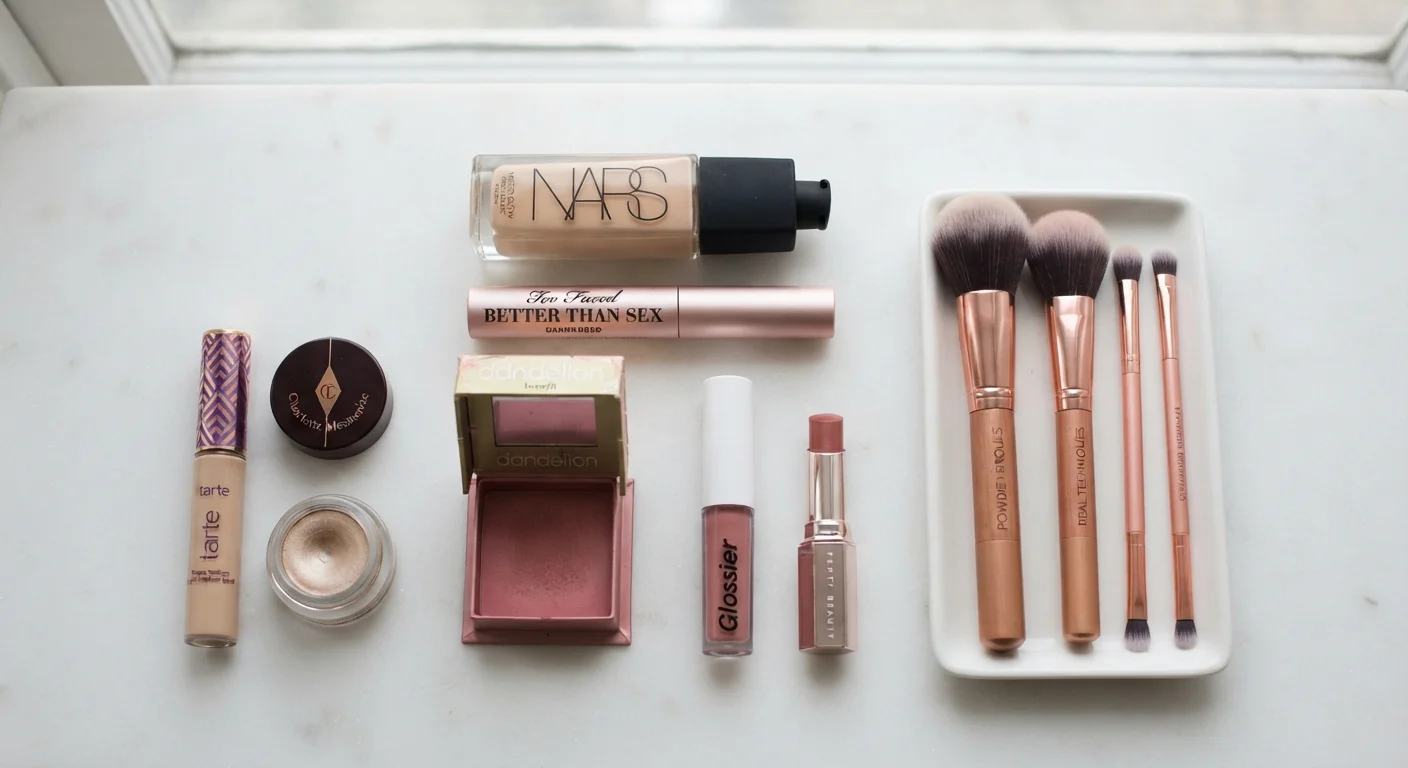
Why a Basic Kit Is All You Really Need
Makeup aisles can feel overwhelming, but the truth is that a small, well-chosen collection covers the vast majority of everyday looks. A basic kit isn't a stripped-down compromise — it's a focused, functional toolkit built around what actually works.
If you're just starting out or streamlining an overcrowded drawer, think of your kit in five categories: complexion, eyes, lips, tools, and finish. Everything else builds from there. And before any of it, solid skincare makes every product perform better — see our beginner's skincare guide for a grounded starting point.
Start With Fewer Products, Not More
Resist the urge to buy everything at once. Building a kit gradually lets you learn what each product does and what your skin actually responds to. A five-product kit used confidently outperforms a twenty-product collection you don't know how to use.
Complexion Products: Your Canvas
Complexion products even out skin tone and create a smooth surface. Here's what each one actually does:
- Primer: Applied before foundation, primer minimizes the appearance of pores, controls oil, and helps other products adhere longer. It's optional but genuinely useful.
- Foundation: The backbone of complexion coverage. Available in liquid, powder, stick, and cushion formats, foundation evens out skin tone across the face. Coverage ranges from sheer to full — choose based on your preference, not what looks most impressive on the label.
- Concealer: More concentrated than foundation, concealer targets specific areas — under-eye circles, blemishes, or redness around the nose. It's often applied after foundation for precision.
- Blush: Adds a flush of color to the cheeks, bringing warmth and dimension back to the face after foundation is applied. Powder blush is easiest to work with for beginners.
- Contour or bronzer (optional): These add shadow and warmth to define facial structure. Neither is essential in a starter kit, but a light bronzer can double as a contour for a simplified approach.
5
Core categories in a complete basic kit
Complexion, eyes, lips, tools, and finish cover the full functional range of everyday makeup.
~10
Products in a practical starter kit
A functional everyday kit — covering all five categories — typically includes around 10 items or fewer.
Eye Makeup Essentials
Eyes have the most product variety of any category, but a basic kit only needs three or four items:
- Mascara: Opens up the eyes by darkening and lengthening lashes. A single tube of black or brown-black mascara is one of the highest-impact items in any kit.
- Eyeliner: Defines the lash line. Pencil liners are most forgiving for beginners; liquid liners offer more precision once you've practiced. You don't need both.
- Eyeshadow: A neutral palette with three to five shades — light, medium, and dark — covers everything from no-makeup-makeup looks to a defined evening eye. Matte shades are more versatile than shimmer for everyday wear.
- Brow product: Often underestimated, filled-in brows frame the entire face. A brow pencil or powder in a shade close to your natural hair color is all you need.
When choosing an eyeshadow palette, prioritize one with at least two matte shades — a highlight and a transition color. These two alone can create a natural eye look without needing shimmer at all.
Matte shades are more forgiving to blend and work across more lighting conditions and occasions than shimmer, making them higher-utility in a small collection.
Fill in brows using short, hair-like strokes rather than drawing a solid line. This mimics the look of real hair and creates a more natural result even with minimal practice.
Brows have an outsized effect on how polished a face looks; natural-looking application tends to age better throughout the day than a heavily drawn-on effect.
Lip Products Worth Having
Lips are the easiest category to keep simple. Two products handle most situations:
- Lip balm: Hydrated lips make any lip product apply more smoothly. A basic, unflavored balm worn under or between lip products is a must.
- Lip color: Whether that's a tinted balm, a lipstick, or a lip liner used all over, one or two shades cover you for both casual and more polished days. A neutral-to-your-skin-tone shade and one bolder option is a practical starting point.
Lip liner, used to define edges and prevent feathering, is genuinely useful if you wear lipstick regularly, but it's not a day-one essential.
Makeup is one expression of personal style — if you're thinking more broadly about how you present yourself, finding your aesthetic is a useful parallel exercise.
Watch for Skin Reactions to New Products
Introducing multiple new makeup products at once makes it difficult to identify what's causing a reaction if irritation occurs. If you have sensitive skin, consider introducing one new product at a time and doing a small patch test on your inner arm before applying it to your face. Discontinue use and consult a dermatologist if you experience persistent irritation, redness, or breakouts.
Tools and Brushes That Make a Difference
Products perform best when applied with the right tools. Fingers work in a pinch, but a few basic tools make a real difference:
- Beauty sponge: Dampened and used to blend foundation and concealer, a sponge produces a more natural, skin-like finish than fingers alone.
- Fluffy powder brush: Used to apply setting powder or blush, a large fluffy brush diffuses product evenly without harsh edges.
- Small blending brush: Essential for blending eyeshadow. Without it, shadow tends to sit in patches rather than graduate naturally.
- Eyelash curler: Not a product, but a tool that dramatically opens up the eye before mascara is applied. Even a basic one makes a noticeable difference.
Caring for your tools matters too — brushes should be cleaned regularly to prevent product buildup and bacterial transfer to skin.
Cleaning Brushes Is Non-Negotiable
Dirty brushes harbor bacteria and old product that can contribute to clogged pores and uneven application. A gentle brush cleanser or mild soap used once a week is enough for most people. Sponges should be cleaned even more frequently — ideally after every few uses — because they stay damp and are more prone to bacterial growth.
Setting and Finishing: The Final Step
Setting products lock everything in place and give your look a polished finish.
- Setting powder: A translucent or lightly tinted powder pressed or dusted over foundation reduces shine and extends wear. It's especially helpful in oily areas like the T-zone.
- Setting spray: A fine mist applied as a final step melts powder together with cream products for a more cohesive, less-cakey finish. It also extends how long your makeup lasts through the day.
Neither product is glamorous, but together they're the reason a look applied at 7 a.m. still looks presentable at 5 p.m.
Building a makeup kit is part of a broader process of figuring out how you want to present yourself. For a full-picture view, our complete personal style framework covers everything from clothing to color to presentation choices.
Makeup Does Not Replace Skincare
No amount of foundation or concealer substitutes for a functioning skincare routine underneath. Primer and setting products work far better on skin that's moisturized and reasonably balanced. If your skin is reactive, dry, or acne-prone, addressing those concerns with a dermatologist will improve your makeup results more than any new product will.