
What Personal Style Actually Means
Personal style isn't a destination you arrive at after the right shopping trip — it's a living, evolving expression of how you choose to show up. It includes the clothes you wear, yes, but also the colors you gravitate toward, the way you handle fit, the accessories you reach for instinctively, and the signals you want to send in different situations.
Think of it as a visual language you're always speaking, even when you think you're just throwing something on. The goal of any style framework isn't to box you in — it's to give you enough self-knowledge that getting dressed feels easier, more intentional, and genuinely enjoyable. Check out our everyday fashion hub for practical wardrobe ideas that complement any style direction.
The Building Blocks: Fit, Color, and Proportion
Three foundational elements underlie every great outfit, regardless of aesthetic: fit, color, and proportion.
Fit
Fit is the single most powerful style tool you have. A well-fitting garment in a basic fabric will almost always look more polished than an expensive piece that bunches, gaps, or overwhelms your frame. This doesn't mean tight — it means intentional. Clothes should skim or drape in ways that feel comfortable and purposeful.
Color
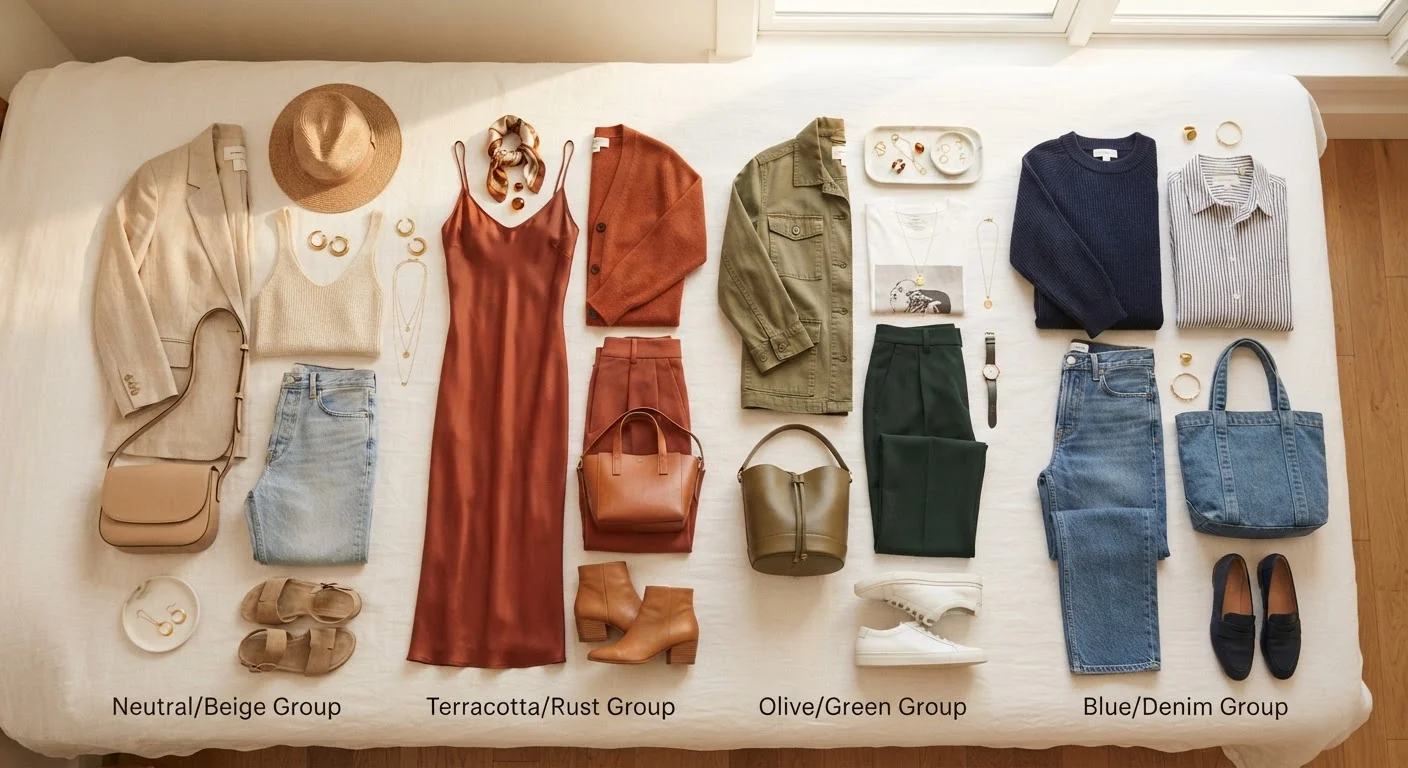
Color affects how others perceive your outfit and how you feel wearing it. Building a cohesive color palette — even a loose one — makes getting dressed faster and ensures pieces work together. You don't need a strict capsule wardrobe; you need enough color awareness to avoid a closet of items that never coordinate.
Proportion
Proportion is about visual balance: pairing a voluminous top with streamlined bottoms, or a fitted silhouette with a statement shoe. Playing with proportion is one of the most creative and accessible ways to make an outfit feel intentional rather than accidental.
The One-Finger Rule for Fit
When trying on a waistband, collar, or sleeve hem, you should be able to slide one finger comfortably inside — not two or three, not zero. This simple check helps you identify the difference between fitted and too tight, or relaxed and simply oversized.
Identifying Your Style Instincts
Before you can build a coherent look, it helps to understand what you're already drawn to. Scroll back through photos where you felt great in what you were wearing — patterns emerge quickly. Do you consistently reach for neutrals or bold color? Structure or ease? Minimal layering or lots of it?
Style archetypes can be a useful shorthand here. Rather than labeling yourself rigidly, think of archetypes as a starting vocabulary. Our article on style archetypes explained breaks down the most common ones and what they reveal about dressing habits.
Create a 'style evidence' folder on your phone: screenshot or save images of outfits — real people, editorial, or your own photos — that genuinely excite you. After 20 or 30 saves, look for patterns in silhouette, color, and proportion. Your preferences will tell you what no quiz can.
Visual pattern recognition is far more reliable than abstract self-description. Most people can identify what they're drawn to visually long before they can articulate it in words.
When an outfit feels almost right but not quite, change one element at a time — swap the shoes, remove a layer, tuck or untuck — rather than scrapping the whole look. More often than not, one small shift resolves the imbalance.
Outfit troubleshooting is a skill that builds over time. Isolating variables the way you would in any problem-solving process helps you understand why something works or doesn't, making future decisions faster.
Your instincts are data. If you keep buying a certain silhouette and never wearing it, that gap between what you buy and what you wear is worth exploring — it often reveals a mismatch between aspiration and lifestyle.
Accessories and Finishing Touches
Accessories are the fastest, most flexible way to shift an outfit's energy. A structured bag elevates a casual look; a chunky chain necklace adds edge to something minimal; a scarf worn in your hair reads entirely differently than the same scarf at your neck.
~65%
Of outfit decisions made in under 5 minutes
Research on decision fatigue suggests most people default to habit-driven choices when time is short, underscoring why a cohesive wardrobe reduces daily mental load.
3–5
Accent pieces that define a signature look
Style practitioners widely note that most signature looks are anchored by a small number of recurring elements — a color, a silhouette, or a type of accessory — rather than a large, varied wardrobe.
The key is intentionality, not quantity. A single well-chosen accessory can do more work than several competing ones. Consider the overall outfit before layering on everything at once — sometimes restraint is the bolder move.
Shoes, in particular, anchor an outfit's formality and mood more than almost any other element. A pair of clean white sneakers and a pointed-toe flat can transform the same midi dress into two completely different style statements.
“Style is a way to say who you are without having to speak. It's not about the clothes themselves — it's about the choices you make and what those choices communicate.”
— Rachel Zoe, Fashion designer and style authority
How Context Shapes Your Choices
Even the most defined personal style bends to context. Occasion, environment, climate, and the social norms of a given community all play a role in what reads as appropriate, confident, or expressive.
This isn't about abandoning your identity — it's about fluency. Just as you'd modulate your tone of voice in different conversations, your wardrobe can flex across contexts while still feeling like you. A workplace that skews formal calls for different choices than a weekend farmer's market, but your color palette, your attention to fit, and your signature accessories can all remain consistent.
Dress for Your Actual Life, Not an Idealized One
One of the most common wardrobe pitfalls is buying clothes for occasions that rarely happen — elaborate event wear, ultra-formal pieces, or aspirational gym gear that never gets worn. Before adding anything new, ask honestly how often you'll actually wear it in your day-to-day life. A wardrobe that serves your real routine will always feel more satisfying than one built around fantasy scenarios.
Understanding context also helps clarify what you actually need in your wardrobe versus what you're buying for a life you don't quite live. Check out dressing with intention for principles that apply across every aesthetic and occasion.
Bringing It All Together
A complete personal style framework isn't about owning the right things — it's about knowing yourself well enough to make purposeful choices with whatever you have. Fit and proportion set the foundation. Color awareness creates cohesion. Instinct-mapping gives you direction. Accessories add dimension. And context keeps everything grounded in the real world.
The good news: you don't need to overhaul anything to get started. You can develop a more intentional style by working with what's already in your closet. Our guide on building a signature look without starting over walks you through exactly how to do that — no purge required.
Style Archetypes Guide
Explore the most common style archetypes and what they reveal about your dressing instincts. A useful starting point for anyone building a more intentional wardrobe.
Dressing With Intention Principles
A set of universal dressing principles that hold regardless of your aesthetic — practical and immediately applicable for minimalists and maximalists alike.
Everyday Fashion Hub
Practical style tips focused on real-life wardrobes — useful for everyday outfit building, not just aspirational fashion moments.
This article is for informational and educational purposes only. Style advice is general in nature and may not suit every individual's needs, lifestyle, or circumstances.