
What Is a Style Archetype?
A style archetype is a recognizable pattern of dressing preferences — a shorthand for how you tend to put yourself together. Think of it less like a rigid box and more like a home base: a consistent set of instincts about silhouette, color, texture, and occasion that shows up repeatedly in what you reach for. Understanding yours can make getting dressed feel less random and more intentional.
Style archetypes aren't about following rules. They're a practical framework for identifying what already works for you — and why. Once you name your tendencies, you can make smarter decisions about what to add to your wardrobe and what to leave behind. If you're just beginning this process, start by identifying your aesthetic before diving into archetypes.
| Number of common archetypes | 6–10 (varies by framework) |
| Primary purpose | Clarify dressing preferences and guide wardrobe decisions |
| Most blended archetypes | Classic + Minimalist; Bohemian + Romantic (Commonly observed in personal style guides) |
| Best time to reassess | After major life changes or when your wardrobe feels misaligned |
| Style archetypes are | Descriptive, not prescriptive — a tool, not a rule |
The Core Style Archetypes
Most style frameworks identify six to ten archetypes that cover the broadest range of dressing habits. Here are the most commonly recognized ones:
Classic
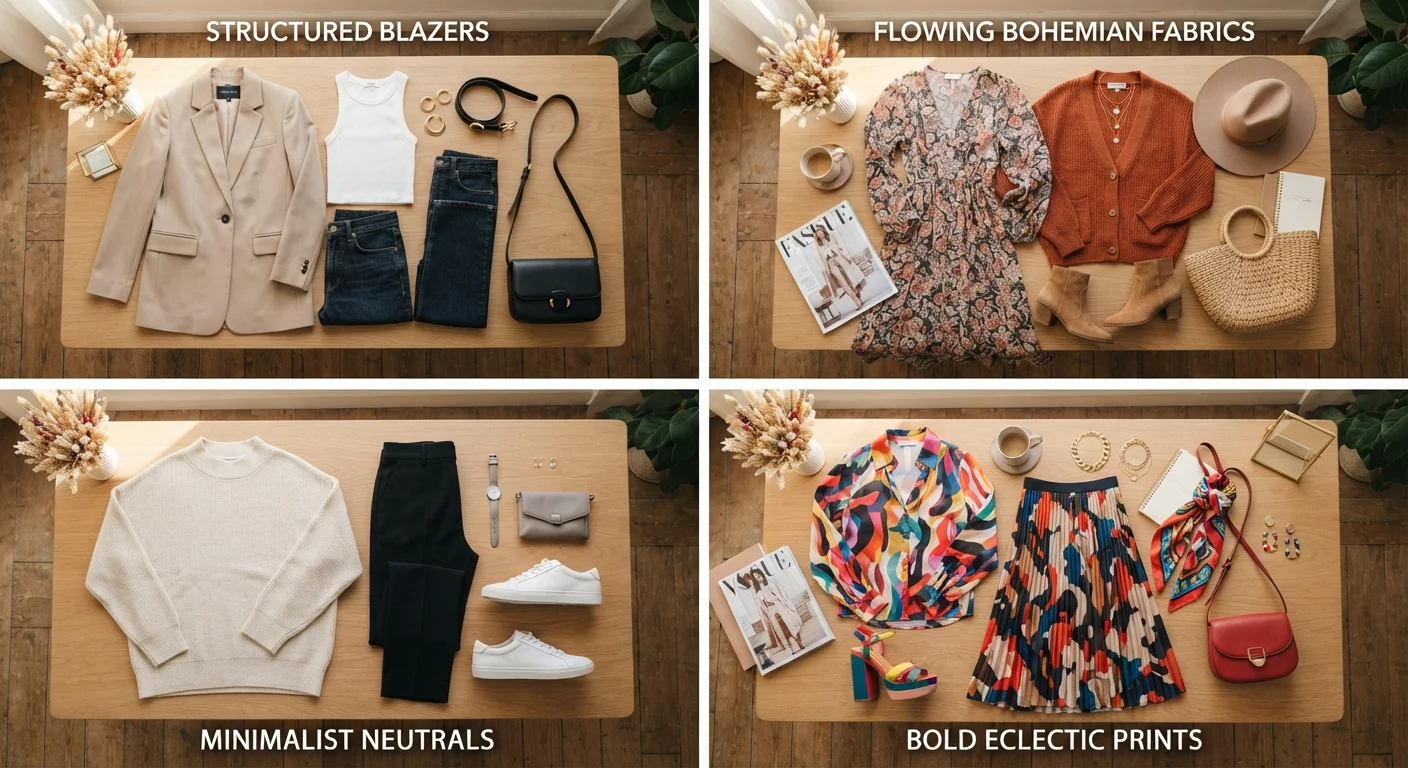
The Classic dresser gravitates toward timeless silhouettes, neutral palettes, and well-made basics. Tailored trousers, clean-lined blazers, and simple accessories define this archetype. The goal is longevity over trend-chasing.
Minimalist
Related to Classic but with a sharper edit, the Minimalist strips the wardrobe down to essentials. Fewer pieces, more considered. Monochromatic outfits, negative space, and purposeful restraint are the hallmarks. This archetype overlaps with capsule wardrobe thinking.
Romantic
Florals, soft draping, delicate details, and feminine silhouettes define the Romantic archetype. This dresser leans into softness — think flowing fabrics, lace details, and a generally dreamy, graceful aesthetic.
Bohemian
Layered textures, earthy tones, vintage-inspired pieces, and global-influenced prints characterize the Bohemian style. This archetype values freedom of expression over structure, often mixing eras and origins with ease.
Edgy / Urban
Dark palettes, asymmetry, leather, hardware, and unexpected proportions are the Edgy archetype's calling cards. This dresser plays with tension — blending tough and polished, structured and oversized.
Preppy / Collegiate
Crisp, polished, and rooted in heritage sportswear influences, the Preppy archetype leans on clean cuts, classic patterns like stripes or plaid, and an overall put-together sensibility that feels structured without being stuffy.
Eclectic
The Eclectic dresser intentionally draws from multiple archetypes, mixing prints, eras, and genres with confidence. This isn't accidental — it's a deliberate aesthetic built on fearless experimentation and a strong personal point of view. Certain core principles still apply even within the most eclectic wardrobes.
Style archetype
A recognizable pattern of dressing preferences that reflects consistent aesthetic instincts — silhouette, color, texture, and occasion — across someone's wardrobe choices.
Capsule wardrobe
A curated, small collection of versatile clothing pieces that can be mixed and matched to create a wide range of outfits, typically built around neutral, timeless staples.
Silhouette
The overall shape or outline a garment creates on the body. Common silhouettes include fitted, A-line, boxy, and oversized.
Eclectic style
A deliberate mixing of aesthetics, eras, patterns, and genres in a single wardrobe or outfit. Distinguished from random dressing by intentionality and a strong point of view.
Home base (style)
The archetype or aesthetic that most consistently reflects your instinctive dressing choices — the starting point from which any experimentation departs.
You Probably Blend More Than One
Very few people are a single archetype. Most of us sit at the intersection of two or three — and that's exactly right. You might be a Minimalist at work and a Bohemian on weekends. You might have a Classic foundation with Edgy accents. Blending is the norm, not the exception.
The value of naming your primary archetype is that it gives you a decision-making anchor. When you're unsure whether a new piece fits, asking "does this align with my home base?" is a fast and honest filter. For a more structured way to audit what you already own through this lens, try evaluating your current closet.
Archetypes Evolve With You
Your style archetype isn't a life sentence. As your circumstances, tastes, and lifestyle shift, what feels most "you" will shift too. It's common for someone to move from a Romantic archetype in their twenties toward a Classic or Minimalist foundation later — not because one is better, but because priorities change. Check in with yourself periodically rather than staying loyal to a label that no longer fits.
Style archetypes are also dynamic. Life shifts — new environments, new priorities, evolving tastes — naturally pull your aesthetic in different directions over time. Revisiting your archetype annually isn't indecisive; it's honest. For a broader look at all the dimensions that shape how you dress, see the complete personal style framework.