
Why a Pre-Active Checklist Actually Matters
Active ingredients — things like retinoids, exfoliating acids, vitamin C, and niacinamide — are the heavy lifters of any skincare routine. They're also the most likely to cause irritation, purging, or unexpected reactions if introduced carelessly. If you're building your first skincare routine, starting with actives before you've nailed your basics is like running before you've learned to walk.
The good news: a quick pre-flight check takes less than an hour and can save your skin weeks of setbacks. This checklist walks you through everything to confirm before that first application — from understanding your current routine to timing your introduction right.
When to Consult a Dermatologist First
If you have a diagnosed skin condition — such as rosacea, eczema, or psoriasis — some active ingredients commonly found in over-the-counter products can worsen symptoms or interact with prescription treatments. This article is for general informational purposes only and is not a substitute for medical or dermatological advice. Always check with a qualified healthcare professional before adding actives to a medically managed skincare routine.
What You'll Need
Before diving into the checklist itself, gather these basic tools. Nothing fancy required.
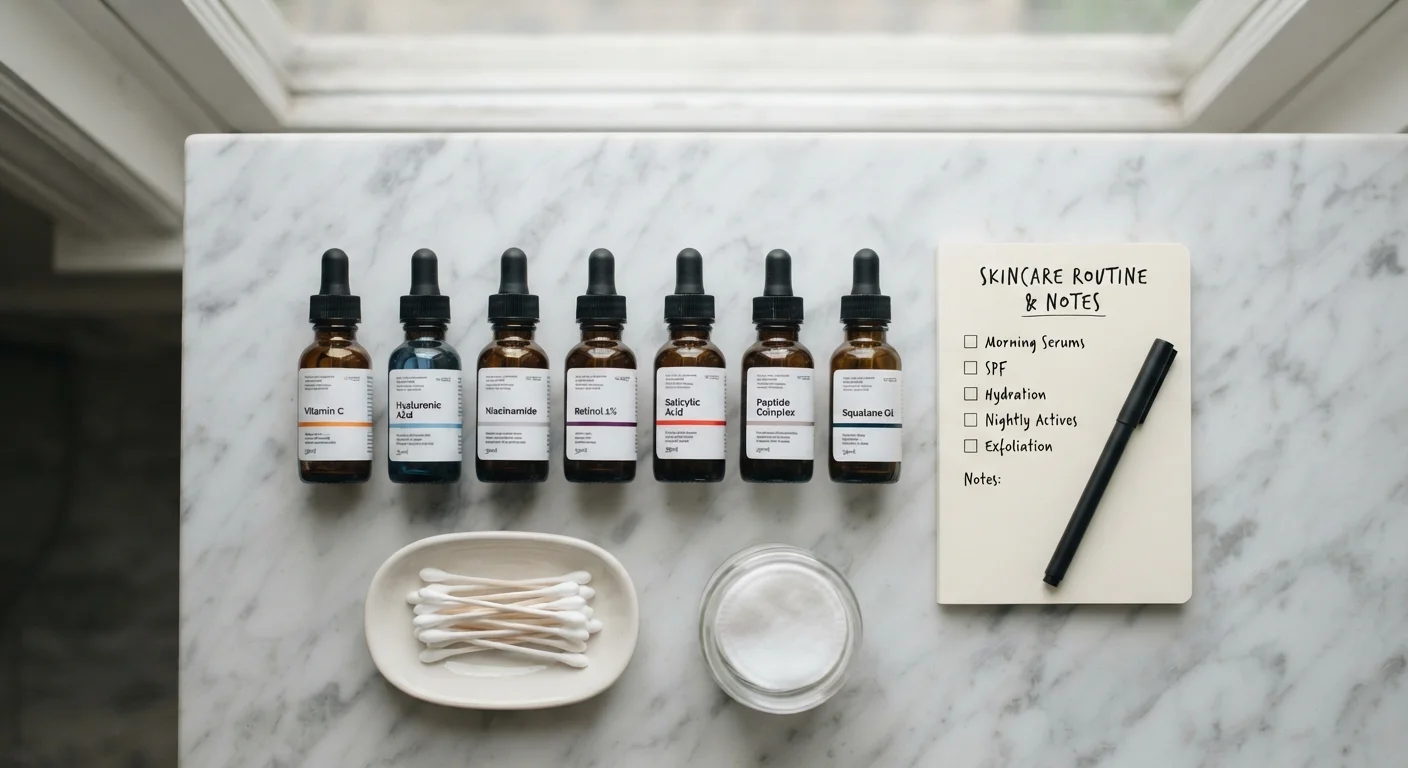
Cotton swabs or a clean cotton pad
Used to apply a small amount of product to your patch test site without contaminating the full container.
A simple skincare journal or notes app
Helps you log your current routine, track patch test results, and monitor skin changes over time.
Broad-spectrum SPF 30+ sunscreen
Many actives increase sun sensitivity — reliable daily SPF is essential before starting most actives.
A fragrance-free, barrier-supportive moisturizer
Helps buffer irritation when first introducing actives, especially exfoliating acids or retinoids.
The Full Pre-Active Checklist
Work through each group in order. If you hit a "must" item you can't yet check off, pause and address it before moving forward.
Know Your Baseline
Understand the Ingredient
Patch Testing
Timing and Introduction
Layering and Application
Purging vs. Breakouts: Know the Difference
Some actives, particularly retinoids and exfoliating acids, can trigger a temporary "purging" phase where existing congestion surfaces faster. This typically resolves within four to six weeks and is limited to areas where you already break out. If you're seeing reactions in new areas, or if irritation persists beyond six weeks, that's more likely a sign of sensitivity — not purging. When in doubt, scale back frequency and consult a dermatologist.
Struggling with which actives can safely coexist? Our guide on ingredients that don't play well together breaks down the most common pairing pitfalls in plain language.