
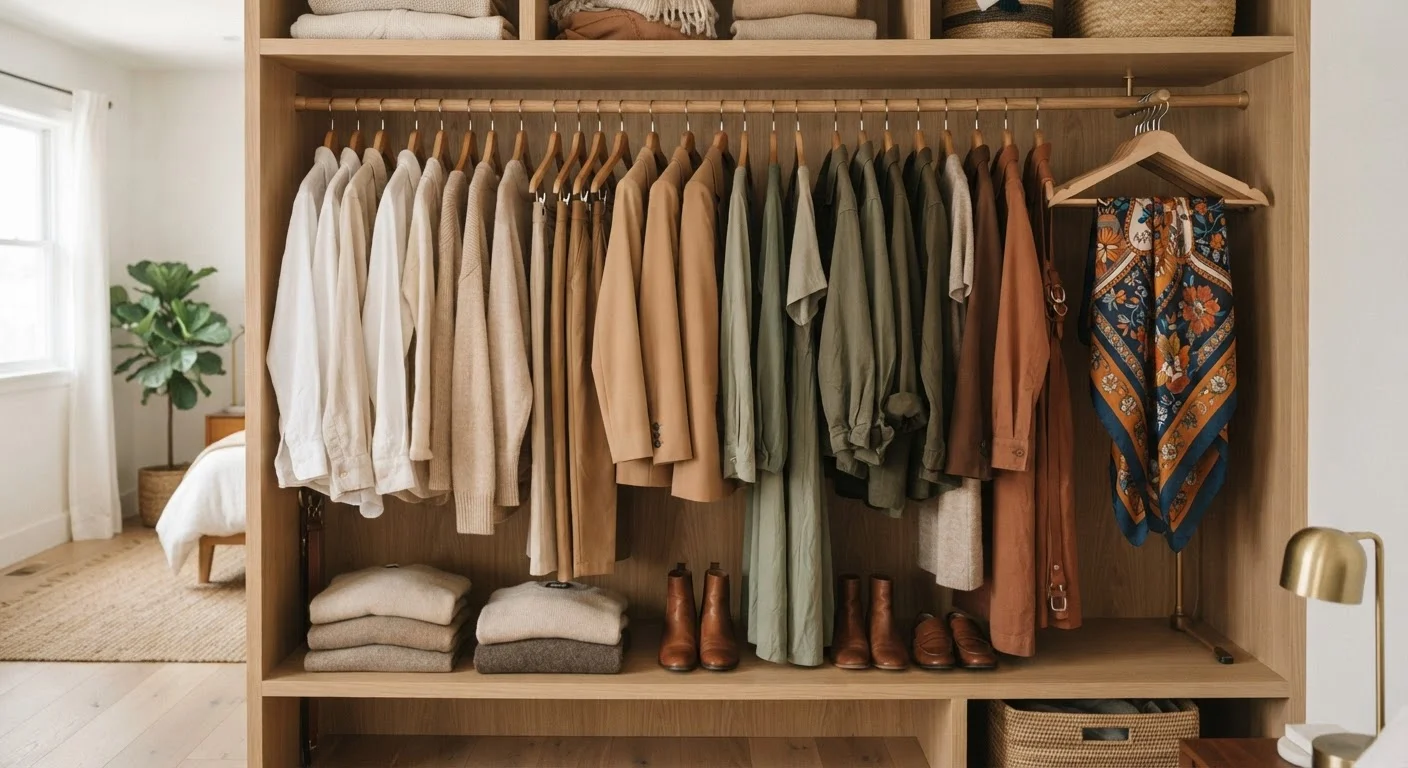
What 'Dressing Consistently' Actually Means
Dressing consistently doesn't mean wearing the same outfit on repeat — it means developing a recognizable aesthetic that runs through your choices. Think of it as a through-line: your color palette, silhouettes, and the overall feeling your outfits project stay relatively stable even when individual pieces change.
This is the foundation of what many people call a signature look — not a uniform, but a reliable visual identity. Consistency might show up as always reaching for clean lines, or always incorporating a specific color family, or maintaining a particular mood (polished, relaxed, bold) across contexts.
By contrast, dressing with variety means actively mixing aesthetics, experimenting with different silhouettes, and letting your wardrobe shift more freely with mood, trend interest, or occasion. Neither stance is wrong — but understanding what each actually involves makes it easier to choose.
Simplifies daily decision-making significantly
A consistent aesthetic means everything in your wardrobe works together, making getting dressed faster and less stressful — particularly on busy mornings.
Builds a recognizable personal identity
When your style has a clear through-line, people associate a look with you — a quiet but powerful form of self-presentation and confidence.
Encourages smarter, more intentional shopping
Knowing your aesthetic makes it easier to resist impulse purchases and invest in pieces that genuinely integrate with what you already own.
Maximizes cost-per-wear on your wardrobe
Pieces selected for a cohesive wardrobe get worn more often, meaning you extract more value from each item rather than letting things sit unused.
Reduces wardrobe clutter and decision fatigue
A curated, consistent closet tends to stay organized and purposeful, making it easier to see what you have and use it well.
The Real Case for Consistency
There's a reason some people wear the same types of outfits for years and seem effortlessly put-together: consistency removes the cognitive load of getting dressed. When your wardrobe has a clear logic, everything works together, which makes mornings faster and the results more reliably satisfying.
Consistency also builds what stylists often describe as a personal uniform — a look that becomes associated with you. That kind of recognizability can be a quiet form of confidence. It signals that you know who you are. As you dress with intention, you're also spending more wisely: fewer impulse purchases, less wardrobe clutter, and more cost-per-wear from pieces you genuinely love.
~33%
Average wardrobe items never worn
Research and wardrobe studies consistently suggest roughly one-third of most people's clothes go unworn — a pattern often linked to buying without a clear personal style framework.
2.5×
Decision fatigue reduction with fewer choices
Behavioral research on decision-making suggests that reducing the number of daily choices — including what to wear — can meaningfully lower mental fatigue over the course of a day.
Where Variety Has the Edge
A wardrobe with more range isn't just for the indecisive — it's genuinely valuable in specific situations. If your life spans many different contexts (creative work environments, formal events, casual weekends, athletic pursuits), stylistic flexibility lets you show up appropriately and comfortably without forcing a single aesthetic into ill-fitting settings.
Variety also keeps the joy in getting dressed. For people who find real pleasure in style as creative play, a rigid consistency can feel limiting. Experimenting with pattern mixing or rotating color palettes can be an energizing form of self-expression rather than a sign of a scattered wardrobe.
And practically speaking, your style should evolve — especially across major life chapters. What served you in your twenties may not fit who you are at forty, and that's growth, not inconsistency. Your wardrobe needs naturally shift as your life does.
Can feel creatively limiting over time
A rigid aesthetic may start to feel like a costume rather than an expression — especially for people who naturally evolve their tastes and interests.
May not suit highly varied lifestyle contexts
If your days span formal presentations, casual outings, and athletic activities, one consistent style can be difficult to translate across all settings appropriately.
Risks looking outdated if never revisited
Consistency taken too far can lead to a look that no longer reflects who you are today, particularly after significant life changes or personal growth.
Limits the joy of style experimentation
For those who find genuine pleasure in creativity and play, a strict aesthetic can remove the fun that makes getting dressed an enjoyable daily ritual.
Finding Your Own Balance
For most people, the answer isn't a hard choice between the two — it's designing a wardrobe with a consistent core and room for intentional variety on the edges. A reliable set of go-to silhouettes and a coherent color story (which you can explore through color palette building) gives you a sturdy foundation. From there, accent pieces, seasonal additions, or bolder experiments can bring freshness without chaos.
If your outfits often feel off even when you like each piece individually, the issue is usually a lack of a unifying thread — something worth diagnosing before adding more variety. Conversely, if your wardrobe feels stale, that's a signal to loosen the framework a little, not abandon it entirely.
The goal, ultimately, is a closet that serves your actual life — not an aesthetic ideal that looks good in theory but fails you on a Tuesday morning. Whether that leans toward consistency or variety, let it be a deliberate choice.
Consistency vs. Rigidity: Know the Difference
Having a consistent style doesn't mean you can never try something new — it means your wardrobe has enough coherence that new pieces integrate naturally. True consistency is flexible enough to absorb change gracefully. If updating your look feels stressful rather than exciting, your framework may be too rigid rather than too loose. For guidance on translating your core aesthetic into different dress codes, see this practical guide.