
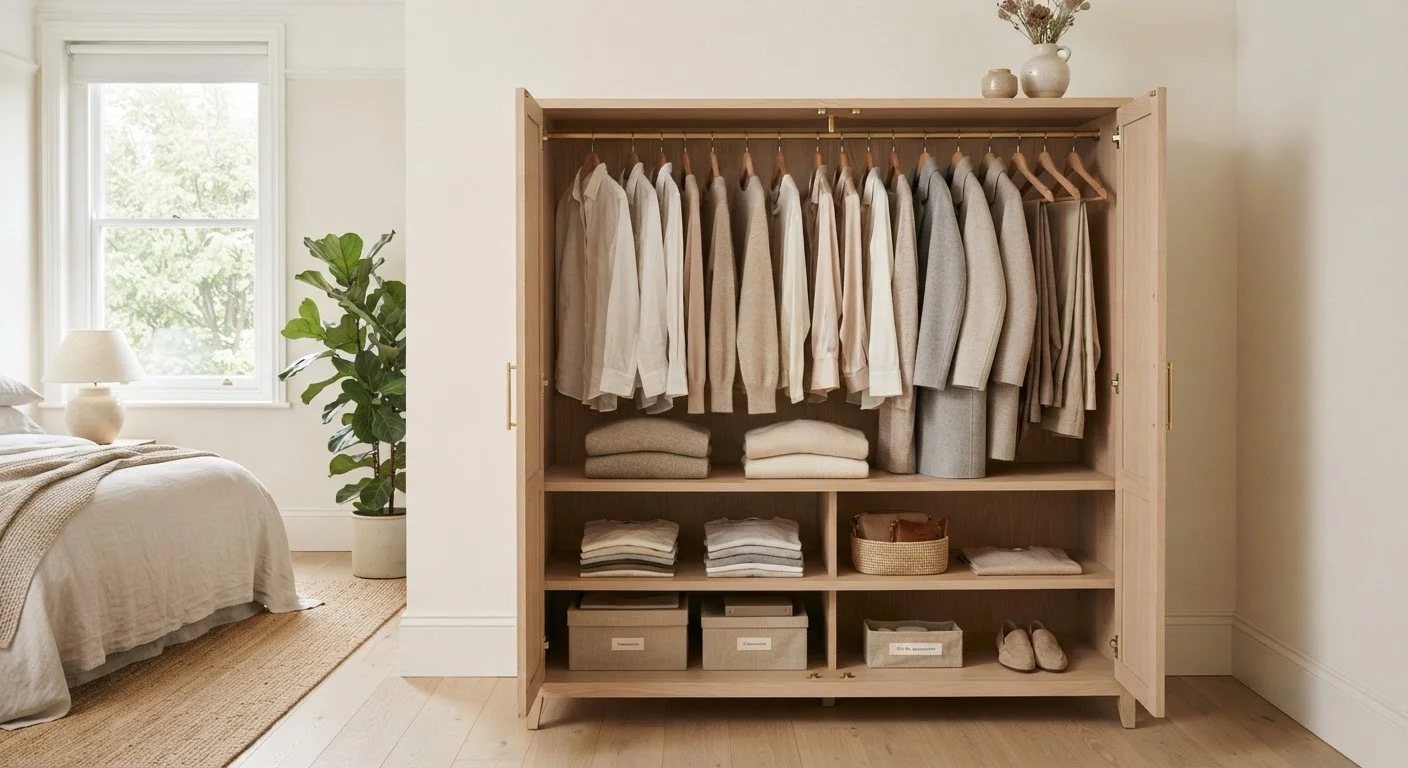
What 'Mostly Neutral' Actually Means
A mostly neutral wardrobe typically means that the bulk of your clothing — think 70 to 90 percent — sits in a palette of whites, creams, beiges, tans, grays, navy, and black. The idea isn't to ban color outright, but to build a core that mixes freely with itself, so every item plays nicely with every other item you own.
This approach overlaps with capsule wardrobe thinking, though the two aren't identical. You can explore how they compare in our piece on capsule versus maximalist dressing. Understanding the distinction matters because neutral dressing is a palette strategy, not just a quantity strategy — you could own 60 pieces and still be operating from a neutral base.
Everything pairs with everything effortlessly
When your closet shares a common palette, you can pull pieces together quickly without worrying about clashes. This dramatically cuts down on morning decision fatigue.
Stretches a tight clothing budget further
Every new piece you add works with what you already own, so you're not buying items that only partner with one specific outfit. This kind of wardrobe math pays off especially well for budget-conscious shoppers — see wardrobe staples that actually earn their keep for pieces that anchor this strategy.
Travels and packs with far less stress
A bag full of neutrals means you can re-wear and recombine pieces across a trip without looking repetitive. Fewer items cover more occasions when the palette is cohesive.
Creates a consistent, polished personal aesthetic
Neutrals tend to read as intentional and put-together, which can strengthen your overall style identity. Consistency in palette is one of the hallmarks of a recognizable personal style.
Seasons and trends matter less
Classic neutrals don't go out of style the way statement colors or trend-driven hues do, meaning pieces stay relevant longer and reduce the pressure to refresh your wardrobe each season.
The Real Downsides Worth Knowing
No approach is without trade-offs, and neutral wardrobes have a few consistent pain points that honest fashion advice shouldn't gloss over.
Self-expression can quietly disappear
Color is one of the fastest ways humans communicate personality and mood through clothing. A wardrobe stripped of it can start to feel like a uniform rather than a reflection of who you are.
Outfits can blur together visually
When everything occupies the same tonal range, individual outfits can look indistinguishable — both to you and others. This undermines the variety you hoped to create.
Undertone mismatches are easy and costly
Warm and cool neutrals clash just as readily as bright colors can, but the errors are harder to spot while shopping. Mixing a yellow-based beige with a pink-based gray can look unintentionally off.
Dressing for joy becomes harder
Research on clothing and mood — sometimes called 'enclothed cognition' — suggests that what we wear affects how we feel. An entirely muted closet can dampen the emotional lift that getting dressed can provide.
Special occasions feel underprepared
Celebrations, formal events, and creative environments often call for something beyond a taupe palette. A strictly neutral wardrobe may leave you scrambling or forced into last-minute purchases.
Perhaps the biggest underrated challenge is that neutrals shift subtly in undertone — a warm ivory and a cool white can clash just as awkwardly as two bold colors. Building a cohesive neutral wardrobe still requires color literacy. Our guide to color coordination without a fashion degree covers the undertone principles that make this easier.
Making Neutrals Work Harder for You
If you commit to a neutral foundation, texture and silhouette carry the expressive weight that color usually handles. A chunky knit, a structured blazer, and a fluid silk-feel blouse can all be the same bone-white and still read as completely different outfit energies. Leaning into varied fabrics — linen, denim, ponte, woven cotton — adds visual interest without adding new colors to manage.
The 80/20 Neutral Rule Worth Trying
Rather than going fully neutral, many stylists suggest the '80/20' approach: 80 percent of your wardrobe in neutrals, 20 percent in colors or prints you genuinely love. This preserves all the mix-and-match benefits of a neutral foundation while keeping room for personality and occasion dressing. It's also a gentler on-ramp if you're transitioning from a more colorful or cluttered closet.
Accessories are also where neutral dressers often introduce their personality. A single bold bag, a printed scarf, or a striking pair of earrings can shift the whole register of an otherwise quiet outfit. Think of your neutrals as a canvas rather than a constraint. For a practical framework on building pieces that do double duty across occasions, see our guide to building a work-to-weekend wardrobe on a realistic budget.
When you're ready to expand beyond the basics, understanding how palette shapes your overall look is a natural next step — it helps you identify which tones genuinely flatter you, so any color you add lands with intention rather than accident.