
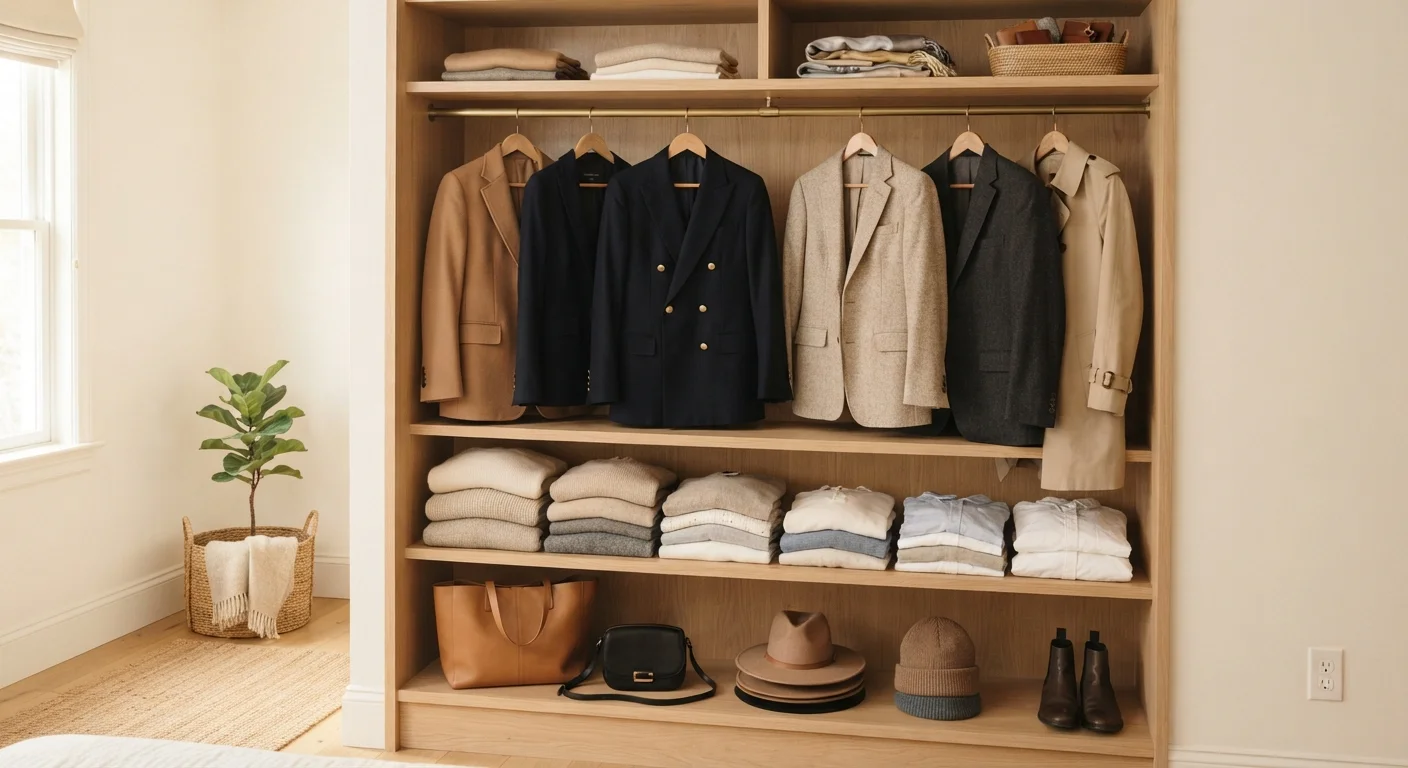
Why One Wardrobe Can — and Should — Do Both Jobs
The idea that you need a completely separate wardrobe for work and one for weekends is one of the most expensive myths in everyday dressing. For most Americans juggling a real schedule and a real budget, maintaining two distinct closets means double the spending, double the clutter, and a whole lot of decision fatigue on Monday mornings.
The smarter approach is building a single wardrobe of thoughtfully chosen pieces that flex across contexts. This isn't about wearing your office clothes to a backyard barbecue — it's about choosing items whose silhouette, fabric, and color are versatile enough to work in both directions with minor adjustments in styling. If you're drawn to developing a more cohesive personal aesthetic while doing this, our article on building a signature look without starting over is a great companion read.
Don't Skip the Audit Step
Jumping straight to shopping without first understanding what you already own is one of the most common — and costly — wardrobe mistakes. A proper audit often reveals that you already have more transitional pieces than you thought, meaning you need to spend far less than expected. See our full wardrobe audit checklist before you open a single browser tab.
Before diving into the steps, gather your tools and honest answers to a few key questions.
What you will need
Full-length mirror
Allows you to evaluate how pieces actually look and layer together before committing to combinations.
Notebook or phone notes app
Track gaps identified during your audit and keep a prioritized shopping list so you buy intentionally.
Garment steamer or iron
Keeps transitional pieces looking polished enough for professional settings without repeated dry-cleaning costs.
Clothing budget tracker
Helps you stay within spending limits and see the cost-per-wear of pieces you already own.
Step-by-Step: Building Your Flexible Wardrobe
Audit what you already own
Pull everything out and sort it into three piles: work-only, weekend-only, and pieces that could reasonably do both. Most people discover they already own several natural crossover pieces — a dark-wash jean, a clean crewneck sweater, a simple leather-look belt — that just haven't been used intentionally. This step prevents you from spending money on things you technically already have.
Not sure where to start? Our step-by-step wardrobe audit guide walks you through the process room by room.
Define your actual dress codes
"Work" and "weekend" mean different things to different people. A construction site and a corporate office are both workplaces. A camping trip and a brunch are both weekends. Write down the three or four specific contexts you dress for most frequently — be concrete. This gives you a filter for every purchase decision and stops you from building a wardrobe for a lifestyle that doesn't reflect your real week.
Identify your core color palette
The most budget-efficient wardrobes orbit around two or three neutrals — navy, charcoal, tan, white, or black are common anchors — plus one or two accent colors you genuinely reach for. When every piece you own coordinates with every other piece, you multiply outfit combinations without multiplying cost. Check out our piece on building a mostly neutral wardrobe for a deeper look at the trade-offs.
Build your transitional foundation pieces
Once you know your gaps and your palette, prioritize these categories in order of versatility:
- Trousers or dark-wash straight-leg jeans — dress up with a button-down, dress down with a graphic tee
- A structured blazer or cardigan — transforms almost any casual top into a work-appropriate layer
- Solid-color T-shirts and long-sleeves in your neutrals — the connective tissue of any flexible wardrobe
- One pair of clean, simple footwear — a low-heeled boot, a leather sneaker, or a loafer that reads both ways
- A versatile outer layer — a trench coat or a clean zip jacket bridges seasons and dress codes equally well
For a detailed breakdown of which pieces genuinely earn their keep season after season, see our guide on wardrobe staples that actually earn their keep.
Use accessories to shift the register
Accessories are the budget-friendly engine of work-to-weekend dressing. The same outfit reads differently depending on whether you're wearing a silk scarf and structured bag versus a canvas tote and hoop earrings. Keep a small collection of interchangeable accessories — a couple of belts, two or three bags at different formality levels, and minimal jewelry — and you can substantially change an outfit's energy without changing a single clothing item.
Shop intentionally and track your spending
With your list of specific gaps in hand, shop with purpose rather than browsing for inspiration. Thrift stores, clothing swaps, and end-of-season sales can all deliver quality at lower prices — our article on thrift shopping vs. fast fashion compares both approaches honestly. Keep a running cost-per-wear estimate in your notes app, and set a per-item ceiling that reflects your actual budget. The Budgeting Basics hub has straightforward strategies if you need help structuring a clothing budget within your broader household finances.
Think Cost-Per-Wear, Not Sticker Price
A $60 blazer worn 80 times costs less per use than a $15 top worn twice. When evaluating whether a piece earns its place in a dual-purpose wardrobe, divide the price by how many realistic occasions it will cover. This single habit shifts your mindset from bargain-hunting to genuine value-building.
Avoid Buying for a 'Future' Lifestyle
It's tempting to buy pieces for the job you hope to have or the weekends you imagine having. Stick to your actual current dress codes and real weekend activities. Clothes bought speculatively often hang unworn, turning a tight budget into wasted money.
Once your foundation is built, the fun part begins: styling across contexts. For ideas on carrying a consistent personal aesthetic from casual to more professional settings, see our piece on translating your style from casual to professional contexts. And when the seasons shift, our guide to seasonal wardrobe transitions will help you rotate pieces without losing the dual-purpose logic you've built.