
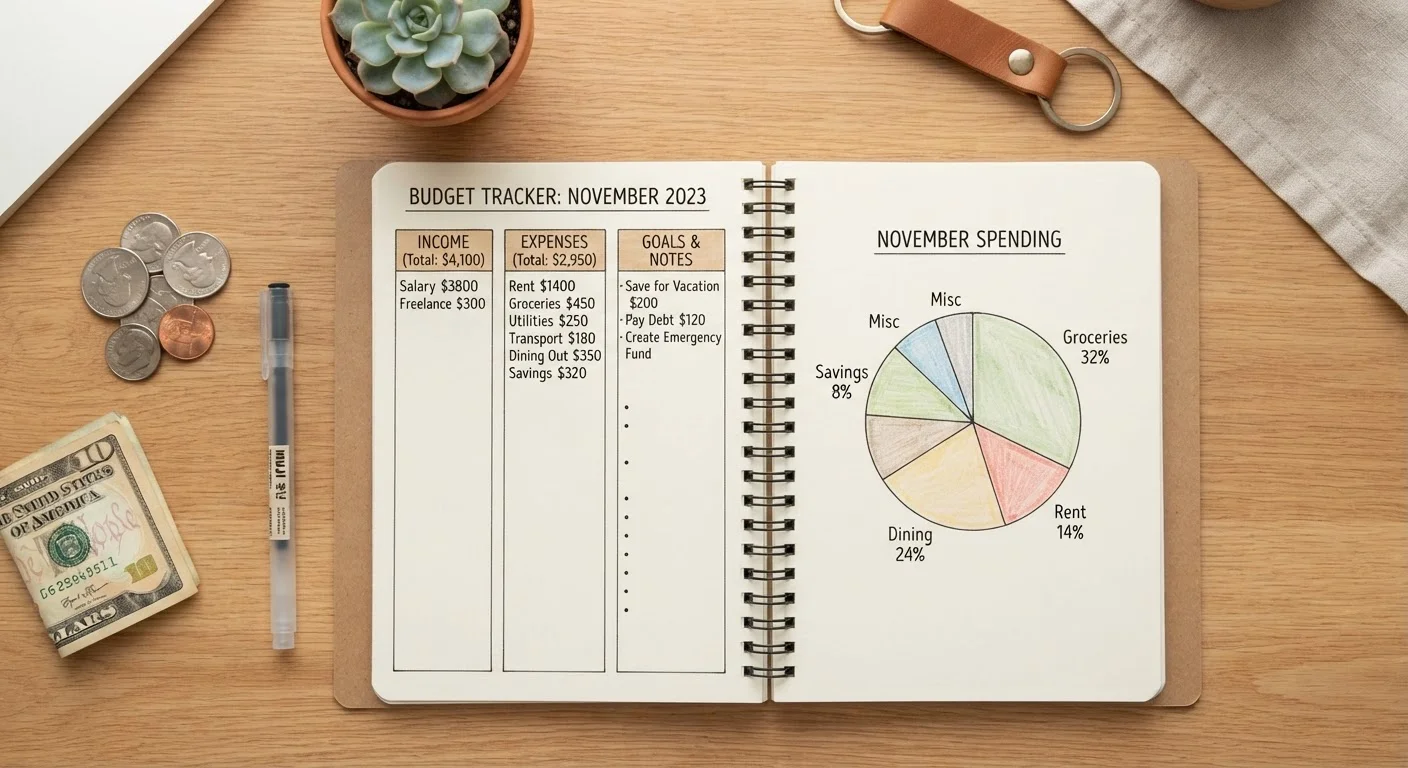
How the Three Categories Work
The 50/30/20 rule divides your monthly take-home pay into three buckets, each with a clear purpose.
50% — Needs
This half of your income covers essential expenses: rent or mortgage payments, electricity, water, groceries, basic transportation, health insurance premiums, and the minimum required payment on any debts. If an expense is non-negotiable for your survival or employment, it belongs here. Understanding exactly which expenses are true needs versus upgraded preferences is often the hardest part of the exercise — Needs vs. Wants: Drawing a Realistic Line offers a practical framework for making that call honestly.
30% — Wants
Wants are everything you choose to spend on beyond the basics: streaming subscriptions, restaurant meals, gym memberships, travel, and clothing beyond what's strictly functional. This category isn't frivolous — it funds quality of life. But it's also the primary lever for adjusting spending when budgets are tight. Even intentional clothing purchases fit here; if you're building a versatile wardrobe, Building a Work-to-Weekend Wardrobe on a Realistic Budget shows how to make the most of that 30%.
20% — Savings and Debt Repayment
The final fifth goes toward building financial resilience: contributing to an emergency fund, retirement accounts, or other savings goals, plus any extra payments made above the minimum on debts. This category is where long-term financial health is built. For guidance on Saving & Debt, exploring structured resources can help prioritize where these dollars go first.
54%
Americans without a formal monthly budget
A survey by the National Foundation for Credit Counseling found that a majority of U.S. adults do not maintain a detailed household budget, underscoring the appeal of simplified frameworks.
~30%
Of income spent on housing alone in many U.S. cities
Federal housing affordability guidelines suggest spending no more than 30% of gross income on housing; in many major metros, median rents now exceed that threshold for median earners.
$6,000+
Median U.S. emergency fund shortfall
Research from the Pew Charitable Trusts has found that a significant share of American households cannot cover a mid-sized unexpected expense, highlighting why the 20% savings category is a priority.
Where the Rule Shines — and Where It Falls Short
The 50/30/20 framework is genuinely useful as a starting point, particularly for people who have never used a budget before. It requires no complex spreadsheets, no per-category tracking, and no daily attention. A single monthly calculation is usually enough to check whether your allocations are roughly on target.
Its simplicity is also its main limitation. The rule assumes a relatively stable income and a cost-of-living environment where 50% of take-home pay can realistically cover necessities. In expensive urban markets — where rent alone can consume more than half of a median income — the percentages may need significant revision. Similarly, households carrying high consumer debt may need to redirect more than 20% toward repayment before savings can meaningfully grow.
Adjust the Percentages to Your Reality
The 50/30/20 splits are guidelines, not financial law. Many financial educators suggest modifying them based on personal circumstances — for instance, shifting to 60/20/20 when living costs are high, or 50/20/30 when aggressively paying down debt. The underlying principle — intentionally dividing income across essential spending, discretionary spending, and savings — matters more than hitting the exact percentages. This is general educational information; a licensed financial adviser can help you determine allocations suited to your specific situation.
The rule also doesn't distinguish between different savings priorities. Putting 20% into a savings account is very different from splitting it between an emergency fund, retirement contributions, and extra debt payments — each with different financial impacts. Supplementing the 50/30/20 framework with a Monthly Budget Setup Checklist can help you think through those details before the month begins.
For those who want more precision, approaches like zero-based budgeting assign every dollar a specific role. Zero-Based Budgeting vs. the Envelope Method offers a direct comparison for readers who outgrow the 50/30/20 framework.
Applying the Rule to Your Own Finances
Starting is straightforward. Calculate your average monthly net income — after taxes and payroll deductions. Multiply that figure by 0.50, 0.30, and 0.20 to find your target dollar amounts for each category. Then compare those targets against what you actually spend in a typical month.
“The beauty of the balanced money formula is that it gives you permission to spend on the things you love, as long as you cover your needs and save for your future first.”
— Elizabeth Warren, U.S. Senator and co-author of 'All Your Worth,' the book that popularized the 50/30/20 framework
Most people find that the needs and wants boundary is the trickiest to draw. A car payment, for example, may be a need if public transportation isn't viable — but the choice of vehicle determines whether the payment is modest or excessive. The rule doesn't adjudicate those judgment calls; it only highlights when a category is out of proportion.
A practical first step is to review two or three recent months of bank and credit card statements, group each expense into one of the three categories, and calculate the percentage of income each represents. That baseline reveals where adjustments are most needed. Pair the exercise with a Monthly Budget Setup Checklist to turn the snapshot into an actionable plan. For discretionary spending discipline — especially in the wants category — even small habits like building a shopping list that actually keeps you on budget can meaningfully reduce overspending.
This article is for general informational and educational purposes only and does not constitute personalized financial, tax, or legal advice. Consult a qualified financial professional for guidance tailored to your individual circumstances.