
Why Most Shopping Lists Don't Work
A shopping list that simply names items isn't doing its full job. Without cost estimates, category structure, or a hard spending limit, it functions only as a memory aid - and a weak one at that. Research on consumer behavior consistently shows that unstructured lists do little to prevent impulse additions or spending overruns once a shopper is in-store.
The real value of a well-built list comes from the decisions you make before you shop. When you know what you need, roughly what it costs, and how much you can spend, you arrive at the store with a clear framework - not just a scrap of paper. That structure is what separates a list that keeps you on budget from one that doesn't.
This is closely connected to broader budget habits that stick long-term - the shopping list is one of the most practical, recurring touchpoints where those habits either hold or break down.
What you will need
How to Build a Budget-Anchored Shopping List
Follow these steps each time you prepare for a shopping trip. The process takes 10-20 minutes but pays back multiples of that in avoided overspending and fewer return trips for forgotten essentials.
Set a hard spending limit before writing anything
Decide on a maximum dollar amount for this specific shopping trip before listing a single item. Pull this figure from your household budget - not from a rough feeling. If you haven't established a monthly shopping budget yet, our monthly budget setup checklist is a practical starting point.
Write the limit prominently at the top of your list where it stays visible throughout the planning process.
Inventory what you already have
Check your pantry, refrigerator, and freezer before writing anything down. This prevents duplicate purchases - one of the most consistent sources of wasted grocery spending. Note items running low versus items that are completely depleted; that distinction affects priority when you need to trim the list later.
Build the list by category, not by memory
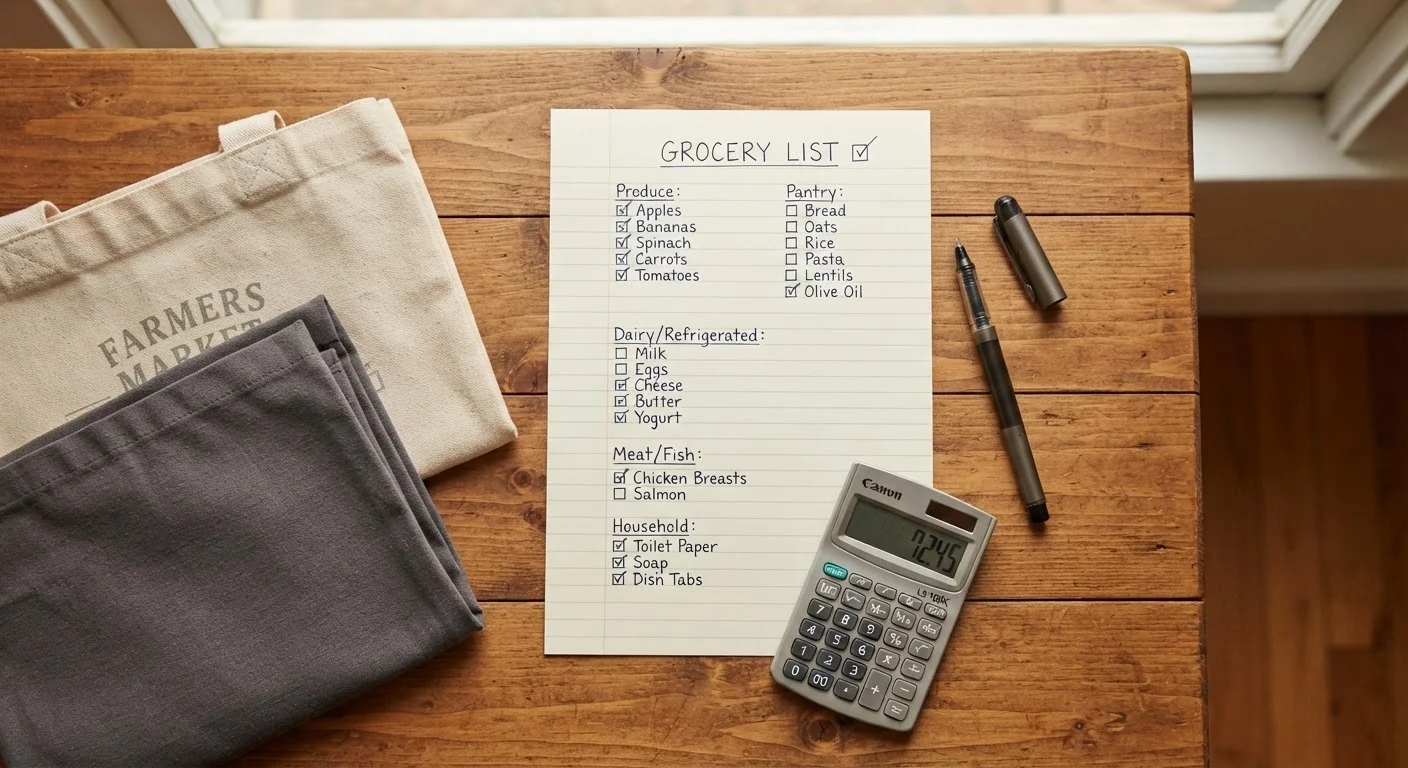
Organize items into logical groupings - produce, proteins, dairy, pantry staples, household supplies, and so on - rather than writing them in the order they occur to you. Category-based lists reduce in-store back-tracking, which cuts browsing time and exposure to unplanned purchases. Most grocery store layouts follow a predictable perimeter-then-interior pattern; aligning your list to that flow speeds up the trip.
Estimate a cost for each item
Next to each item, write a rough price based on what you typically pay. You don't need precision - a rounded estimate is enough. Then add a running subtotal as you go. This turns the list into a budget tracker, making it visible when you're approaching your limit before you reach the checkout lane.
If your estimated total exceeds your limit, cut or downsize optional items now rather than making those decisions under pressure in-store.
Mark items as needs versus wants
Before finalizing the list, flag each item as a need (essential for meals, health, or household function) or a want (desirable but cuttable). This priority coding gives you a fast triage tool if your in-store total runs high - you can remove want-flagged items without deliberating at the shelf.
Commit to the list at the store entrance
Before you pick up a basket or cart, read through your list once. This brief review reactivates your plan and reduces the likelihood of drifting into unstructured browsing. In-store, treat any item not on the list as a candidate for a future trip - not the current one. For the full picture on making every trip more efficient, see our guide on smarter grocery shopping from list to checkout.
Digital Lists Add a Useful Layer
Apps that let you check off items as you shop - and share lists with a household partner in real time - reduce both forgotten items and duplicate purchases. Many also allow you to add price notes alongside each item. The specific app matters less than the habit of using one consistently.
Once you've built the habit, consider connecting your list process to a broader spending picture. Our guide on tracking where your money goes each month can help you see how grocery and shopping expenses fit into your overall cash flow.
Common Pitfalls to Avoid
Even a well-structured list can be undermined by a few recurring mistakes:
- Shopping hungry or rushed: Both states reliably increase unplanned additions. Build your list with a full stomach and adequate time.
- Ignoring the per-unit price: A larger package isn't always better value. Our article on bulk buying for the home walks through when buying more actually saves money.
- Adding items at the store: Unless something is a genuine replacement for a listed need, it belongs on next trip's list - not the current cart. For a structured way to pause before adding anything unplanned, see our pre-purchase checklist.
- Skipping the cost estimate step: Listing items without rough prices makes the budget ceiling invisible until checkout - when it's too late to adjust easily.
Store Layout Is Designed to Extend Your Trip
Retailers deliberately place high-margin items at eye level and position staples like dairy and bread at the back of the store. A category-organized list keeps you on a deliberate path rather than a wandering one. Knowing this dynamic doesn't make you immune - it just makes the list more important, not less.
For more on the psychology driving unplanned purchases, why impulse purchases feel rational in the moment is a useful companion read.