
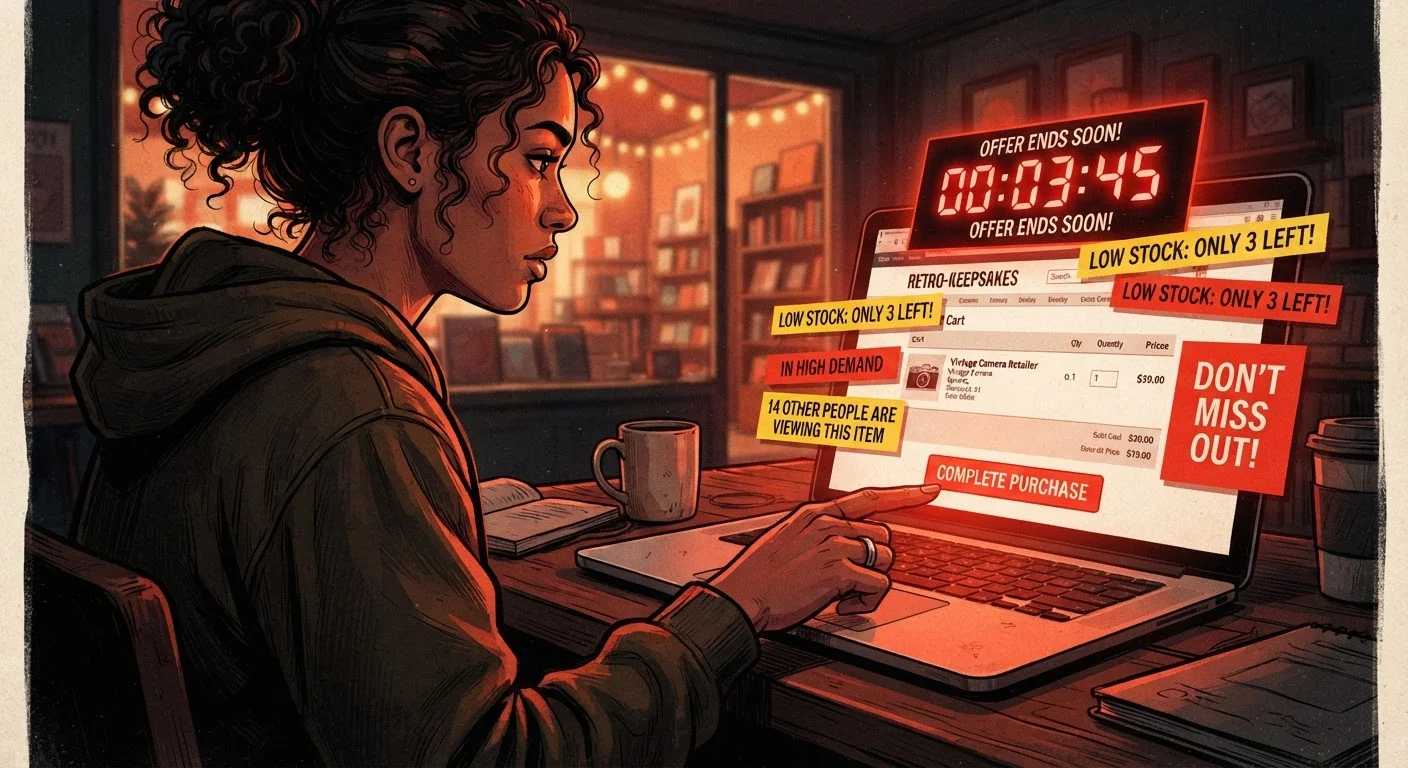
The Rationalization Happens Fast - and First
When you reach for something you didn't plan to buy, it rarely feels impulsive. It feels obvious. You needed it anyway. The price is good. You deserve it. These aren't lies exactly - they're rapid justifications your brain generates after the emotional decision has already been made.
This sequence is well-documented in behavioral research. Emotional processing moves faster than deliberate reasoning. By the time you're consciously thinking about a purchase, the emotional system has already voted yes - and your rational mind is playing catch-up, not gatekeeper.
Understanding this sequence is worth more than willpower. You can't outrun a process that's already finished. What you can do is recognize the conditions that trigger it - and learn to create distance before those conditions take hold.
Awareness Lowers Susceptibility
Studies in consumer psychology suggest that simply knowing about a persuasion tactic reduces its effectiveness - a phenomenon called the 'persuasion knowledge effect.' You don't need to avoid retail environments; you just need to recognize what's happening when urgency cues appear.
What Retail Environments Actually Do to Your Decision-Making
Urgency and scarcity messaging aren't informational - they're functional. "Only 3 left in stock" and "Sale ends in 00:47:22" are designed to activate loss aversion, a well-established cognitive tendency to weight potential losses more heavily than equivalent gains.
When you believe you might miss something, your decision window compresses. There's less time to think about whether you actually want the item, whether it fits your budget, or whether a better option exists elsewhere. Retailers - particularly in e-commerce - understand this compression and build checkout flows around it.
Physical stores use a parallel toolkit: product placement at eye level and near exits, checkout lane merchandise, sensory elements like lighting and scent. For more on how these environmental tactics work together, see spending traps hidden in everyday retail environments.
~49%
Share of purchases that are unplanned
Research published in the Journal of Retailing has consistently found that close to half of in-store purchases are unplanned at the point of entry.
2-3x
Loss aversion weight vs. equivalent gain
Behavioral economists, including Nobel laureate Daniel Kahneman, have documented that people generally feel losses roughly twice as strongly as equivalent gains - the mechanism behind urgency messaging.
The Pause Is the Strategy
There's no single habit that eliminates impulse purchases, but creating friction between impulse and checkout consistently reduces them. A 24-to-48-hour wait between seeing an item and buying it is among the most practical interruptions available. It's not about denial - it's about letting the emotional urgency dissipate before you commit real money.
Other reliable friction strategies include: closing a tab and returning later, removing saved payment information to add a checkout step, or using a wishlist as a holding area rather than a decision queue. None of these require exceptional self-control. They just restructure the moment of purchase.
Before any unplanned buy, a few specific questions can interrupt the emotional momentum: Do I have a place for this? Have I compared prices elsewhere? Would I still want this in a week? For a complete pre-purchase framework, see our pre-purchase checklist before adding anything to your cart.
Use the Wishlist as a Cooling Chamber
Instead of buying on impulse, add items to a wishlist or saved-for-later folder and revisit in 24-48 hours. Most unplanned desires fade without the initial emotional trigger present. If you still want the item two days later, the purchase is far more likely to be intentional.
Planning Ahead Reduces the Battlefield
Impulse buying doesn't only happen to people with low discipline - it happens when anyone enters an optimized retail environment without a clear prior intention. Retailers compete aggressively for unallocated buying decisions. The fewer unallocated decisions you bring into a store or checkout flow, the less effective these tactics become.
A structured shopping list does more than keep you organized. It reduces the number of in-the-moment choices you face, which directly lowers exposure to impulse triggers. Decision fatigue - the documented decline in decision quality after many choices - is real, and retailers know that tired shoppers spend more. See how to build a shopping list that keeps you on budget for a practical approach.
This is especially relevant in grocery contexts, where repeat visits and routine purchases create consistent exposure to impulse opportunities. Practical habits for that specific environment are covered in smarter grocery shopping from list to checkout. For broader smart shopping tips, these principles apply across every retail category.