
Start Before You Leave the House
The most effective grocery run begins at home, not in the store. Before writing a single item down, do a quick audit of your refrigerator, freezer, and pantry. Knowing what you already have prevents duplicate purchases — one of the most common sources of both waste and overspending.
Once you know what you need, build a list organized by store section: produce, proteins, dairy, dry goods, and frozen. This structure reduces backtracking, limits exposure to unplanned displays, and helps you move through the store with purpose. For a deeper look at structuring your list effectively, see how a well-built shopping list reduces overspending.
Setting a realistic spending target before you shop — rather than checking the total at checkout — also keeps decisions grounded throughout the trip. This connects directly to broader household financial habits covered in the Budgeting Basics hub.
Navigate the Store With Intention
Grocery stores are designed to encourage unplanned purchases. End-cap displays, eye-level product placement, and strategically placed impulse items near checkout are all deliberate layout choices. Recognizing these tactics doesn't require cynicism — just awareness.
Sticking to the perimeter of most stores naturally surfaces produce, proteins, and dairy before packaged goods. This isn't a rule, but a useful orientation. When you do go into the interior aisles, a specific list prevents browsing from becoming buying.
Shop with a full stomach whenever possible.
Hunger measurably increases the likelihood of impulse purchases and larger portion selections. Shopping in a neutral physical state keeps decisions more deliberate and list-driven.
Use unit pricing to compare true value between products.
Package size, promotional positioning, and branding can all obscure whether an item is actually a better deal. Unit price strips those variables away and gives a direct cost comparison.
Stick to the shopping list as a default, not a suggestion.
Lists reduce cognitive load in a high-stimulus environment and serve as a pre-made decision framework. Every unplanned item requires a deliberate override of the plan rather than a passive addition.
Plan meals before you plan your list.
Shopping to support specific meals reduces vague or aspirational purchases that never get used. It also naturally prevents buying duplicate items you already have at home.
Designate a spot at home for items nearing their use-by date.
Reducing food waste starts at home but is reinforced by how you shop. A visible "use first" shelf or bin ensures older produce and proteins get incorporated into meals before they're lost.
Unit pricing — the cost per ounce, pound, or count displayed on the shelf label — is one of the most underused tools available to shoppers. Two identically named products at different package sizes can have very different per-unit costs. Taking ten seconds to compare these figures often reveals better value without any sacrifice in quality. This same logic applies when evaluating when bulk buying genuinely saves money versus when it costs more.
Cart Decisions That Shape What You Eat
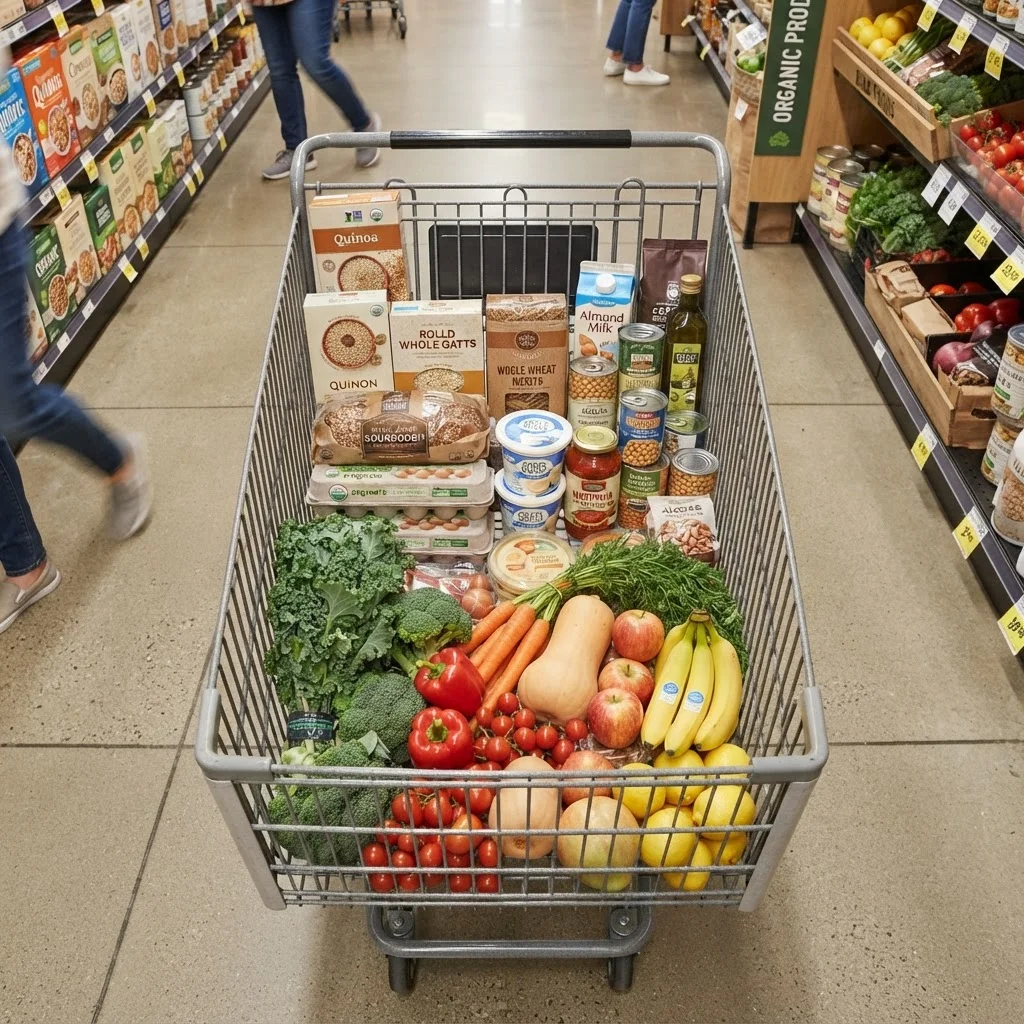
What goes in your cart shapes meals for the entire week. Structuring your cart around whole foods — vegetables, fruits, lean proteins, and less-processed grains — tends to produce better nutritional outcomes over time. For practical guidance on aligning your cart with nutrition goals, see grocery shopping habits that support a more nutritious diet.
30–40%
Share of the U.S. food supply wasted annually
According to the USDA, between 30 and 40 percent of the U.S. food supply is wasted, with a significant portion occurring at the consumer household level.
$1,500+
Estimated annual household food waste cost
The Natural Resources Defense Council has estimated that the average American family of four discards roughly $1,500 worth of food per year.
One practical technique: before adding a packaged item, ask whether it's on your list and whether a simpler alternative is available nearby. This one-question habit interrupts the automatic reach-and-place motion that drives much of unplanned spending. For a broader pre-purchase framework, this pre-purchase checklist applies equally to grocery and non-grocery shopping.
Frozen Produce Is Often Just as Nutritious
Frozen fruits and vegetables are typically flash-frozen shortly after harvest, which preserves much of their nutritional content. They also reduce waste because you use only what you need. When fresh produce is out of season or priced high, frozen is a practical and nutritionally sound alternative — not a compromise.
Checkout and After: Closing the Loop
Checkout is where many shoppers disengage, but it's also where the feedback loop begins. Review your receipt — either in line or later that day — and note any items you bought off-list. Over several shopping trips, patterns emerge: the same snack category, a recurring impulse aisle, or a product you consistently overbuy and waste.
Tracking even rough totals over a month builds meaningful awareness of where grocery spending actually goes. This kind of simple, consistent monitoring is a foundational habit in managing household savings and debt. If you use store loyalty programs, digital coupons, or cashback apps, knowing how they work — and when they drive unnecessary purchases rather than genuine savings — matters. Understanding the mechanics of coupons, cashback, and promo codes helps you use these tools without letting them reverse your savings.
Loyalty Programs: Useful, but Not Neutral
Store loyalty cards and apps can offer genuine savings on items you already buy. However, they also collect purchasing data and are designed to surface personalized promotions that may encourage spending beyond your list. Use them selectively, and treat any in-app "deal" the same way you'd treat an in-store display — check whether the item was already on your list before adding it.