
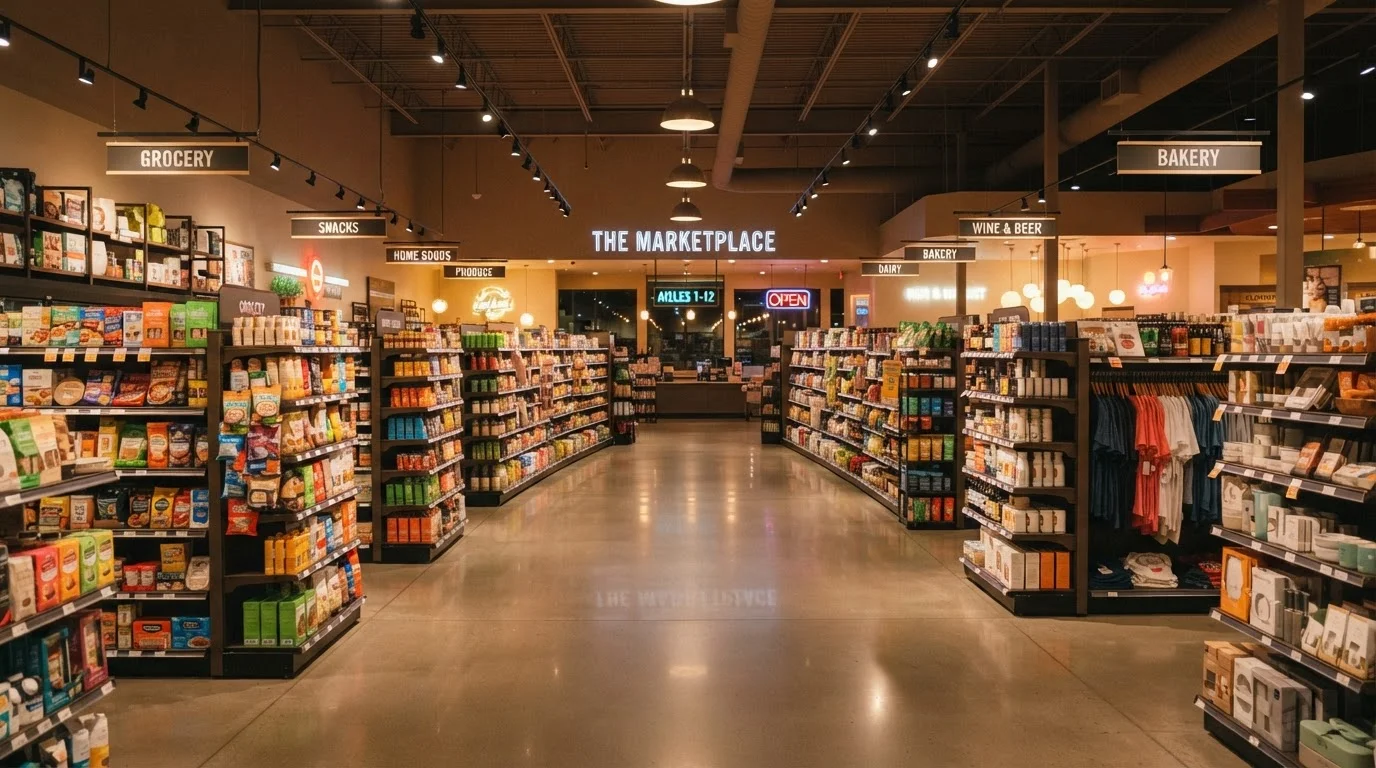
How Retail Environments Are Engineered
Walking into a well-designed retail store feels effortless — and that ease is entirely intentional. Lighting, music tempo, aisle width, product placement height, and even ambient scent are calibrated to slow movement, increase dwell time, and lower psychological resistance to buying. These aren't hunches; they're the product of decades of behavioral research funded by the retail industry itself.
Understanding the mechanics behind these environments doesn't require suspicion of every purchase. It simply means recognizing that you're navigating a space that has been optimized for someone else's revenue — not your household budget. Pair this awareness with practical habits, and the environment loses much of its leverage.
~60–70%
Share of supermarket purchases that are unplanned
Research published in marketing and consumer behavior literature consistently finds that a majority of grocery purchases are decided in-store rather than before arrival.
Up to 30%
Estimated sales lift from strategic in-store scent
Academic studies in retail atmospherics have found that congruent ambient scent — such as fresh bread near a bakery section — can measurably increase dwell time and purchase rates.
The mistakes below represent the most common ways shoppers are nudged off their intended spending path — along with straightforward steps to stay on it.
Common Mistakes Shoppers Make In-Store
Most overspending in retail settings isn't the result of weak willpower. It's the predictable outcome of encountering environments specifically designed to exploit normal human decision-making patterns. Identifying where those patterns get exploited is the practical starting point.
Entering a store without a fixed spending limit or written list.
Why it happens: Most shoppers assume they'll remember what they need and stay disciplined in the moment — but retail environments are specifically optimized to introduce new wants.
Treating anchor pricing as a reliable reference for value.
Why it happens: When a product shows a crossed-out 'original' price next to a sale price, the brain instinctively uses the higher number as its comparison point — a well-documented cognitive bias known as anchoring.
Browsing longer than necessary due to deliberate store layout friction.
Why it happens: Essential categories — produce, dairy, and pharmacy sections — are typically placed at the back or perimeter of stores, requiring shoppers to pass high-margin display items to reach them.
Making unplanned purchases at the checkout zone.
Why it happens: The checkout area is stocked with low-cost, high-margin impulse items precisely when shoppers are experiencing decision fatigue from the rest of their trip. Resistance is genuinely lower at this stage.
Responding to scarcity or urgency signals without verifying them.
Why it happens: Phrases like 'only 3 left' or 'today only' trigger a fear-of-missing-out response that compresses the time available for rational evaluation. This is explored further in why impulse purchases feel rational in the moment.
Treating 'bundle' or 'multipack' pricing as automatic savings.
Why it happens: Bulk pricing feels economical, but it only saves money if you actually use all the units before they expire or become irrelevant — and if it doesn't cause you to consume faster.
These Tactics Are Legal and Widespread
Retailers invest heavily in behavioral research to design environments that encourage unplanned spending. None of these tactics are deceptive in the legal sense — they work precisely because they feel natural. Awareness is your primary tool: the moment you recognize a nudge, its power diminishes significantly.
For a broader look at where household money quietly disappears, see spending categories most household budgets overlook — many of those gaps start at the retail level.
Building Habits That Hold Up In the Moment
Awareness alone won't neutralize every retail nudge — habits and pre-commitments are more reliable. The most effective protection happens before you enter the store: a written list, a hard spending ceiling, and a clear reason for the trip. Smarter grocery shopping from list to checkout offers practical structure for building these habits into a repeatable routine.
Loyalty Programs Aren't Always Savings
Reward points and member discounts can create a false sense of earning while spending. Studies in consumer behavior suggest that framing a purchase as 'earning rewards' lowers psychological resistance to spending more. Before enrolling in a program, consider whether you'd buy those items at full price without the rewards incentive.
It's also worth noting that spending patterns vary by season. Certain product categories follow predictable price cycles, and knowing when retailers are pushing volume — rather than genuinely discounting — adds another layer of awareness. Seasonal shopping patterns worth knowing explains those cycles in plain terms.
The goal isn't to approach shopping with anxiety or distrust. It's to walk in with a clear plan, recognize when the environment is working against that plan, and make deliberate choices rather than reactive ones. That shift — from reactive to deliberate — is where meaningful household savings tend to accumulate over time.