
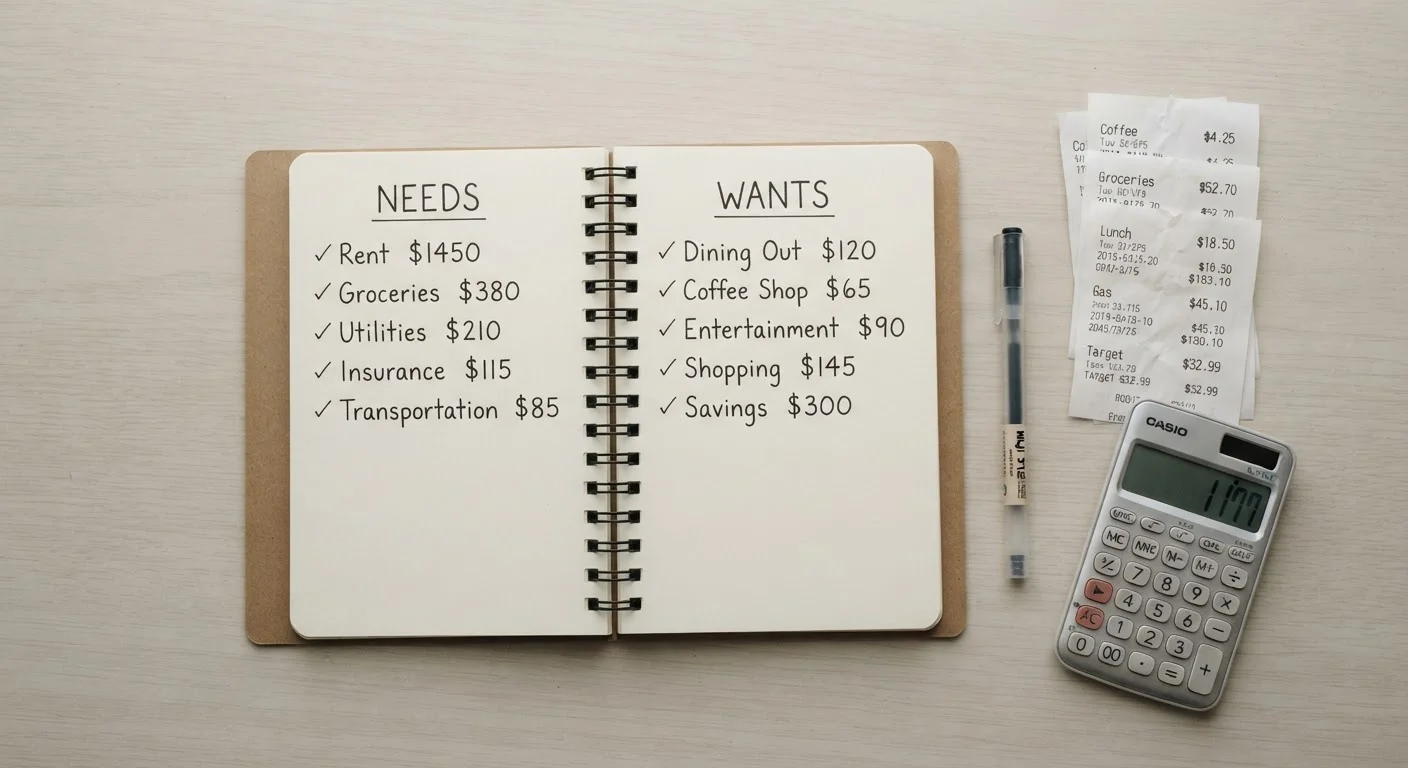
Why the Line Is Blurrier Than It Sounds
Ask someone whether groceries are a need, and they'll say yes without hesitation. Ask whether a weekly dinner out is a want, and most people agree. But then ask about the daily work lunch, the streaming subscription that doubles as background noise while they cook, or the slightly nicer running shoes recommended by a physical therapist — and the answers get complicated fast.
The needs-vs.-wants distinction is a cornerstone of personal finance for good reason: it forces honest self-reflection about where your money actually goes versus where you tell yourself it goes. But applying it in real life requires more than a simple binary. It requires context.
This is worth understanding before you judge any single expense in isolation. The same item — a car, a cell phone, a particular food — can be a genuine need for one household and a clear want for another. What matters is whether removing it would compromise your health, safety, or ability to earn a living.
Context Changes the Calculation
What counts as a need is not universal — it depends on your health, job, location, and family situation. A diabetic who needs refrigerated medication has different baseline costs than someone without a chronic condition. Someone in a rural area without public transit has different transportation needs than an urban resident. Apply the framework to your life, not a generic template.
A Practical Framework for Categorizing Expenses
Rather than debating each line item from scratch, try running every expense through three questions:
- Would going without this harm my health, safety, or ability to earn income? If yes, it's almost certainly a need.
- Am I paying for a base-level version of this, or an upgrade? The base level may be a need; the upgrade is likely a want layered on top.
- Could I meet this need for significantly less? If yes, the difference between what you pay and what you'd need to pay is the want-component of that expense.
This three-question test keeps you honest without demanding a spartan lifestyle. It acknowledges that needs have a minimum threshold — and that anything above that threshold enters want territory. See questions to ask before any major purchase for a structured approach to larger one-time spending decisions.
Try a 30-Day Expense Audit
Before reworking your budget, spend one month logging every purchase — no matter how small — and tagging it as a need, want, or hybrid. Real spending data is far more revealing than estimates. You'll spot patterns that change how you prioritize, and you'll have concrete numbers to work with instead of guesses.
Common Expenses and Where They Actually Fall
Some expenses are straightforward. Rent or mortgage, basic utilities (electricity, heat, water), essential medications, and transportation to work are near-universal needs. Others — gym memberships, premium cable packages, frequent restaurant meals, name-brand clothing — are widely recognized wants.
The tricky middle ground includes:
- Internet service: A need for remote workers, students, and job seekers; more discretionary for a household with access elsewhere.
- A car: Often a need in areas without public transit; a want in a city with robust transit options.
- Clothing: Work-appropriate clothing is a need; fashion-forward spending beyond functional coverage is a want.
- Food: Groceries for nutritious home cooking are a need; frequent dining out or premium specialty items are wants.
Understanding how fixed and variable expenses interact with this framework is also useful — some needs are fixed monthly costs, while others fluctuate. The article on fixed vs. variable expenses explains that distinction clearly.
~33%
Average share of income spent on housing
According to U.S. Bureau of Labor Statistics Consumer Expenditure data, housing consistently represents the largest single expense category for American households.
50/30/20
Common needs/wants/savings budget guideline
The 50/30/20 rule, popularized in personal finance literature, suggests allocating 50% of after-tax income to needs, 30% to wants, and 20% to savings — though individual circumstances vary widely.
$6,000+
Average annual U.S. household food spending
BLS Consumer Expenditure Survey data shows American households spend thousands annually on food, with a significant share going to dining out rather than groceries.
Putting It to Work in Your Budget
Once you've sorted your expenses honestly, the framework becomes actionable. Start by listing every monthly expense — fixed and variable — then label each as a need, a want, or a hybrid. For hybrids, estimate the need-level cost and note the want-premium you're paying on top.
This exercise often reveals surprising patterns. Many people discover their wants far exceed their needs in volume, even when individual want-purchases feel small. A streaming service here, a subscription box there, weekly convenience-store stops — collectively, these can erode savings faster than one large discretionary purchase.
From there, building a shopping list that keeps you on budget becomes a natural next step, translating your categories into concrete purchase decisions before you ever reach the checkout.
For households working to build savings or manage debt, trimming the want layer — not eliminating it — typically creates the most sustainable financial breathing room. Explore general strategies in the Saving & Debt hub for further guidance.
This article is for general informational and educational purposes only and does not constitute personalized financial advice. Consult a qualified financial professional for guidance tailored to your specific situation.