How Each Method Works
Both zero-based budgeting and the envelope method share a core philosophy: every dollar of your income should have a destination before you spend it. Beyond that principle, they diverge meaningfully in structure and execution.
Zero-based budgeting (ZBB) asks you to start each month from scratch. You list your total expected income, then assign amounts to every category — rent, utilities, groceries, savings, debt payments, entertainment — until your income minus your planned spending equals zero. "Zero" doesn't mean you've spent everything; it means every dollar has a job, including dollars directed to savings or an emergency fund. If your income changes next month, you rebuild the budget from the ground up.
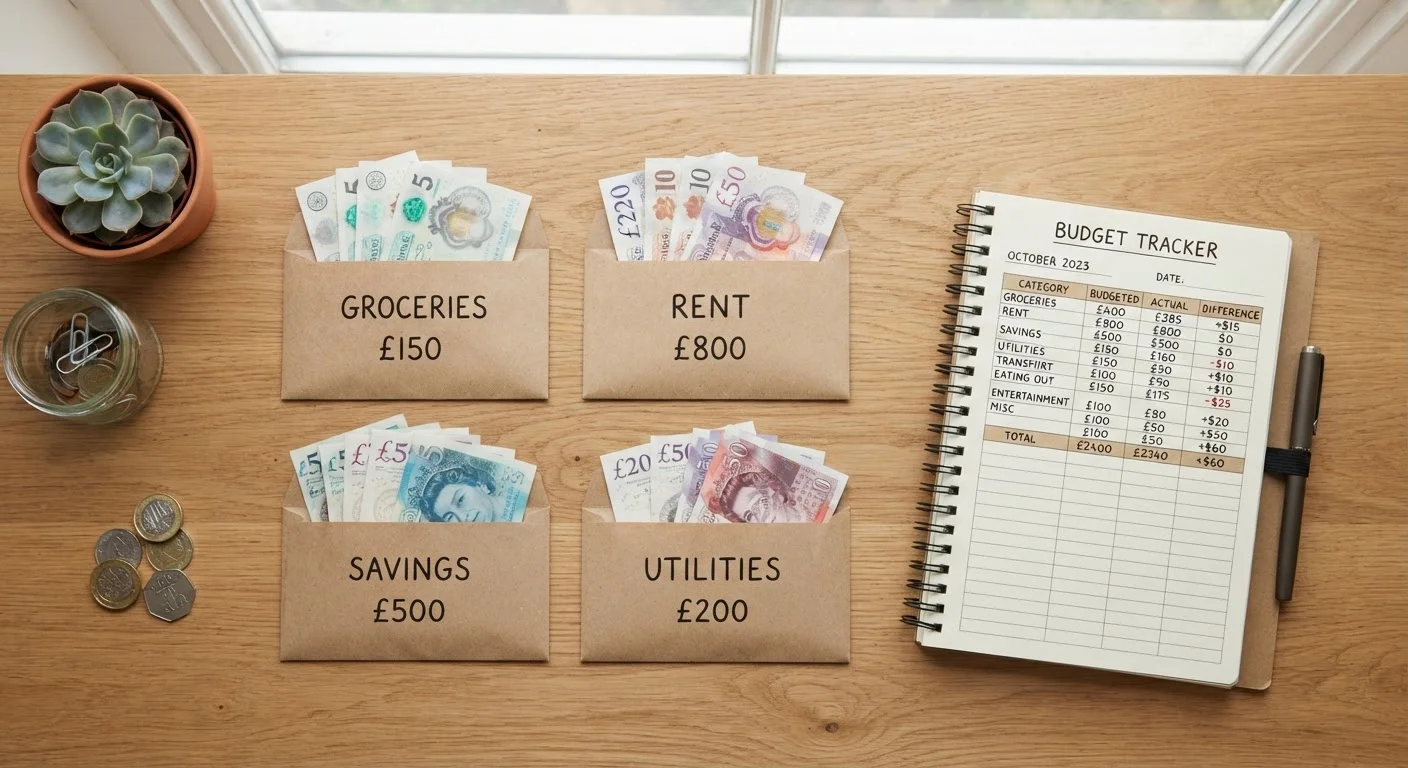
The envelope method takes a more physical approach. You divide your budgeted cash into labeled envelopes — one per spending category. When an envelope is empty, spending in that category stops for the month. Traditionally this involves literal cash, though digital variants use separate accounts or app-based virtual envelopes to replicate the same constraint. See our comparison of manual and digital budgeting tools for more on how technology fits into either method.
| Criterion | Zero-Based Budgeting | Envelope Method |
|---|---|---|
| Core mechanism | Assign every dollar a category until balance = zero | Place cash in labeled envelopes per category |
| Works best for | All income and expenses, fixed and variable | Variable, discretionary spending categories |
| Primary format | Spreadsheet or budgeting app | Physical cash or virtual envelope apps |
| Mid-month adjustments | Easy — update numbers as needed | Possible, but weakens the system's guardrails |
| Behavioral reinforcement | Relies on self-discipline to honor the plan | Hard stop when envelope is empty |
| Suits irregular income | Yes — rebuilt from scratch each month | Less naturally — cash amounts must be recalculated |
| Learning curve | Moderate — requires detailed tracking | Low — simple and immediately tangible |
Key Differences: Flexibility, Friction, and Fit
The practical differences between these two systems show up most clearly in day-to-day use.
Flexibility: Zero-based budgeting is easier to adjust mid-month. If you underspend on dining and want to redirect that money to a car repair, you update a number in your spreadsheet or app. With the envelope method, mid-month transfers between envelopes are possible but can undermine the system's psychological guardrails — which are its greatest strength.
Friction: The envelope method creates deliberate friction by requiring cash withdrawals and physical handling. For people who overspend because digital payments feel abstract, that friction is a feature, not a bug. Zero-based budgeting carries less friction but demands more self-discipline to honor the numbers you've written down.
Coverage: Zero-based budgeting covers all expenses, including fixed bills paid by check or autopay. The envelope method works best for variable, discretionary categories like groceries, dining, and personal care — most people don't stuff an envelope with rent cash each month.
~33%
Americans who follow a formal monthly budget
According to a Gallup survey, roughly one-third of U.S. households maintain a detailed monthly budget, suggesting most people still manage money without a structured system.
65%
People who say they couldn't cover a $1,000 emergency
A Bankrate survey found that nearly two-thirds of Americans would struggle to fund an unexpected $1,000 expense, underscoring the value of intentional spending plans.
For a broader look at how budgeting works as a financial foundation, our guide on household budgeting from the ground up covers the fundamentals in detail.
Choosing the Right System — or Combining Both
There's no universally correct answer here. The best budgeting method is the one you'll actually maintain. Consider a few honest questions:
- Do you tend to lose track of small, frequent purchases? The envelope method's cash limit eliminates the ambiguity.
- Does your income vary? Zero-based budgeting's monthly rebuild adapts more gracefully.
- Are you comfortable managing finances digitally? ZBB integrates well with apps and spreadsheets.
- Do you have trouble stopping spending once you start? Physical cash envelopes apply a hard stop that willpower alone may not.
Some households use a hybrid: zero-based budgeting for the overall monthly plan, with cash envelopes specifically for the categories most prone to overspending. This captures the analytical rigor of ZBB alongside the behavioral guardrails of the envelope system.
If you're not sure whether budgeting is even right for you, a balanced look at what budgeting can and cannot do can help set realistic expectations. And if you're ready to put either method into practice, the monthly budget setup checklist walks you through the setup process step by step.
Digital Envelope Tools Are a Valid Option
If carrying physical cash feels impractical or unsafe, several budgeting apps replicate the envelope method digitally by letting you create virtual spending buckets funded from your bank account. The psychological effect is somewhat different from handling cash, but the hard category limits still apply. Whichever format you choose, the discipline of sticking to preset limits is what drives results.
This article is for general informational and educational purposes only and does not constitute personalised financial advice. For guidance specific to your financial situation, consider consulting a qualified financial professional.