
Why Most Households Overbuy Without Realizing It
It's a familiar scenario: you pick up another bottle of dish soap at the store, only to come home and find two already under the sink. Or you buy a set of extra batteries, then discover a full pack in the junk drawer. These small redundancies feel minor in the moment, but across an entire household, they add up to real dollars spent on things you already own.
The root cause is almost never carelessness - it's simply a lack of visibility. Most households don't have a reliable picture of what they own, where it's stored, or how much of it they actually have. A household inventory solves that visibility problem directly.
~$1,800
Average annual household spending on supplies and consumables
U.S. Bureau of Labor Statistics Consumer Expenditure data consistently shows American households spend significant amounts on housekeeping supplies and household operations annually.
30-40%
Food wasted per household annually
The USDA estimates that American households waste roughly 30 to 40 percent of the food supply, much of which is tied to poor visibility of what's already on hand.
Beyond overbuying, poor inventory awareness also leads to waste. Perishable supplies expire unused. Duplicates take up storage space. And when something genuinely does need replacing, it's harder to notice against a backdrop of clutter. See our framework for deciding what truly earns its place in your home.
What a Household Inventory Actually Looks Like
A household inventory doesn't have to be elaborate. At its most basic, it's a list - organized by room or category - of what you have and roughly how much. A notes app, a shared cloud document, or a simple spreadsheet all work well. The format matters far less than the habit of maintaining it.
Useful inventories typically capture a few core details: the item category (cleaning supplies, bedding, pantry staples), the general quantity on hand, and whether anything is running low or past its useful life. For electronics and appliances, noting the model and purchase date is worthwhile - particularly for warranty tracking. Our complete electronics ownership guide covers what details are worth keeping for devices specifically.
Start With the Area That Costs You Most
If you're not sure where to begin, start with the category where you most often find yourself overbuying - cleaning supplies, pantry staples, or personal care items are common culprits. Getting one category under control builds the habit before expanding to the rest of the house.
Room-by-room organization tends to work best for most households. If you're not sure where to start, our room-by-room home essentials checklist gives you a practical baseline for what belongs in each space.
The Financial Case for Keeping Track
The money-saving logic behind a household inventory is straightforward: you can't make a smart purchasing decision about something you can't see. When you know what you have, you shop to fill actual gaps rather than perceived ones.
This connects directly to building better shopping habits. A current inventory feeds directly into a more accurate shopping list - one that reflects real need rather than assumption. For a deeper look at how that translates at the store, see our guide to building a shopping list that keeps you on budget.
Inventory awareness also supports smarter decisions about quantity and format. Knowing you go through three rolls of paper towels a month, for instance, helps you assess whether bulk purchasing makes sense - or whether switching to reusable alternatives might cost less over time. Our analysis of paper towels vs. reusable cloths walks through that calculation. For households working to stretch every dollar, this kind of informed decision-making connects to broader budgeting basics that support real financial stability.
Inventory as a Home Management Habit
The most useful household inventories aren't one-time projects - they're living documents that get updated when things are purchased, used up, or replaced. That ongoing awareness is what actually changes shopping behavior over time.
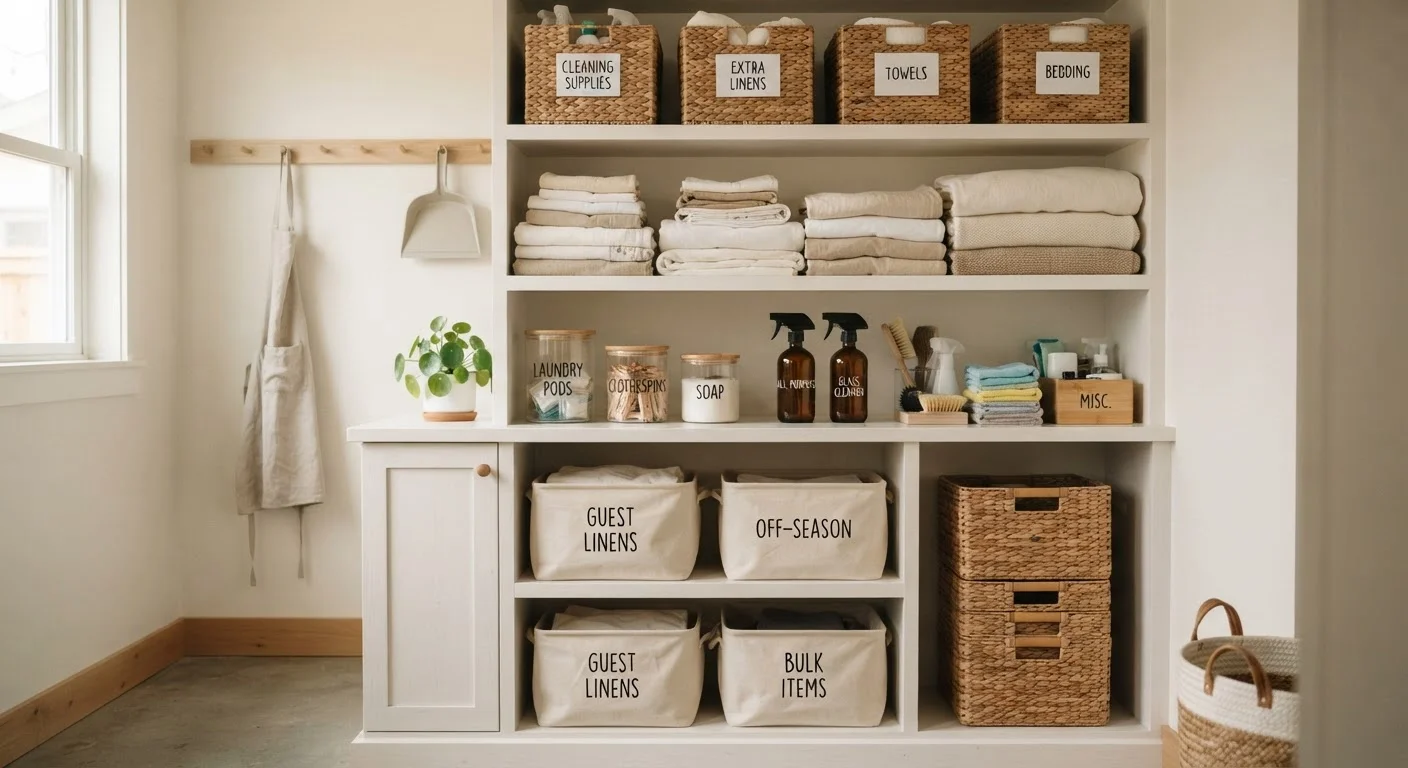
A practical approach: do a brief sweep by category every few months, and update the list when you notice something genuinely running low. This pairs naturally with seasonal cleanouts and works especially well for areas like linen closets, where it's easy to accumulate more than you need. Our guide to keeping a linen closet stocked without overfilling it offers a concrete model for this kind of category-level thinking.
Consistent inventory habits also reinforce a broader truth about home management: knowing what you own is the starting point for spending less on what you don't need. That clarity is one of the simplest, lowest-effort ways to reduce household waste and make your savings work harder over time.