
Why Linen Closets Overflow in the First Place
Most linen closets aren't disorganized because of bad intentions - they're disorganized because linens accumulate slowly and invisibly. A set of sheets from a guest room no one uses, towels kept "just in case," a duvet bought on impulse that doesn't fit any bed in the house. Over time, the closet becomes a holding zone for textile guilt.
The fix isn't a bigger closet. It's a clearer sense of what a household actually needs. If you've never taken stock of what you own versus what you actively use, our household inventory guide offers a practical starting framework.
Audit your linen closet twice a year and remove anything unused in the past six months.
Linens accumulate without obvious prompts to review them. Regular audits prevent the closet from silently filling with items that are outdated, worn, or simply redundant. This habit also surfaces what actually needs replacing before it becomes urgent.
Store complete bedding sets together inside one pillowcase.
Hunting for a matching fitted sheet when you're making a bed at 10 p.m. is a small but genuine friction point. Keeping sets bundled eliminates it entirely and keeps shelves visually tidy.
Limit bath towels to two or three per person using the bathroom regularly.
Extra towels beyond this tend to sit unused long enough to absorb ambient moisture and develop odors - ironic given their purpose. Fewer towels in rotation also means they get washed more frequently, which keeps them fresher.
Store seasonal or rarely used linens outside the main closet.
Heavy winter duvets or extra blankets used only a few months a year take up significant shelf space when stored with everyday linens. Moving them to under-bed storage or a cedar chest frees up prime closet real estate for what gets used daily.
Replace worn linens based on condition, not just age.
A quality towel used and washed carefully can outlast a cheaper one used carelessly by years. Judging replacement by visible wear - thinning, pilling, lost elasticity - is more reliable than replacing on a fixed schedule.
How Much Is Actually Enough
There's a useful rule of thumb in household management: own enough of each category to keep one in use, one in the wash, and one as a backup. That translates directly to linen closet planning.
- Bed sheets: Two to three sets per bed is the practical sweet spot for most households. A family doing laundry once a week may want three; a single person with flexible laundry habits can manage with two.
- Bath towels: Two to three per regular user, plus one or two spares for guests. More than that usually means towels sitting unused long enough to develop a musty smell before they ever get rotated into service.
- Hand towels and washcloths: Four to six of each per bathroom keeps things fresh without overflow. These are small and easy to over-accumulate.
- Pillowcases: These often wear before the matching sheets do. Keep a few extras so you can swap them out independently.
- Extra blankets: One or two per household for cold nights or sick days is reasonable. Seasonal items like heavy quilts can be stored elsewhere - vacuum storage bags work well for this.
2-3 sets
Sheets recommended per bed
Consumer organization and home management experts generally recommend two to three sheet sets per bed as sufficient for most laundry schedules.
2-5 years
Typical bath towel lifespan
With regular use and proper care, bath towels generally remain effective for two to five years before fabric quality noticeably degrades.
For those setting up a new home, the first-time home stocking guide covers starting quantities across every room category.
Organizing What You Keep
Once you've landed on realistic quantities, the storage system itself makes or breaks the closet. A few habits go a long way:
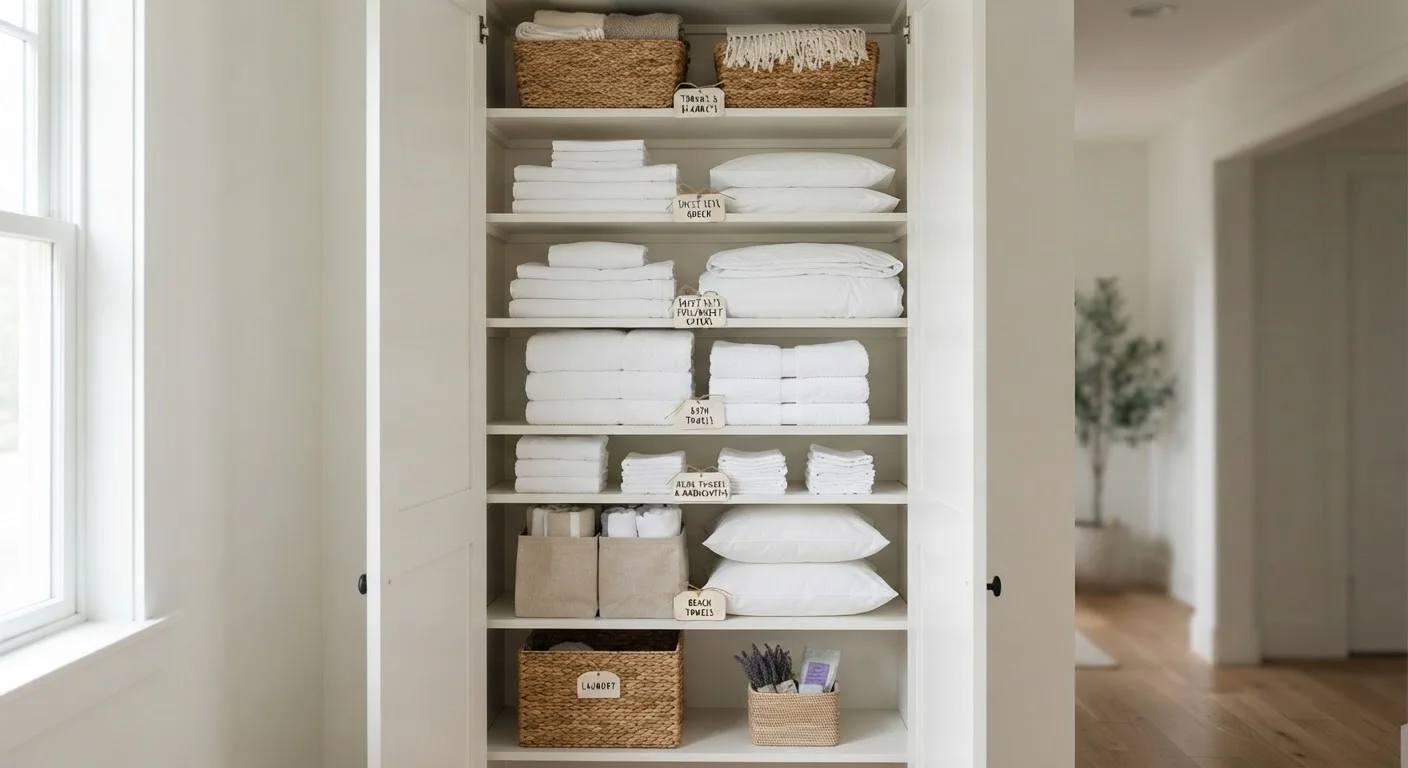
Storing complete sets together - sheet, fitted sheet, and pillowcases folded inside the pillowcase - eliminates the frustrating hunt for matching pieces. Towels folded in thirds and stacked vertically (rather than in tall piles) stay accessible and don't avalanche when you pull one from the middle.
Label shelves if your household has multiple users. Dedicated shelf space for guest linens, kids' bedding, and everyday bath items prevents the closet from becoming a free-for-all. The logic here mirrors the broader principle behind a room-by-room home essentials checklist - defined categories make everything easier to find and restock.
Guest Linens Are a Special Case
If you host guests occasionally, one complete spare set of sheets and two extra bath towels is sufficient for most households. If you have a dedicated guest room in frequent use, consider a separate small bin or shelf section just for those linens so they don't get mixed into daily rotation. Overbuilding a guest linen supply for rare visits is one of the most common ways linen closets become overfull.
When to Let Linens Go
Even good-quality linens have a lifespan. Bath towels typically hold up for two to five years with regular use and proper washing. Sheets can last longer, but pilling, thinning fabric, and elastic that no longer holds its shape are clear signals it's time to replace rather than keep.
Resist the urge to hold onto worn linens "for rags" unless you'll actually use them that way within a defined timeframe. The same discipline that applies to wardrobe basics that earn their keep applies here: if it's not being used, it's just taking up space.
Twice-yearly audits - a quick pass through the closet in spring and fall - keep quantities in check. Donate clean, usable linens to shelters or animal rescues, which often accept textile donations. A leaner closet is easier to maintain and easier to shop for when replacements are genuinely needed, which connects directly to smarter household budgeting basics.
“The goal of an organized home isn't perfection - it's having what you need when you need it, without spending ten minutes looking for it.”
— Shira Gill, Professional home organizer and author of books on minimalist living