
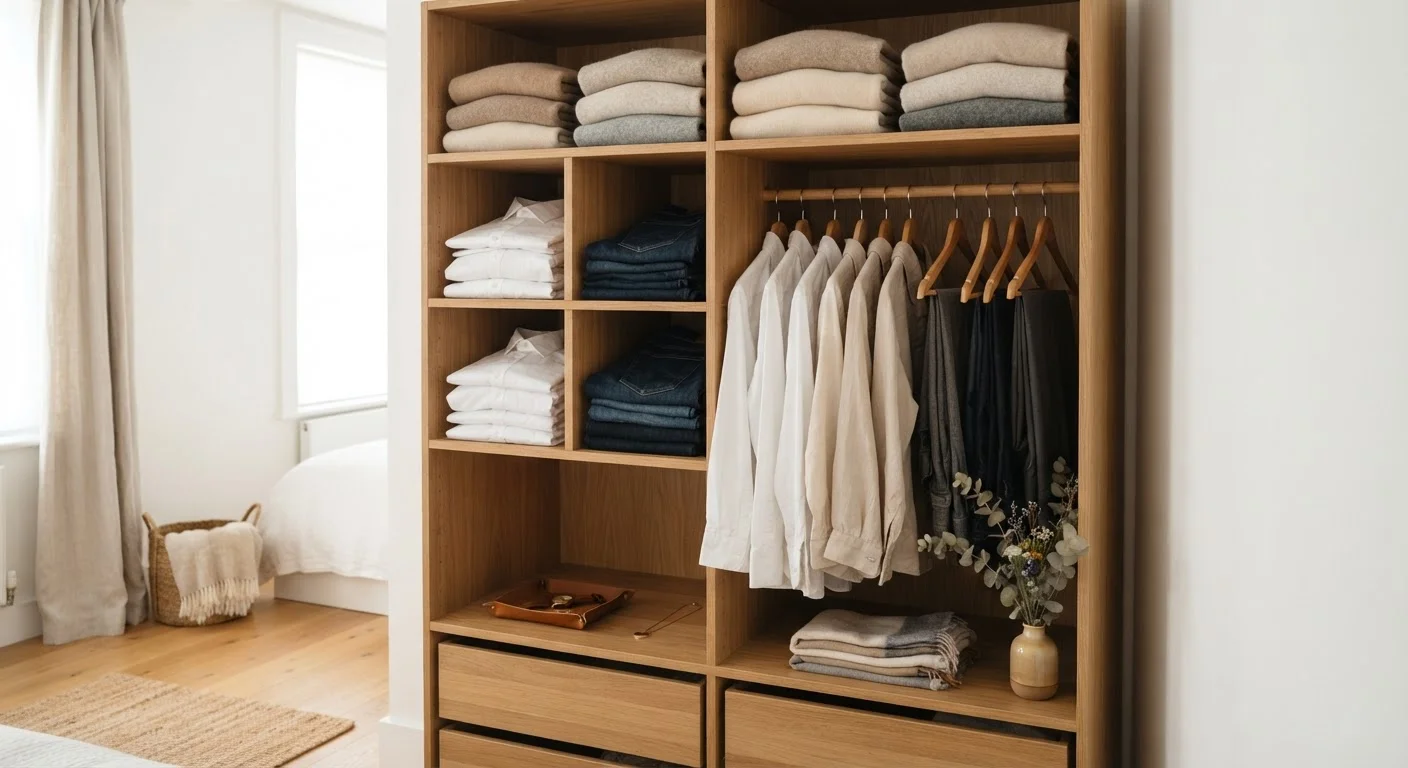
Why Most 'Essentials' Lists Get It Wrong
Every style guide on the internet has a list of wardrobe essentials. The problem? Most of them read like a shopping checklist dressed up as advice — long on items, short on reasoning. A piece earns the label staple not because a magazine says so, but because it genuinely shows up for you: across seasons, across occasions, across the inevitable morning when you have twelve minutes to get dressed and zero patience for difficult outfits.
The real test is versatility under pressure. Can the piece move from a casual Saturday to a low-key work meeting with nothing more than a shoe change? Does it layer without drama? Does it still look pulled-together after a dozen washes? If the answer is yes on at least two of those counts, you're looking at a keeper.
To go deeper on building a cohesive closet around pieces like these, see our guide on how a capsule wardrobe actually works. Below are the pieces that consistently pass the test — and why each one pulls more weight than it looks like it should.
A well-fitted dark-wash jean
Dark denim is one of the few pieces that genuinely crosses the casual-to-dressy line without asking much in return. A slim or straight cut in a deep indigo or near-black wash reads polished enough for a dinner out or a casual office environment, yet comfortable enough for a full weekend. The critical variable is fit: a pair that fits your actual body — not your aspirational one — will always look more intentional than an expensive pair in the wrong cut.
Look for a mid-rise with a clean hem and minimal distressing. Distressed styles narrow your options quickly; a clean wash keeps them open. Fabric matters too — a small percentage of stretch (around 1–3%) helps with comfort and shape retention without making the denim look cheap. Understanding how fabric composition affects everyday wear can help you make a smarter call at the rack.
Fit beats price every time — a well-fitting mid-range pair outperforms an ill-fitting designer one.
A white or off-white button-front shirt
Few pieces have the range of a clean, well-cut button-front shirt in white or a warm off-white. Tucked into trousers with loafers, it's meeting-ready. Half-tucked over jeans with sneakers, it's weekend-ready. Layered open over a fitted tee, it doubles as a lightweight topper. That's three distinct outfit categories from a single hanger.
The quality checkpoint here is fabric weight and opacity. A too-thin shirt becomes see-through under certain lighting — frustrating and limiting. A cotton-poplin or cotton-blend with some structure holds its shape through a long day and presses easily. Look for a collar that lies flat without stays and a placket that doesn't pull at the buttons. These small construction details separate a shirt that works from one that just hangs.
A clean button-front shirt in white is arguably the most format-flexible piece in any wardrobe.
A mid-weight, neutral-toned layer
This one goes by many names — cardigan, blazer, unstructured jacket, zip sweater — but the function is the same: it's the piece that transforms an outfit from incomplete to considered. A mid-weight layer in a neutral (think camel, charcoal, navy, oatmeal) bridges the gap between seasons and between dress codes.
A relaxed blazer in a soft fabric can dress up a t-shirt without demanding a tie. A fine-knit cardigan worn open over a slip dress handles a cool summer evening. The key is choosing one that doesn't read as either too formal or too casual — something that floats in the middle works hardest. Avoid very trendy silhouettes here; an exaggerated shoulder or cropped cut will date faster than you'd like for a foundational piece.
The right mid-weight layer is the difference between an outfit and an almost-outfit.
A versatile flat or low-heeled shoe
Footwear is where wardrobe math gets complicated fast. A shoe that only works with one outfit type is essentially a costume piece — visually interesting but practically expensive. A clean, low-profile flat or modest low heel in a neutral leather or leather-look fabric solves this problem by going with nearly everything.
Classic loafers, simple ankle boots with a block heel, and pointed-toe flats all fall into this category depending on personal preference. The test: can it pair with both trousers and a midi skirt without looking like an afterthought? If yes, it belongs. These styles also tend to age better than trend-driven footwear, which means the cost-per-wear math works out significantly in your favor over time.
A shoe that only works with one outfit type is a costume piece, not a staple.
A well-constructed tee in a solid color
The humble tee is chronically underestimated. A poorly cut one in a fabric that pills or turns thin after three washes is a disappointment — but a well-constructed crew or V-neck in a substantial cotton is one of the most reliable pieces you'll own. The difference shows in the weight of the fabric, the seam finishing, and the way the neckline holds its shape over time.
Stick to solid colors for maximum flexibility: white, grey, navy, and black are the classics for good reason. A quality tee layers under blazers, sits under open button-fronts, and holds its own with a great pair of trousers and interesting earrings. That understated versatility is exactly the point.
A well-made solid tee is the quiet engine behind more outfits than most people realize.
A simple, structured bag in a neutral
Bags are where many people over-invest in novelty and under-invest in function. A structured bag in a camel, black, cognac, or warm tan carries through every season without clashing, handles the transition from work to errands without looking out of place, and doesn't demand that your outfit revolve around it.
Size matters practically: big enough for daily essentials, compact enough to not feel cumbersome. Interior organization — a few pockets, a stable base — matters more than exterior hardware for day-to-day use. A bag that works with 80% of your existing wardrobe without thought is worth significantly more than one that requires outfit planning around it. For those thinking about their closet holistically, this same logic of utility-first applies across building a work-to-weekend wardrobe on a realistic budget.
A bag that requires your outfit to work around it is a liability, not an asset.
Making These Pieces Work Harder for You
Owning the right staples is only half the equation. How you care for them determines how long they stay in rotation. Rough washing cycles, improper storage, and ignoring care labels quietly shorten a garment's life — sometimes dramatically. Our article on why clothes wear out faster than they should covers the specific habits worth breaking.
Rotate, Don't Just Store
Staples wear out unevenly when you reach for the same two or three pieces on autopilot. Rotate deliberately — pulling from your full range of basics keeps wear distributed, extends garment life, and reminds you what you actually own. Seasonal rotations are a practical moment to assess what's still serving you and what's quietly past its prime.
It's also worth thinking about what these staples sit alongside. A wardrobe built largely on neutrals makes mixing effortless — though it comes with its own trade-offs worth weighing. Explore the full case for and against an all-neutral closet before committing either way. And when you're ready to take stock of what you actually own versus what's just taking up space, a structured wardrobe audit checklist can bring real clarity fast.
The goal isn't a minimal wardrobe for its own sake — it's a wardrobe where everything earns its keep. That's a standard worth holding, regardless of your budget, your style philosophy, or the size of your closet.