
What a Capsule Wardrobe Actually Is
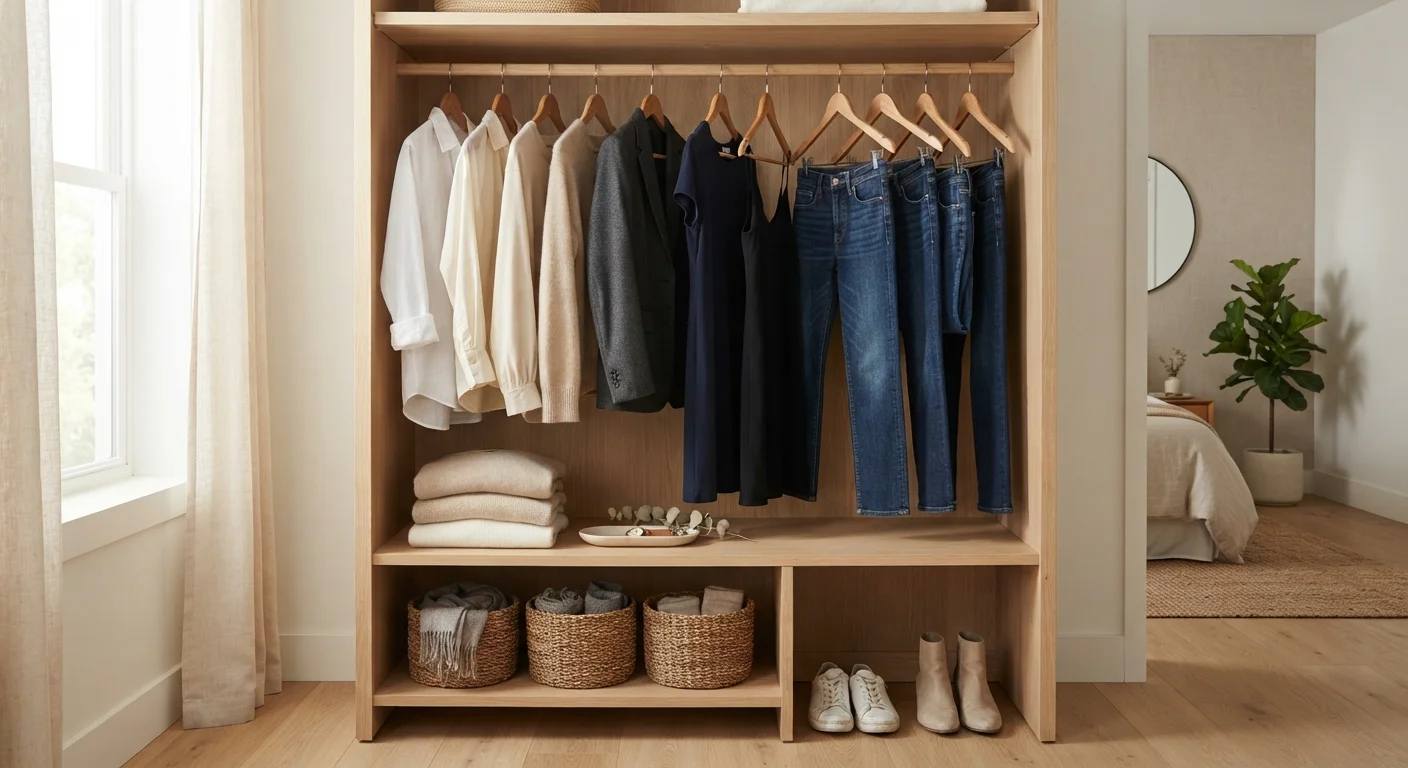
The phrase gets thrown around a lot in style circles, but the core idea is refreshingly simple: a capsule wardrobe is a small, coordinated set of clothes where every item can realistically be worn with multiple others. Think of it like a puzzle where every piece fits — nothing sits alone or mismatched.
Most definitions put the count somewhere between 25 and 40 seasonal items: everyday tops, a few bottoms, layering pieces, one or two dresses or suits depending on your life, outerwear, and shoes. Accessories are sometimes counted separately. But the number matters far less than the principle behind it — that each item you own should actually pull its weight.
The math works surprisingly well. Ten tops and six bottoms can technically generate 60 distinct outfit combinations. Add a blazer or two? That number climbs fast. This is why a thoughtfully edited closet can feel more abundant than a packed-full one where nothing seems to go together.
There's No Official Capsule Wardrobe List
You'll find plenty of prescriptive 'must-have' lists online, but a capsule wardrobe is inherently personal. A teacher, a warehouse worker, and a freelance designer have very different daily lives — and their capsules should reflect that. Use the principle as a framework, not a rigid rulebook.
Why People Swear By It
Decision fatigue is real. Research in psychology has consistently shown that making many small decisions throughout the day depletes mental energy — and getting dressed is often one of the first decisions we face. A capsule wardrobe removes much of that friction. When everything in your closet works together, any combination you grab is a working outfit.
Beyond the mental load, there's a practical closet reality for most Americans: the average person wears roughly 20% of their wardrobe 80% of the time. A capsule wardrobe essentially makes that 20% your entire wardrobe — the pieces you actually reach for, already there and ready.
~20%
Of wardrobe worn 80% of the time
A widely cited observation in behavioral research on consumer habits suggests most people regularly wear only a small fraction of their total clothing.
25–40
Typical capsule wardrobe item count per season
Style educators generally recommend this range as a workable starting point, though the ideal number varies by lifestyle and laundry frequency.
60+
Outfit combinations from 10 tops and 6 bottoms
Simple combinatorics show how a small, coordinated set of pieces can generate a surprisingly large number of distinct outfit options.
For anyone juggling work, weekends, and everything in between, this matters. Our guide to building a work-to-weekend wardrobe on a realistic budget digs into how to choose pieces that do double duty across different settings — a natural companion to the capsule mindset.
How to Start Building Yours
The most effective starting point isn't shopping — it's editing what you already have. Before adding anything new, a wardrobe audit helps you see what you actually own, what you actually wear, and where the real gaps are. Our wardrobe audit checklist walks you through that process step by step.
Once you've cleared the clutter, the building process follows a simple logic:
- Anchor with neutrals. Choose two or three base colors that work together — navy, white, and camel, for example — so that almost everything coordinates naturally.
- Prioritize versatility. Every piece should work in at least three different outfits before it earns a spot.
- Fit first, always. A well-fitting moderately priced item will always outperform an ill-fitting one. Tailoring is an underrated tool.
- Fill gaps deliberately. Identify what's missing rather than shopping broadly. Knowing you need a dark-wash trouser is very different from browsing without a plan.
For pieces that genuinely stand the test of time, see our breakdown of wardrobe staples that actually earn their keep — a useful reference when deciding what belongs in your core rotation.
Try the 'Three-Outfit Test' Before Buying
Before adding any new piece to your capsule, ask yourself: can I picture this in at least three different outfits I'd actually wear? If you can only imagine it in one specific look, it's probably not earning its place. This simple mental check prevents impulse purchases that end up unworn.
Is a Capsule Wardrobe Right for You?
The honest answer: it depends on how you relate to clothes. For some people, variety and self-expression through fashion are genuinely joyful — a tightly edited closet might feel creatively limiting. That's a completely valid way to approach personal style, and it's worth exploring in our piece on capsule vs. maximalist dressing if you're weighing both approaches.
For others — especially those who feel overwhelmed by their closet, spend more time frustrated than inspired, or find themselves buying things that never quite work — the capsule framework can be genuinely transformative. It reframes getting dressed from a daily stressor into something easy and even enjoyable.
Capsule wardrobes also adapt across seasons. Rather than maintaining one giant year-round collection, many people rotate a warm-weather and a cool-weather capsule, storing off-season pieces properly. Our guide to seasonal wardrobe transitions covers how to handle that rotation without losing track of what you own.
Wherever you land, the capsule concept offers one genuinely useful idea for everyone: know what you have, wear what you love, and let the rest go.