
Breaking Down the Real Costs
Paper towels feel cheap at the register. A single roll might cost between $1 and $2, and a bulk pack can seem like a bargain. But because paper towels are single-use, you're paying that cost repeatedly - week after week, year after year. A household that uses one roll per week spends roughly $75-$150 annually depending on the brand and quantity purchased. That number compounds quietly over time.
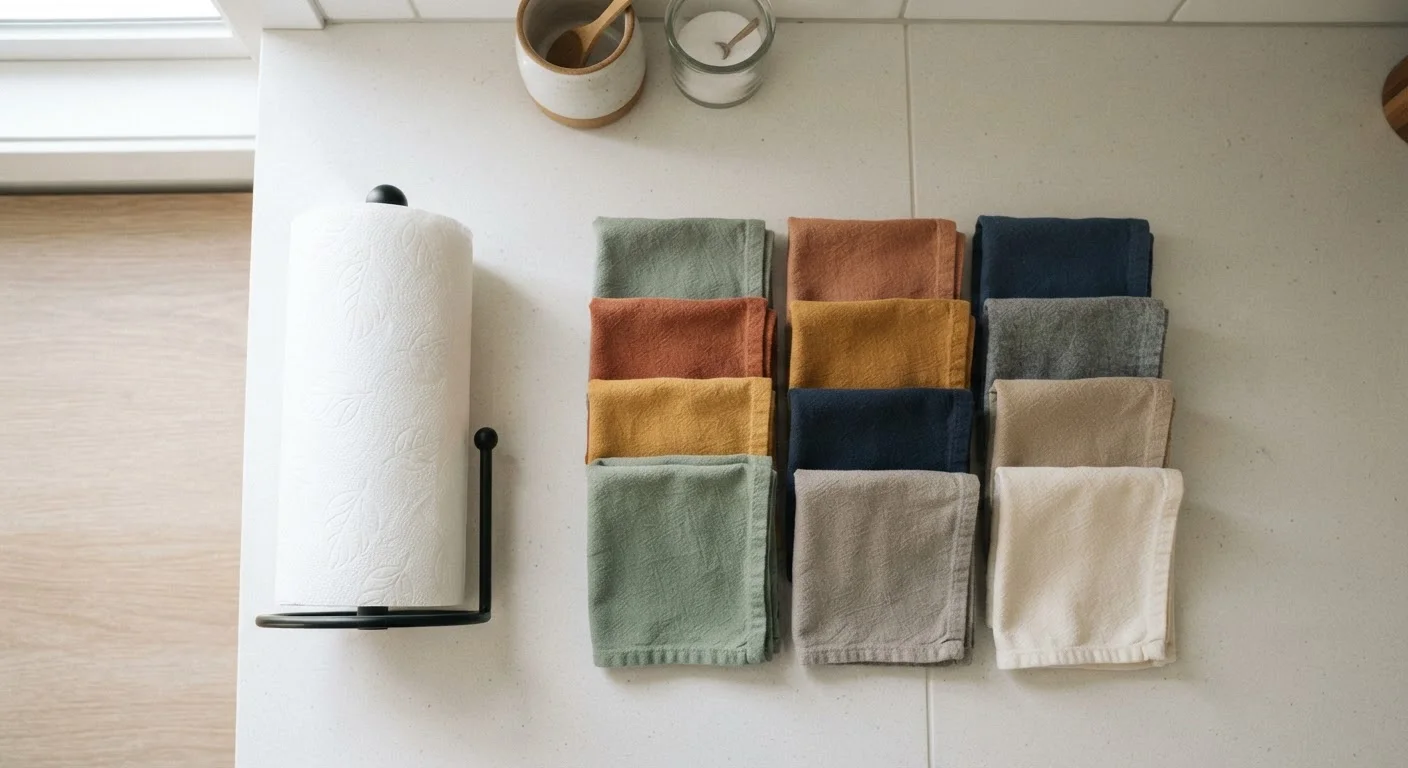
Reusable cloths - whether cotton bar towels, microfiber cloths, or cut-up fabric - typically cost between $10 and $30 for a starter set of 10 to 20 pieces. The ongoing cost is primarily laundering: water, detergent, and energy. Estimates vary, but adding a load of cloths to existing laundry adds only marginal cost per wash cycle. Over a year, laundering costs for reusable cloths often run well under $20 for most households.
Understanding cost per use is the clearest lens for this comparison. A paper towel used once and discarded has a fixed, non-recoverable cost. A reusable cloth that survives 200 wash cycles spreads its purchase price across hundreds of tasks - driving cost per use toward near-zero.
| Criterion | Paper Towels | Reusable Cloths |
|---|---|---|
| Upfront cost | Low ($1-$5 per pack) | Moderate ($10-$30 for a set) |
| Ongoing cost | Continuous repurchasing | Minimal (laundering only) |
| Estimated annual spend | $75-$150+ | $15-$35 (after initial purchase) |
| Cost per use | Fixed, non-recoverable | Decreases with every wash cycle |
| Lifespan | Single use | Hundreds of uses with proper care |
| Convenience | High - grab and toss | Moderate - requires laundering |
| Waste generated | High - fully disposable | Very low - reused repeatedly |
| Best use cases | Raw meat, chemicals, one-time tasks | Daily spills, surfaces, general cleanup |
Where the Break-Even Point Falls
The break-even point - where reusable cloths have cost you the same as paper towels would have - typically arrives within two to four months for moderate-use households. After that, every cleanup task costs less with reusables than with disposables.
$75-$150
Estimated annual paper towel spend per household
Based on average roll pricing and typical household usage of approximately one roll per week.
2-4 months
Typical break-even timeline for reusable cloths
Estimated based on moderate household usage replacing the majority of daily paper towel tasks with washable cloths.
200+
Wash cycles a quality reusable cloth can withstand
Durable cotton or microfiber cloths can last hundreds of laundry cycles before needing replacement, per general textile durability guidance.
That said, break-even depends on actual behavior. If you buy reusable cloths and still habitually reach for paper towels out of convenience, you're paying for both. The financial case only holds if the cloths get regular use. This is worth being honest about before committing to a set.
It's also worth noting that cheap home supplies don't always save money. Low-quality reusable cloths that fall apart after a dozen washes don't deliver the same value as durable options - durability directly affects how many uses you get before replacement.
Practical Considerations Beyond Price
Cost isn't the only variable worth weighing. Paper towels have genuine use cases where reusables aren't practical: raw meat cleanup, certain chemical applications, or situations where cross-contamination is a real concern. Keeping a small supply of paper towels for those specific tasks is reasonable and doesn't negate the savings from using cloths everywhere else.
Reusable cloths do require a system: enough cloths to rotate through, a designated spot for used ones before washing, and laundry discipline. For households already running frequent laundry loads, adding cloths is minimal effort. For households that find laundry management difficult, the friction is real and worth accounting for.
If you're reviewing your overall household supply spending, tools like a household inventory can help you spot exactly how much you're replenishing on disposables each month - often a revealing number. Similarly, applying the same cost-per-use thinking to your cleaning products is worthwhile; see how cleaner format affects real value when comparing concentrates to ready-to-use sprays.
For households actively managing a budget, even modest recurring savings matter. Redirecting $75-$120 per year from disposable paper products is a small but real contribution to broader budgeting goals.
Bulk Buying Paper Towels: Savings With a Catch
Buying paper towels in bulk lowers the per-roll price but doesn't change the fundamental math - you still consume and repurchase them continuously. Bulk purchasing can reduce unit cost, but it's worth separating that from the question of whether disposables cost less overall. For a fuller look at when bulk buying genuinely helps, see our guide on bulk buying for the home.