
The Question Marketers Don't Want You to Ask
Retail messaging is built around one idea: that more products make a home run better. Every season brings a new wave of gadgets, organizers, and specialty cleaners promoted as things you couldn't possibly manage without. But the honest question - does this solve a real problem I actually have? - cuts through most of that noise quickly.
The concept of a household essential isn't complicated, but it gets muddied by clever packaging, seasonal promotions, and the very human tendency to equate owning something with being prepared. Understanding what the label actually means is the starting point for a home that works without accumulating unnecessary weight.
Context Changes the Answer
What's essential in a 600-square-foot apartment differs from what's essential in a four-bedroom house with a yard. Household composition, climate, cooking habits, and health needs all shift the calculus. There is no single universal list - the framework matters more than any specific inventory of items.
A Working Framework: Four Tests Worth Applying
Rather than relying on lists someone else assembled, apply these four criteria to any item you're evaluating - whether you're deciding to buy it or deciding whether to keep it.
- Frequency test: How often would you use it? An item used weekly passes; one used twice a year deserves harder scrutiny. Daily-use items are almost always worth having; niche items need a stronger justification.
- Substitution test: Can something you already own do the same job adequately? A second cutting board rarely justifies space if one works fine. A duplicate function is a sign of clutter, not preparedness.
- Consequence test: What happens if you don't have it? If the answer is mild inconvenience, it's probably not essential. If the answer is a genuine disruption to daily life, safety, or hygiene, it earns the label.
- Space-cost test: Storage isn't free. Every item occupies physical space that could hold something you use more often. If an item rarely earns its square footage, that's a real cost.
Try a 30-Day Use Audit
If you're unsure whether an item is essential, move it to a less accessible spot for 30 days. If you go looking for it, it stays. If you forget it existed, that's useful information. This low-effort audit works especially well for kitchen gadgets and specialty cleaning tools.
This framework applies equally whether you're setting up a home from scratch or reassessing what's already in your cabinets. See our room-by-room essentials checklist for a category-by-category reference.
What Earns the 'Essential' Label - and What Doesn't
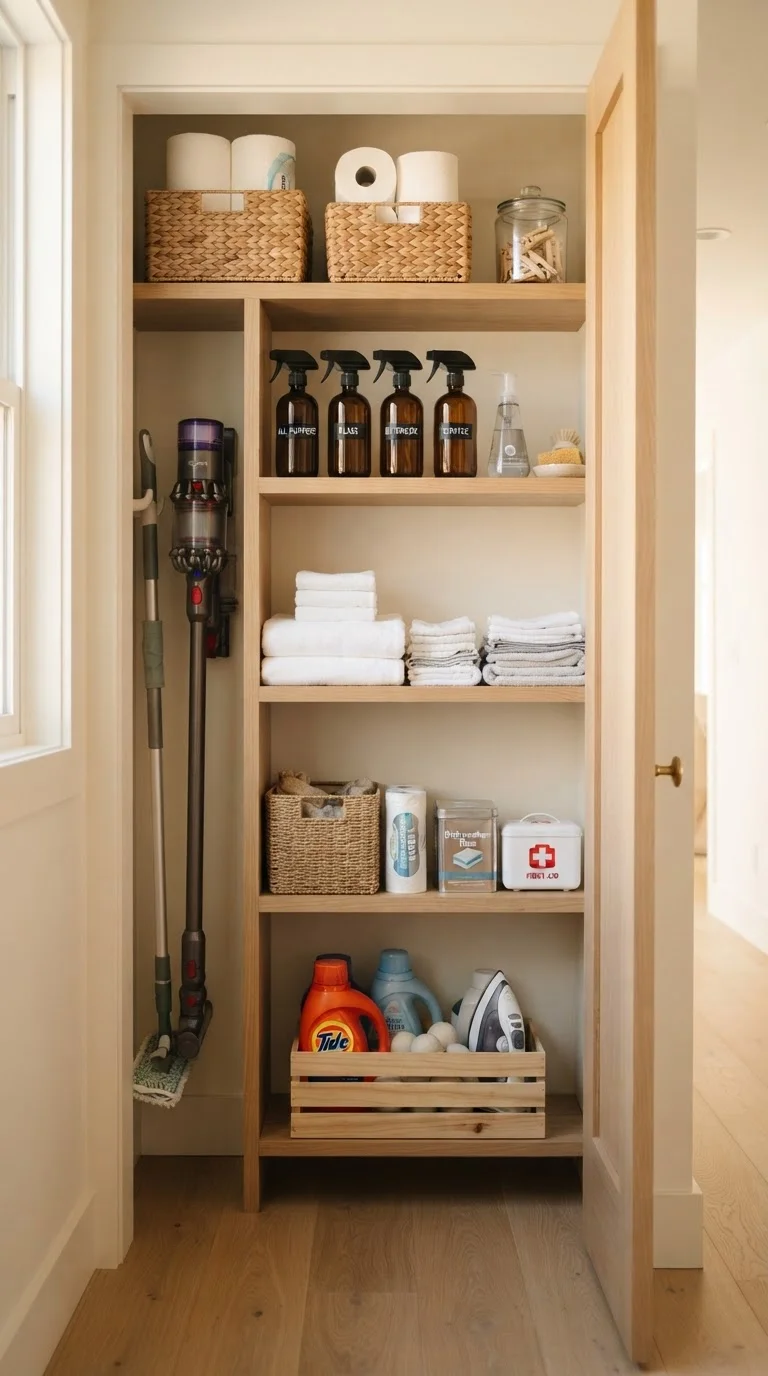
Across most households, a core set of supplies consistently passes all four tests: basic cleaning agents, a functional first-aid kit, cooking fundamentals, weather-appropriate bedding, and working tools for minor repairs. These categories recur because they address needs that appear in virtually every home regardless of lifestyle.
What tends to fail the tests? Specialty appliances used for a single dish, duplicate versions of tools you already own, products marketed for problems you don't have, and items bought speculatively - "just in case" purchases that sit unused for years.
1 in 4
Americans report garages too cluttered to park cars
U.S. Department of Energy research has noted that a significant portion of American garages are used primarily for storage rather than vehicle parking, reflecting widespread accumulation of household items.
$1,000+
Average annual spending on unnecessary household items
Consumer research has estimated that American households spend meaningfully on items that go largely unused; exact figures vary by study, but excess purchasing is a well-documented consumer behavior pattern.
The guide to stocking a home from scratch breaks this down further by category, which is useful when you're building a baseline rather than editing an existing collection.
The Role of Household Inventory in Cutting Clutter
One underrated tool for keeping a home functional rather than cluttered is a basic household inventory - a simple record of what you own by category. Without it, it's easy to overbuy, forget what's already on the shelf, or replace items that haven't actually been used up.
Knowing what you have makes the four-test framework faster to apply. When you're considering a new purchase, you can quickly check whether you already own a functional substitute. This is especially useful in categories like cleaning supplies, pantry staples, and linens, where accumulation happens gradually. Our article on why a household inventory saves money covers the practical steps for setting one up.
If you're weighing household spending more broadly, the needs vs. wants framework offers a complementary structure for categorizing expenses honestly. A similar principle applies to your wardrobe - see how wardrobe staples earn their keep for the same kind of honest scrutiny.
This article provides general consumer guidance for informational purposes only and does not constitute financial or professional advice. For decisions about your household budget, consider consulting a qualified financial professional.