
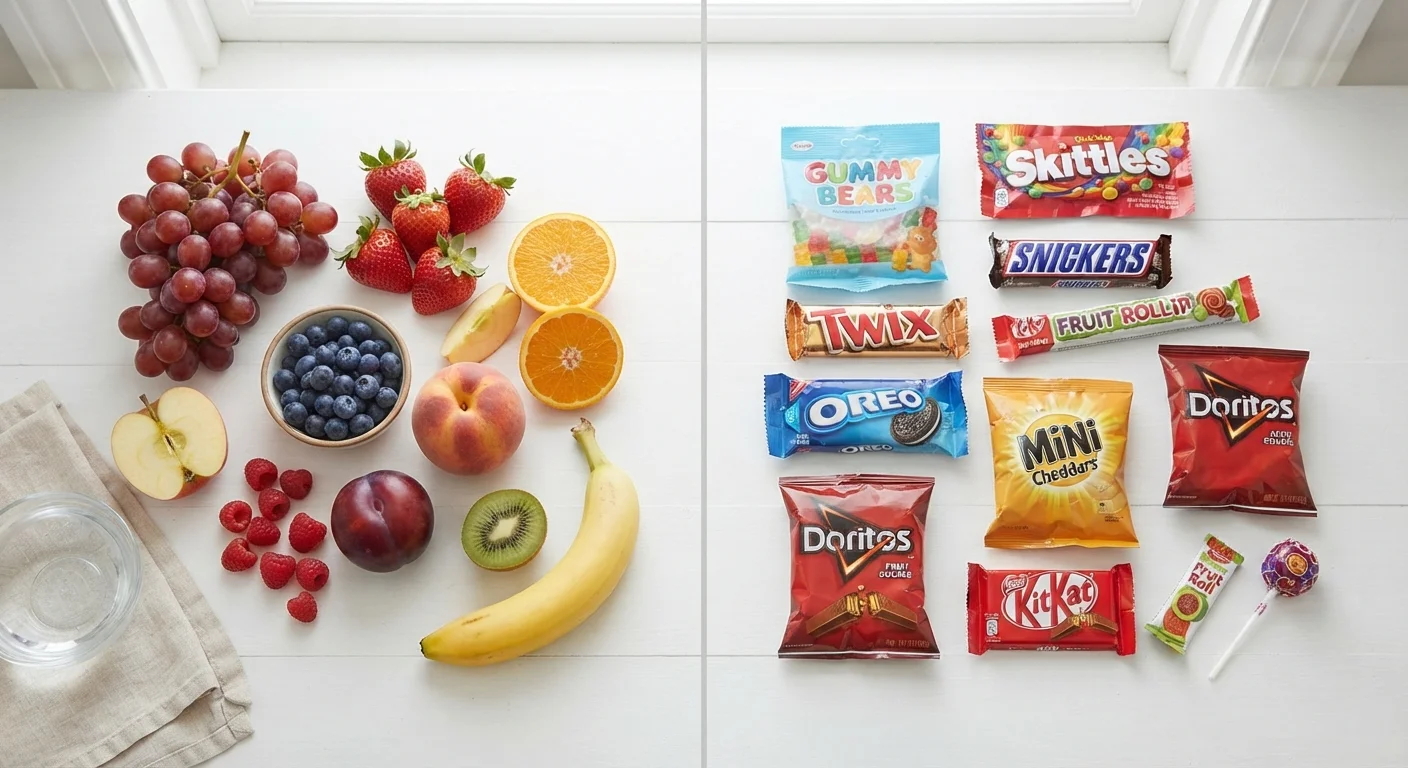
Same Molecule, Different Story
At the molecular level, sucrose is sucrose. Whether it arrives in your body from a ripe mango or a can of soda, the glucose and fructose your digestive system sees are chemically indistinguishable. This biochemical fact is sometimes used to argue that all sugars are equal - but that framing leaves out the most important part: what else comes along for the ride.
Natural sugars exist within a complex food matrix. In an apple, fructose travels with dietary fiber, water, vitamin C, and a range of polyphenols. That matrix slows digestion, moderates the rate at which sugar enters the bloodstream, and contributes to feelings of fullness. Added sugars, by contrast, are typically stripped of that context - they are incorporated into products to improve palatability, texture, or shelf life, without the accompanying nutrients.
This distinction is why nutrition researchers and public health bodies treat the two categories separately, and why the updated Nutrition Facts label introduced a dedicated Added Sugars line - so consumers can distinguish between sugar inherent to a food and sugar that manufacturers put there. For a deeper look at how to read that label accurately, see our guide on nutrition labels vs. health claims.
What the Research Actually Shows
Epidemiological evidence consistently finds that high intake of added sugar - particularly in sugar-sweetened beverages - is associated with elevated risk of type 2 diabetes, cardiovascular disease, and obesity-related conditions. A widely cited analysis published in JAMA Internal Medicine found that adults who consumed 17-21% of their daily calories from added sugar had a 38% higher risk of dying from cardiovascular disease compared to those whose intake was around 8%.
Whole fruit intake, on the other hand, is associated with reduced risk of those same conditions in most large observational studies. The fiber in fruit effectively buffers fructose absorption and supports gut health - a distinction that fruit juice, which concentrates natural sugar while removing most fiber, largely loses.
17 tsp
Average daily added sugar intake for US adults
According to CDC data, American adults consume approximately 17 teaspoons of added sugar daily - well above recommended limits.
38%
Higher cardiovascular mortality risk at high added sugar intake
A JAMA Internal Medicine analysis found adults deriving 17-21% of calories from added sugar had a 38% higher risk of cardiovascular death vs. those at ~8%.
~70%
Share of added sugars from packaged foods and beverages
Research published in nutrition journals estimates that the majority of added sugar in the US diet comes from packaged and processed products, not home cooking.
It is worth noting that observational studies establish association, not causation, and individual metabolic responses vary. But the overall pattern in the literature is consistent enough that major health organizations - including the World Health Organization, the American Heart Association, and the Dietary Guidelines Advisory Committee - have singled out added sugars, not naturally occurring ones, as the primary target for reduction. As with sodium - another nutrient where source and food context dramatically shape health impact - the details matter enormously. Our article on sodium in the American diet explores a parallel story.
Head-to-Head: How They Compare
The table below summarises the key differences across the dimensions that matter most for everyday dietary decisions.
| Criterion | Natural Sugar | Added Sugar |
|---|---|---|
| Origin | Inherent to whole food (fruit, dairy, vegetables) | Added during manufacturing or cooking |
| Accompanying nutrients | Fiber, vitamins, minerals, water | Typically none in isolation |
| Rate of absorption | Slowed by food matrix and fiber | Often rapid, especially in beverages |
| Effect on satiety | Supports fullness via fiber and bulk | Minimal satiety effect per calorie |
| Nutrition Facts label | Counted in Total Sugars only | Counted in both Total and Added Sugars |
| Evidence-based health association | Whole fruit linked to reduced chronic disease risk | High intake linked to elevated cardiometabolic risk |
| Daily limit guidance (AHA) | No specific limit set for whole-food sources | ≤25g/day (women); ≤36g/day (men) |
One practical implication: when comparing two packaged foods, checking the Added Sugars row rather than the total sugars row gives a more meaningful signal. A yogurt with 12g of total sugar but 0g added sugar is a very different product from one with 12g of total sugar and 10g added sugar - even though the label's headline number looks the same.
Understanding fiber content alongside sugar is equally important. Dietary fiber slows the absorption of sugars and helps moderate postmeal blood glucose - which is exactly the mechanism that makes whole fruit nutritionally distinct from a sugary drink.
Practical Steps Without Extremes
Reducing added sugar intake does not require eliminating sweetness from your diet or adopting a restrictive protocol. The goal most evidence supports is contextual: eat more sugar within whole-food matrices, and less sugar added to processed products.
- Audit beverages first. Sugar-sweetened drinks are the single largest source of added sugar in the American diet. Water, unsweetened tea, or sparkling water are straightforward substitutions.
- Read ingredient lists for sugar aliases. Added sugar appears as corn syrup, dextrose, evaporated cane juice, maltose, agave nectar, and dozens of other names. If multiple sugar-derived ingredients appear in the first few positions, the product warrants a closer look.
- Choose whole fruit over fruit products. Whole fruit retains fiber; most juices, fruit snacks, and dried fruits concentrate sugar while reducing or eliminating the fiber buffer.
- Pair naturally sweet foods with protein or fat. A piece of fruit eaten with a handful of nuts slows glucose absorption and extends satiety - a practical application of the food-matrix principle.
None of these steps require perfection. A single dessert or sweetened coffee is not a health crisis in the context of an otherwise varied diet. The pattern over time - not any individual food - is what the research consistently links to long-term outcomes.
What About Honey and Maple Syrup?
Natural-sounding sweeteners like honey, maple syrup, and agave nectar are still classified as added sugars when used in cooking or manufacturing - because they are added to a food rather than inherent to it. They may carry trace minerals or antioxidants, but in the quantities typically consumed, those contributions are nutritionally modest. From a metabolic standpoint, they behave similarly to table sugar and should be counted toward your daily added sugar total.
For a comparable look at how food processing changes a nutrient's profile, see our piece on whole grains vs. refined grains - the same food-matrix logic applies there as well.
This article is for general informational and educational purposes only and is not a substitute for professional medical or dietary advice. Consult a qualified healthcare provider or registered dietitian before making significant changes to your diet, especially if you have a medical condition.