
Two Types of Fiber, Two Distinct Jobs
When most people hear "fiber," they picture one thing: roughage that keeps digestion on track. That picture is accurate but incomplete. Dietary fiber divides into two categories - soluble and insoluble - and their mechanisms in the body differ enough that understanding both is genuinely useful for making food choices.
Soluble fiber dissolves in water and forms a thick, gel-like substance as it moves through the digestive tract. This gel slows the rate at which food leaves the stomach, which in turn moderates how quickly glucose enters the bloodstream. It also binds to cholesterol-containing bile acids in the gut, helping to carry them out of the body. The net result is a measurable contribution to blood sugar stability and LDL cholesterol management.
Insoluble fiber does not dissolve in water. Instead, it absorbs water and adds physical bulk to stool, accelerating its movement through the intestines. This reduces the time waste material stays in contact with the intestinal wall and helps maintain regular bowel function. Wheat bran, the skins of vegetables, and the outer layers of whole grains are classic insoluble fiber sources.
Most Foods Contain Both Fiber Types
Foods are rarely purely soluble or purely insoluble - most whole plant foods contain both types in different ratios. Categorizing sources as "soluble" or "insoluble" is a useful simplification, but it reflects which type predominates rather than an absolute distinction. A varied diet that includes legumes, whole grains, fruits, and vegetables naturally delivers both.
Where to Find Each Type in Everyday Foods
Most plant foods contain a mix of both fiber types, but the proportions vary considerably. Knowing which foods skew toward which type helps you build a more intentional plate.
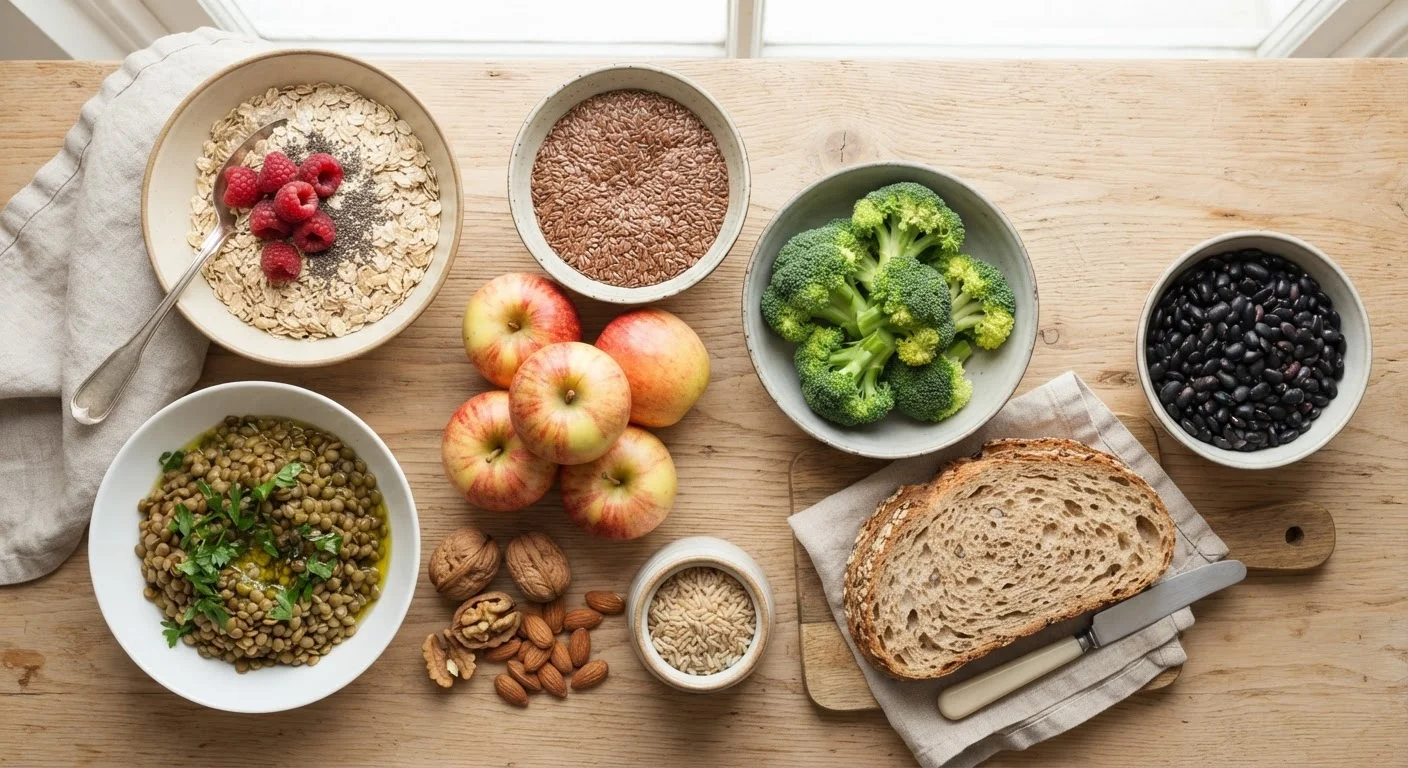
- Rich in soluble fiber: oats, barley, rye, beans, lentils, chickpeas, apples, pears, citrus fruits, carrots, and flaxseeds.
- Rich in insoluble fiber: whole wheat products, wheat bran, brown rice, corn bran, nuts, seeds, and the skins of most vegetables and fruits.
Legumes - beans, lentils, and split peas - are among the most efficient sources of total fiber overall, delivering meaningful quantities of both types per serving. Oats are a well-researched soluble fiber source, primarily due to a compound called beta-glucan. When you look at a Nutrition Facts panel, you can learn more about interpreting fiber content in context by reading our guide to reading nutrition labels.
~5%
Americans meeting daily fiber recommendations
Research published in the American Journal of Lifestyle Medicine estimates that only about 5% of Americans consume adequate daily fiber.
25-38g
Recommended daily fiber intake for adults
The Dietary Guidelines for Americans recommend 25g/day for women and 38g/day for men, with needs tapering slightly after age 50.
~8g
Fiber in a half-cup of cooked lentils
Lentils are one of the most fiber-dense common foods, providing roughly 8 grams of fiber per half-cup cooked serving according to USDA nutrition data.
Health Benefits Supported by the Evidence
The research on dietary fiber spans decades and touches multiple body systems. Here is where the evidence is strongest:
Cardiovascular Health
Soluble fiber - particularly beta-glucan from oats and barley - has been studied extensively for its ability to lower LDL cholesterol. The FDA recognizes a qualified health claim connecting beta-glucan soluble fiber intake to reduced risk of coronary heart disease, making it one of the more robustly supported diet-disease relationships in nutrition science.
Blood Sugar Regulation
The gel formed by soluble fiber slows carbohydrate digestion and glucose absorption. This blunts post-meal blood sugar spikes, which is relevant both for people managing blood sugar levels and for general metabolic health. This is one reason dietary patterns centered on whole plant foods tend to show favorable glycemic profiles in research.
Digestive Regularity
Insoluble fiber's role in preventing constipation is well established. A diet consistently low in insoluble fiber is associated with slower gut transit time and greater risk of constipation. Adequate hydration amplifies this benefit - fiber without water can have the opposite effect.
Gut Microbiome Support
Certain soluble fibers - particularly those classified as prebiotics - ferment in the colon and serve as fuel for beneficial gut bacteria. This area of research is active and growing, with early evidence connecting fiber fermentation to immune function and gut lining integrity. Much of this science is still emerging, so definitive clinical recommendations remain cautious.
Increase Fiber Gradually to Avoid Discomfort
If you currently eat very little fiber, a sudden large increase can cause bloating, cramping, and gas. Nutrition professionals generally recommend adding one or two higher-fiber foods per week rather than overhauling your entire diet at once. Drinking plenty of water throughout the day is equally important - fiber needs adequate fluid to do its job effectively.
Practical Ways to Increase Your Intake
The average American consumes roughly half the recommended daily fiber intake. Closing that gap doesn't require dramatic dietary overhauls. A few targeted substitutions tend to be more sustainable than sweeping changes.
Start by auditing the grains on your plate. Swapping refined white bread, rice, and pasta for whole grain versions adds insoluble fiber without changing much else about a meal. Adding a serving of legumes - whether in a soup, salad, or as a side - is one of the most efficient moves available; a half-cup of cooked lentils contains roughly 8 grams of fiber.
Leaving edible skins on fruits and vegetables (apples, pears, potatoes, cucumbers) preserves a meaningful portion of the insoluble fiber that processing or peeling removes. Snacking on whole fruit rather than drinking juice has a similar effect.
Increase fiber intake gradually - over several weeks rather than days - to allow your digestive system to adjust. Drink water consistently throughout the day. These two steps together prevent most of the bloating and gas that people associate with high-fiber eating.
For a broader look at how fiber fits within the nutritional context of what you eat daily, consider exploring discussions of related nutrients like dietary fats and added versus natural sugars, which interact with fiber in the overall quality of a diet.
This article is for general informational and educational purposes only and does not constitute medical or dietary advice. Consult a qualified healthcare professional or registered dietitian before making significant changes to your diet, especially if you have a chronic health condition.