
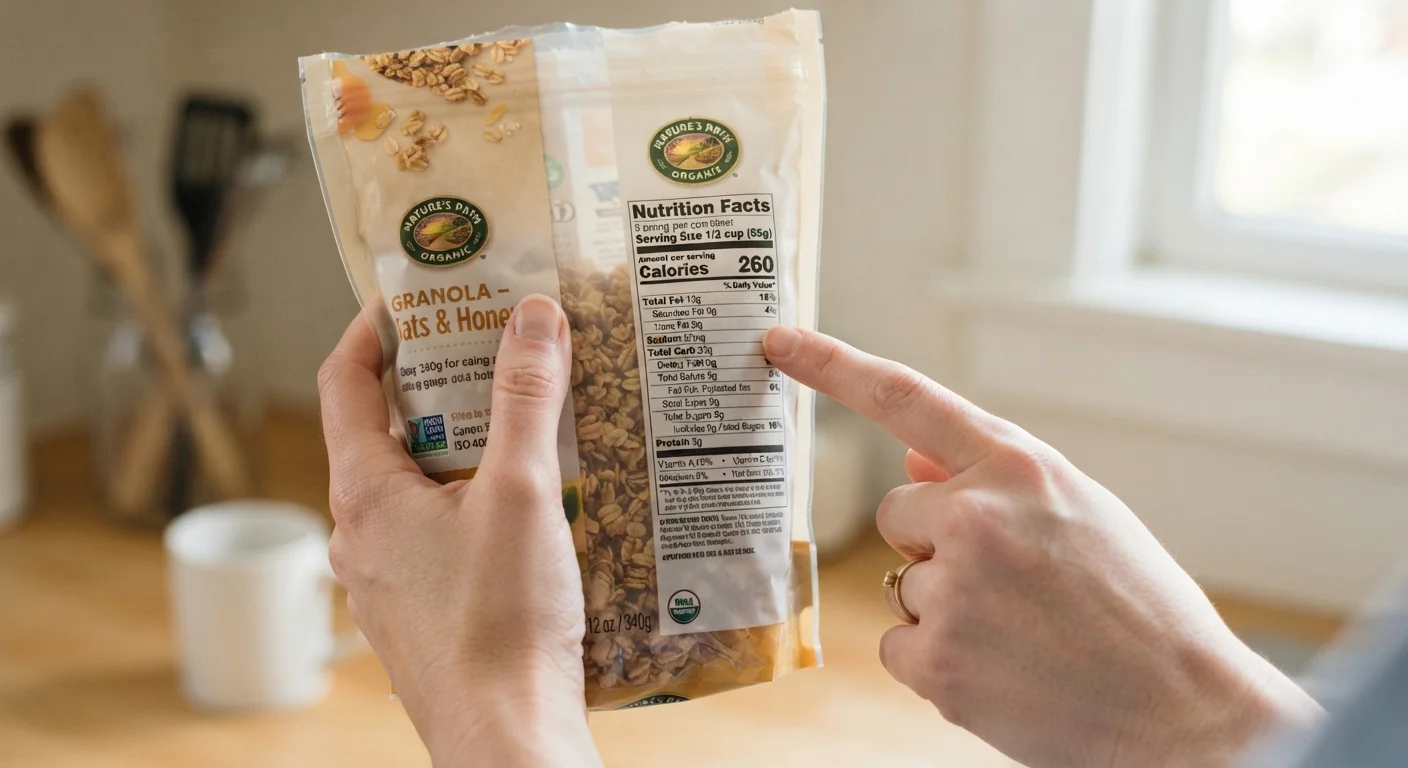
Why the Nutrition Facts Panel Exists - and What It Actually Covers
The Nutrition Facts label is a federally mandated format regulated by the U.S. Food and Drug Administration (FDA). Unlike the front of a food package - where phrases like "natural," "low-fat," or "high-protein" are largely marketing language - the Nutrition Facts panel follows strict rules about what must be disclosed and how it must be presented. Understanding how front-of-pack claims differ from regulated label data is an important first step in reading any packaged food clearly.
The panel was significantly updated in 2016 (with full compliance required by most manufacturers by 2020), reflecting evolving nutrition science. Key changes included a larger, bolder calorie display; the addition of a separate "added sugars" line; updated daily reference values; and the removal of vitamins A and C (which Americans rarely lack) in favor of Vitamin D and potassium (which they frequently do).
Reading the label fluently also connects to broader food literacy - understanding what carbohydrates, proteins, and fats actually do in the body makes the numbers more meaningful in practice.
What you will need
What You'll Need and How to Read Each Section Step by Step
No special tools or background knowledge are required. The steps below walk through the label from top to bottom - the same order the FDA structures it - so you can apply this process to any packaged food you pick up. Keep a real label handy as you read through.
Packaged food with Nutrition Facts label
The label itself is your primary reference - practice reading a real one as you follow each step.
Smartphone calculator
Useful for multiplying nutrient values when you consume more than one serving.
Find the serving size and servings per container
The serving size appears at the very top of the panel in bold. It represents the standardized amount the FDA uses as a reference - based on typical consumption patterns, not necessarily a recommended portion. Directly below it, you'll see how many servings the entire package contains.
Every number that follows - calories, fat, sodium, vitamins - applies to one serving only. If the label says 2.5 servings per container and you eat the whole thing, every figure needs to be multiplied by 2.5.
Read the calorie count in context
Calories measure the total energy one serving provides. This number is printed large on most modern labels. While calorie needs vary by age, sex, activity level, and health status, the label uses a 2,000-calorie daily reference diet as its baseline for %DV calculations.
Calories alone don't tell you whether a food is nutritious. A food can be calorie-dense and nutrient-rich (like nuts) or calorie-dense and nutrient-poor (like some ultra-processed snacks). Use calories alongside the nutrient breakdown below it.
Check total fat, saturated fat, and trans fat
The total fat line includes all fat types. The sub-lines for saturated fat and trans fat matter more from a health standpoint. Dietary guidelines generally support limiting saturated fat and avoiding artificial trans fats entirely. Unsaturated fats - listed on some labels - are associated with cardiovascular health benefits.
For more on how different fat types affect the body, see our article on dietary fat and its evolving reputation.
Examine sodium content carefully
Sodium is measured in milligrams (mg). The current Dietary Guidelines for Americans suggest adults limit sodium to 2,300 mg per day, yet most Americans consume considerably more. A single serving of some soups or processed foods can account for 40-50% of that daily reference - and the %DV column will reflect that plainly.
Because most dietary sodium comes from packaged and restaurant food rather than the salt shaker, the label is your best tool for tracking intake. Learn more about where sodium actually hides in the American diet.
Distinguish total sugars from added sugars
Total sugars includes both naturally occurring sugars (such as lactose in dairy or fructose in fruit) and sugars added during manufacturing. The added sugars sub-line - required on US labels since the FDA update - isolates sugars that were introduced by the manufacturer. Added sugars have a %DV based on a limit of 50 grams per day on a 2,000-calorie diet.
Naturally occurring sugars come packaged with fiber, vitamins, and other nutrients. Added sugars generally do not, which is why they are tracked separately.
Look at fiber, vitamins, and minerals
Below sugars, the label lists dietary fiber, then key micronutrients including Vitamin D, calcium, iron, and potassium. These are nutrients many Americans consume in insufficient amounts, so the %DV here guides you toward foods that contribute meaningfully to daily needs.
Fiber supports digestive health and is associated with a reduced risk of several chronic conditions. Understanding soluble and insoluble fiber can help you make smarter food choices beyond just the number on the label.
Interpret the Percent Daily Value column
The %DV column runs along the right side of the label and tells you what percentage of the daily recommended amount (or limit) one serving contributes, based on a 2,000-calorie reference diet. It works as a quick comparison tool: use it to compare two similar products, or to see at a glance whether a food is high or low in a particular nutrient.
For nutrients you want to limit (saturated fat, sodium, added sugars), lower %DV is preferable. For nutrients you want to get enough of (fiber, vitamins, minerals), higher %DV is better.
Use %DV as a Quick Benchmark
A %DV of 5% or less is generally considered low for a nutrient; 20% or more is considered high. This shortcut helps you quickly assess whether a food is a meaningful source of something beneficial - or something you may want to limit - without doing any math.
Multiple Servings Can Add Up Fast
Many packaged items that look single-serving - a bottle of juice, a small bag of chips - actually contain two or more servings. If you consume the entire package, you must multiply every number on the label by the number of servings listed. Overlooking this is one of the most common ways calorie and sodium intake gets underestimated.
This Is General Nutrition Information
This article explains how to read a Nutrition Facts label for general educational purposes. It is not medical or dietary advice tailored to your individual health needs. If you have a specific health condition, dietary restriction, or are managing a chronic disease, consult a registered dietitian or qualified healthcare provider before making changes to your eating habits.
This article is for general informational and educational purposes only and does not constitute medical, dietary, or nutritional advice. Individual nutritional needs vary based on age, health status, activity level, and other factors. Consult a registered dietitian or qualified healthcare provider for guidance specific to your health situation.