
The Salt Shaker Is Not the Problem
When most people think about cutting back on sodium, their first instinct is to remove the salt shaker from the table. That instinct, while well-intentioned, addresses a surprisingly small part of the problem. According to the U.S. Centers for Disease Control and Prevention (CDC), roughly 70% of the sodium Americans consume comes from packaged, processed, and restaurant foods - not from salt added at the table or during home cooking.
This distinction matters because it shifts where meaningful change can actually happen. Sodium is added to processed foods not just for flavor, but as a preservative, a texture enhancer, and even a color stabilizer. Understanding its hidden presence is the first step toward making more informed choices without abandoning entire food categories.
For a broader look at how to interpret sodium information at the grocery store, see our guide to reading a Nutrition Facts label.
Where Dietary Sodium Actually Hides
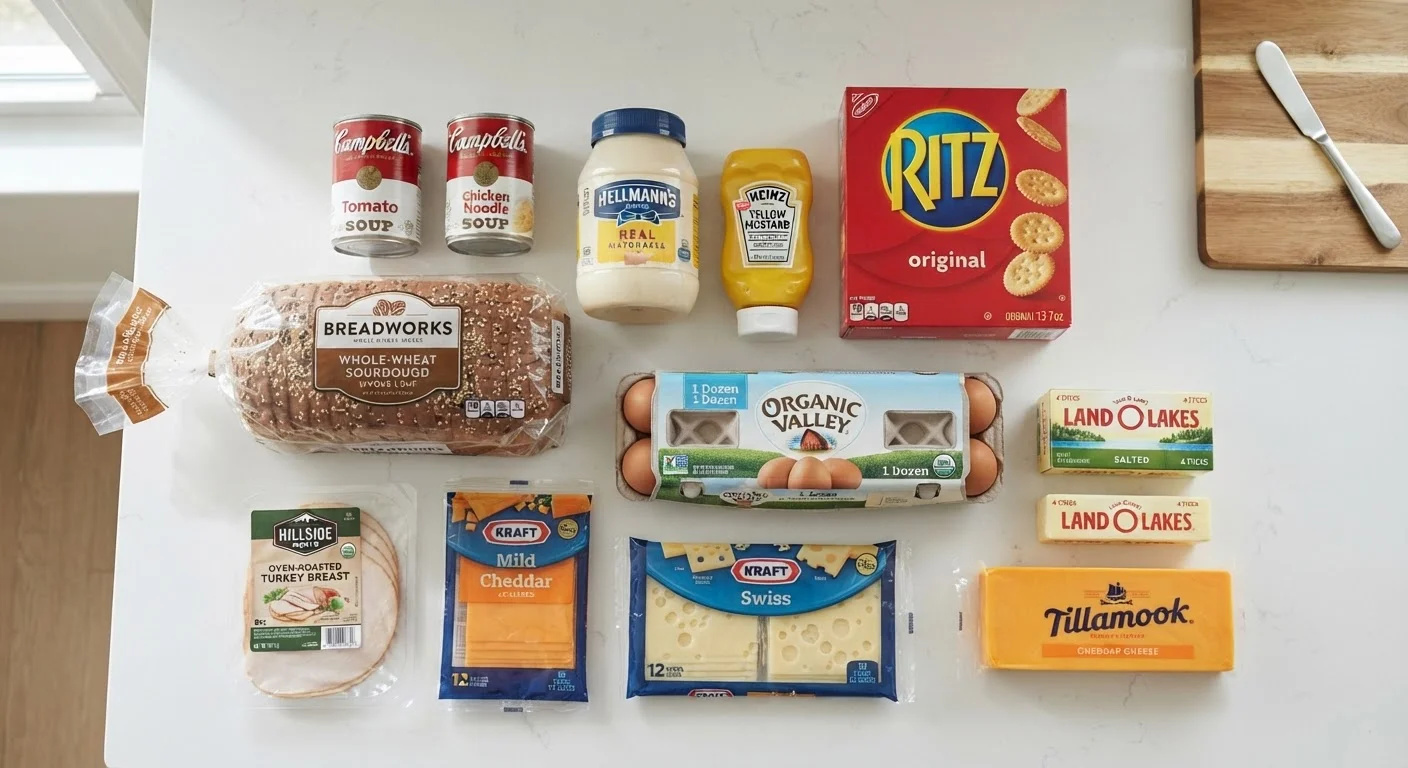
Research published through the CDC's sodium reduction initiative has consistently identified a cluster of food categories that account for the majority of sodium intake in the American diet. The top contributors include:
- Breads and rolls - often overlooked because individual slices don't taste salty, yet two slices of sandwich bread can contribute 200-400 mg of sodium.
- Pizza - a combination of dough, cheese, sauce, and processed toppings makes a single slice a significant sodium source.
- Cold cuts and cured meats - sodium is used heavily in preservation and flavor development.
- Soups - a single can of condensed soup frequently contains 800-1,000 mg per serving, and often the can holds more than one serving.
- Sandwiches and burgers - between the bread, condiments, cheese, and meat, these meals stack sodium from multiple directions simultaneously.
- Savory snacks - chips, crackers, and pretzels are obvious, but popcorn, rice cakes, and flavored nuts also carry significant loads.
- Cheese - natural cheeses vary widely, but processed cheese products tend to be notably high.
- Condiments and sauces - soy sauce, ketchup, salad dressings, and hot sauces can each add hundreds of milligrams per tablespoon.
Sodium
A mineral and electrolyte naturally present in many foods and added as salt (sodium chloride) to processed products. It plays a role in fluid balance and nerve function, but excess intake is linked to elevated blood pressure in some individuals.
Daily Value (DV)
A reference amount used on Nutrition Facts labels to indicate how much of a nutrient a serving provides relative to general dietary recommendations. For sodium, the DV is 2,300 mg per day for adults.
Processed food
Any food that has been altered from its natural state through methods such as canning, curing, freezing, or adding preservatives. Processing often introduces significant amounts of sodium even when the food does not taste overtly salty.
Sodium chloride
The chemical name for common table salt, composed of sodium and chlorine ions. It is the primary form in which sodium is added to food during manufacturing and cooking.
Electrolyte
A mineral that carries an electrical charge and is essential for regulating fluid balance, muscle function, and nerve signaling. Sodium, potassium, and magnesium are all electrolytes.
The same pattern applies to added sugars in manufactured products - our article on added sugar versus natural sugar explores a parallel dynamic worth understanding.
Reading Labels and Making Practical Adjustments
The Dietary Guidelines for Americans recommend that adults consume less than 2,300 mg of sodium per day - roughly the amount in one teaspoon of table salt. Most Americans consume significantly more than this. The key to managing intake without extreme restriction lies in label literacy and pattern recognition rather than eliminating entire food groups.
A Note on 'Reduced Sodium' Claims
Marketing terms like 'reduced sodium,' 'light in sodium,' and 'low sodium' have specific FDA definitions, but they don't mean the same thing. 'Reduced sodium' means at least 25% less than the original product - but if the original was very high, the reduced version may still be substantial. Always cross-check the actual milligram amount on the Nutrition Facts panel rather than relying on front-of-package claims alone.
When scanning a Nutrition Facts panel, the % Daily Value (% DV) for sodium is your fastest reference point. A product with 5% DV or less per serving is considered low in sodium; 20% DV or more is considered high. Because serving sizes on labels are standardized by the FDA - not by how much people actually eat - pay close attention to whether a package contains multiple servings.
Some practical approaches that nutrition researchers highlight include choosing lower-sodium versions of staples like canned beans and tomatoes, rinsing canned goods before use (which can reduce sodium content), and leaning on herbs, citrus, and spices to add flavor without salt. These are sustainable habits, not deprivation strategies. Readers managing specific health conditions should consult a registered dietitian or physician for personalized guidance, as sodium needs vary considerably by individual.
To see how sodium fits into the broader picture of nutritional gaps, our overview of micronutrients most Americans fall short on provides helpful context.
This article is for general informational and educational purposes only and is not a substitute for professional medical or dietary advice. Consult a qualified healthcare provider regarding any health concerns or before making significant changes to your diet.