
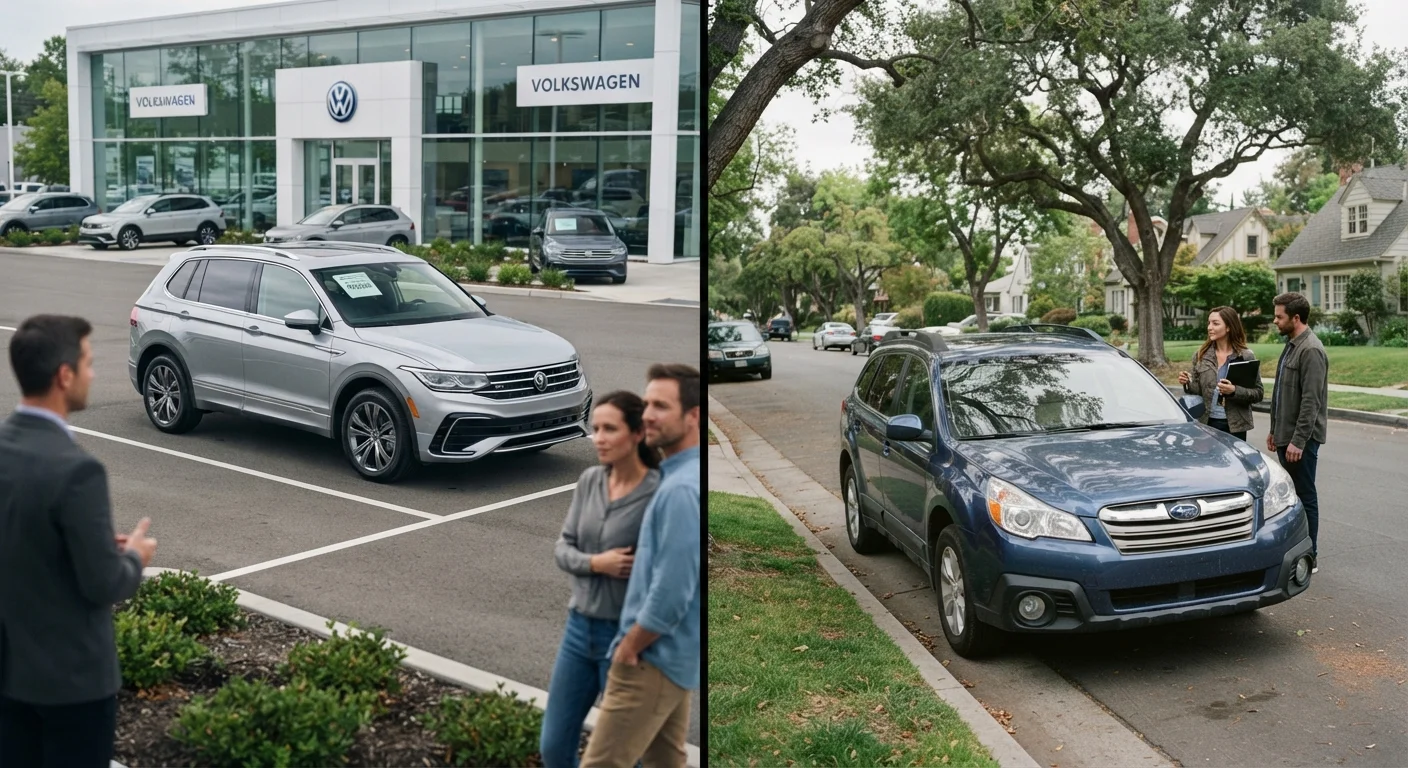
The Depreciation Factor: Where the Real Money Goes
Depreciation is often the largest single cost of car ownership - and it hits hardest in the first few years. A new vehicle can lose a significant portion of its original value within the first two to three years of ownership, depending on the make, model, and market conditions. When you buy used, someone else has already absorbed that initial drop.
This is the core financial argument for buying used. A vehicle that is two to four years old may offer most of the same utility as its new equivalent at a meaningfully lower purchase price. Understanding how depreciation works before you shop can help you identify which models hold their value better - and which ones give used buyers the most leverage.
That said, if you plan to keep a new car for ten or more years, the depreciation curve flattens considerably over time. The calculation looks different for long-term owners than for those who trade in every three to five years.
| New Car | Certified Pre-Owned | Standard Used Car | |
|---|---|---|---|
| Purchase Price | Highest | Moderate to high | Lowest to moderate |
| Depreciation Exposure | Absorbs first-year drop | Partial exposure avoided | Steepest drop already absorbed |
| Warranty Coverage | Full factory warranty | Limited extended warranty | Little to none typically |
| Financing Rates | Generally lowest | Moderate | Generally highest |
| Repair Risk | Very low initially | Low to moderate | Moderate to higher |
| Technology & Safety Features | Latest available | Recent but not current | May be dated |
| Insurance Costs | Typically higher | Moderate | Often lower |
Warranty, Reliability, and the Risk You're Taking On
New cars come with manufacturer warranties - typically a bumper-to-bumper coverage period plus a longer powertrain warranty. These provide a financial safety net during a period when the vehicle is least likely to need major repairs anyway. If something goes wrong, the cost is largely covered.
Used vehicles may arrive with little to no remaining warranty coverage, depending on their age and mileage. This transfers repair risk directly to the buyer. That risk is manageable - especially with a pre-purchase inspection - but it is real. An independent mechanic inspection before committing to a used car purchase is one of the most cost-effective steps a buyer can take. Learn what a pre-purchase inspection covers and how to interpret the results before signing anything.
Certified pre-owned (CPO) programs sit between these two extremes. They typically include inspections and extended limited warranties, though the specific terms vary by manufacturer and dealership. What CPO certification actually involves is worth understanding before paying the premium those programs command.
Get an Inspection Before You Commit
For any used vehicle, budgeting $100-$200 for an independent pre-purchase inspection by a qualified mechanic is money well spent. It can surface issues invisible to a visual walk-around and give you negotiating leverage - or a clear reason to walk away. Never skip this step based on a seller's assurances alone.
Financing Rates and Total Cost of Ownership
Financing rates for new vehicles are generally lower than for used vehicles. Lenders treat new cars as lower-risk collateral, and manufacturers sometimes offer promotional rates that are unavailable on used purchases. On a multi-year loan, even a modest difference in interest rate can add up to hundreds or thousands of dollars in total interest paid.
However, the higher sticker price of a new car means a larger loan balance to start - so a lower rate does not automatically translate to a lower monthly payment or lower total outlay. Run the numbers on both scenarios before assuming either is cheaper.
Beyond the purchase itself, annual ownership costs deserve equal attention. Insurance premiums, registration fees, fuel costs, and maintenance schedules all factor into what a vehicle truly costs you each year. New cars may carry higher insurance costs due to their replacement value, while older vehicles may need more frequent maintenance.
~20%
Typical first-year depreciation for new vehicles
Industry estimates suggest new cars can lose roughly 15-20% of their value in the first year, with steeper cumulative losses by year three.
2-3 yrs
Age at which used-car value often stabilizes
Vehicles in the two-to-three-year-old range have shed the sharpest depreciation while typically retaining modern safety and technology features.
$700-$1,200
Estimated annual maintenance difference (new vs. older used)
General cost estimates from automotive ownership studies suggest older used vehicles tend to carry higher annual maintenance costs than newer ones.
Making the Call for Your Situation
There is no objectively correct answer here. A new car makes more sense for buyers who value factory warranty coverage, want the latest safety technology, and plan to keep the vehicle for the long term. A used car makes more sense for buyers focused on minimizing upfront cost and avoiding the steepest depreciation.
A few questions can sharpen your thinking: How long do you plan to own this vehicle? Do you have a cash reserve to cover unexpected repairs? How important is manufacturer warranty coverage to your peace of mind? What does your realistic monthly budget look like - not just for the loan, but for insurance and maintenance too?
If you eventually sell or trade the vehicle, how you exit matters too. Trading in vs. selling privately involves different trade-offs in convenience, pricing, and tax implications that are worth thinking through before you buy - because the exit is part of the total ownership picture.
Several common car-buying myths also cloud the decision, particularly around dealer financing and what certified pre-owned status actually guarantees. Going in informed on those points will keep you from making an expensive assumption.
This article is for general informational purposes only and does not constitute financial or purchasing advice. Vehicle pricing, depreciation rates, financing terms, and insurance costs vary significantly by market, model, and individual circumstances. Consult a licensed financial adviser or insurance professional for guidance specific to your situation.