
The Core Price Gap - and Why It Exists
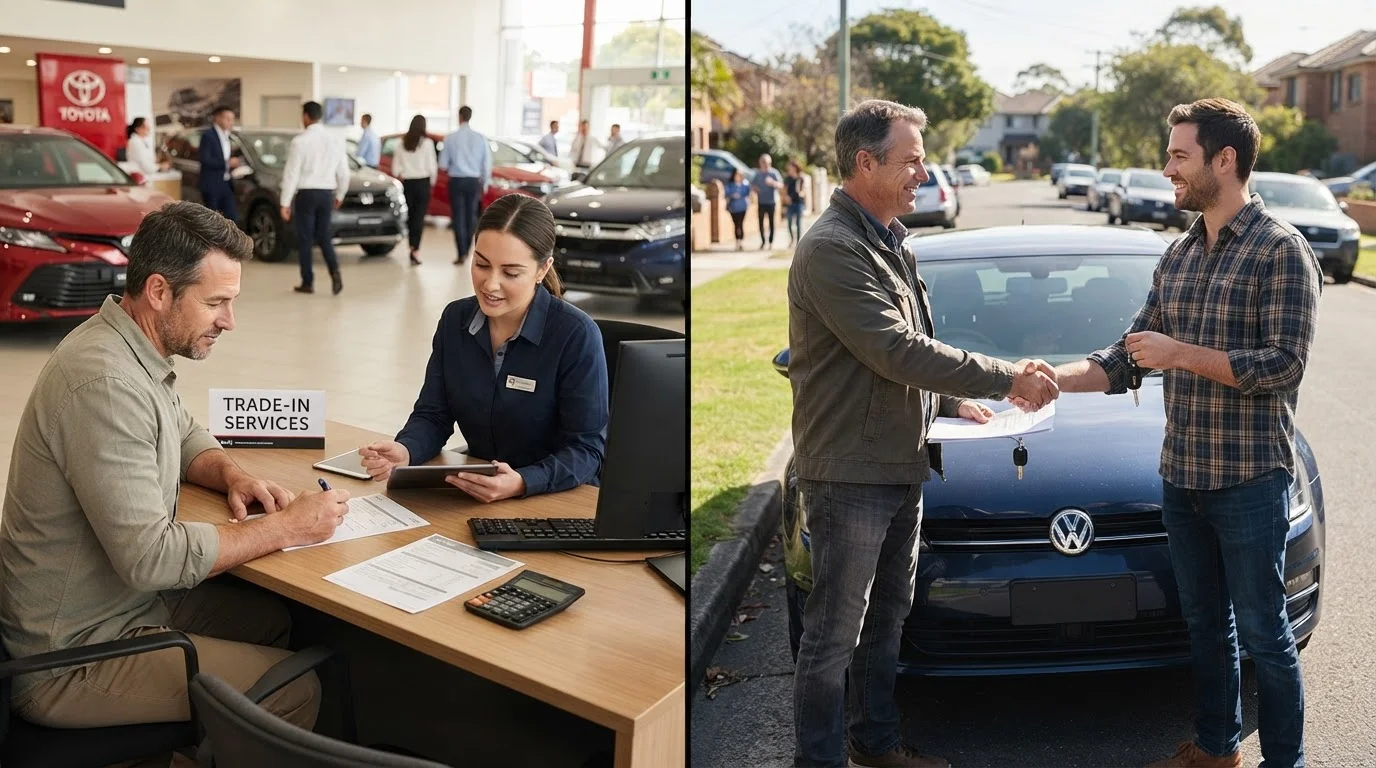
When you sell a car to a dealer as a trade-in, you're selling to a business that needs to profit on the resale. That means the dealer's offer typically reflects wholesale or near-wholesale value - enough room for them to recondition the vehicle, carry it in inventory, and still earn a margin. Private buyers, by contrast, expect to pay closer to retail because they're buying directly for personal use.
The result: private-party sale prices are generally higher than trade-in offers for the same vehicle. The gap varies depending on the car's age, condition, and market demand, but it's real and consistent across most transactions. If money is the primary factor in your decision, that reality has to anchor your thinking.
That said, the gap is rarely as large as it first appears once you factor in the sales tax offset - which we cover below - and the true cost of the time and effort a private sale demands.
| Criterion | Dealer Trade-In | Private Sale |
|---|---|---|
| Typical sale price | Wholesale or near-wholesale | Closer to retail value |
| Sales tax offset (most states) | Yes - tax on price difference only | No - tax on full purchase price |
| Time to complete | Same day, typically | Days to weeks |
| Paperwork burden | Dealer handles most of it | Seller manages all of it |
| Negotiation complexity | Moderate - dealer sets anchor price | Variable - depends on buyer |
| Safety considerations | Minimal - professional setting | Requires vetting strangers |
| Ongoing costs during sale | None | Insurance, possible repairs, detailing |
The Tax Angle Most People Overlook
In the majority of U.S. states, when you trade in a vehicle and buy a replacement from the same dealership, you pay sales tax only on the difference between your trade-in value and the purchase price of the new vehicle. This is commonly called the trade-in sales tax credit or tax offset.
Here's a simplified example of how that math works: if your trade-in is valued at $10,000 and your next car costs $30,000, you may only owe sales tax on $20,000 - not the full $30,000. Depending on your state's tax rate, that offset could represent hundreds or even thousands of dollars in savings.
A private sale doesn't come with that benefit. You pocket more from the sale itself, but you pay sales tax on the full purchase price of your next vehicle. In some situations, the tax savings from a trade-in can significantly narrow - or even eliminate - the apparent advantage of selling privately.
Trade-In Tax Rules Differ by State
Not every state applies the trade-in sales tax credit the same way, and some cap the benefit or exclude certain transaction types. Before factoring this into your decision, check your specific state's Department of Motor Vehicles or Department of Revenue guidance. A tax professional can help you model the actual savings for your situation.
Tax treatment of trade-ins varies by state. A handful of states cap the trade-in credit or don't offer it at all. Always verify the rules in your state before assuming the offset applies to your transaction.
Convenience, Effort, and Hidden Costs
A dealer trade-in is genuinely fast. You get an offer, negotiate if you choose to, and the transaction wraps up as part of buying your next vehicle. No strangers visiting your home, no test drives with unknown drivers, no back-and-forth negotiations that stretch over days.
Selling privately takes real effort. You'll need to price the car accurately - resources like published valuation guides can help - write an honest listing, vet inquiries, arrange test drives safely, and handle all the paperwork. Our step-by-step guide to private car sales walks through each of those stages in detail.
There are also costs that can erode private-sale profits: detailing, minor repairs to make the car presentable, continued insurance coverage during the listing period, and the opportunity cost of your time. None of these eliminate the financial case for selling privately, but they do belong in your calculation.
15-25%
Typical trade-in discount vs. private-party price
Industry valuation data consistently shows dealers offer significantly less than private-party prices to preserve resale margin.
2-6 weeks
Average time to sell privately
Depending on vehicle demand and pricing accuracy, private listings often take several weeks to attract and close a qualified buyer.
Varies by state
Sales tax savings from trade-in credit
In states with a trade-in tax credit, the savings can offset a substantial portion of the price gap between a trade-in and a private sale.
Making the Call: What to Weigh Before You Decide
Neither route is automatically the right answer. The decision depends on a few honest questions: How much time do you have? How comfortable are you negotiating with strangers? Does your state's tax structure favor a trade-in? And how much does the difference in net proceeds actually matter for your financial picture?
If you're financing your next vehicle, it's also worth understanding how a trade-in interacts with dealership financing. Our comparison of dealer financing vs. bank loans explains how these pieces fit together at the negotiating table.
One practical approach: get trade-in quotes from multiple dealers and at least one independent appraisal before you list the car privately. That gives you a real floor - and a clear sense of what the private-sale premium is worth pursuing. If you do sell privately, understanding how title transfer works will help you close the deal cleanly and legally.
Whatever path you take, go in with accurate numbers rather than assumptions. The difference between a good outcome and a frustrating one usually comes down to preparation, not luck.
This article is for general informational purposes only and does not constitute financial, legal, or tax advice. Tax rules and trade-in regulations vary by state. Consult a qualified professional for guidance specific to your situation.