
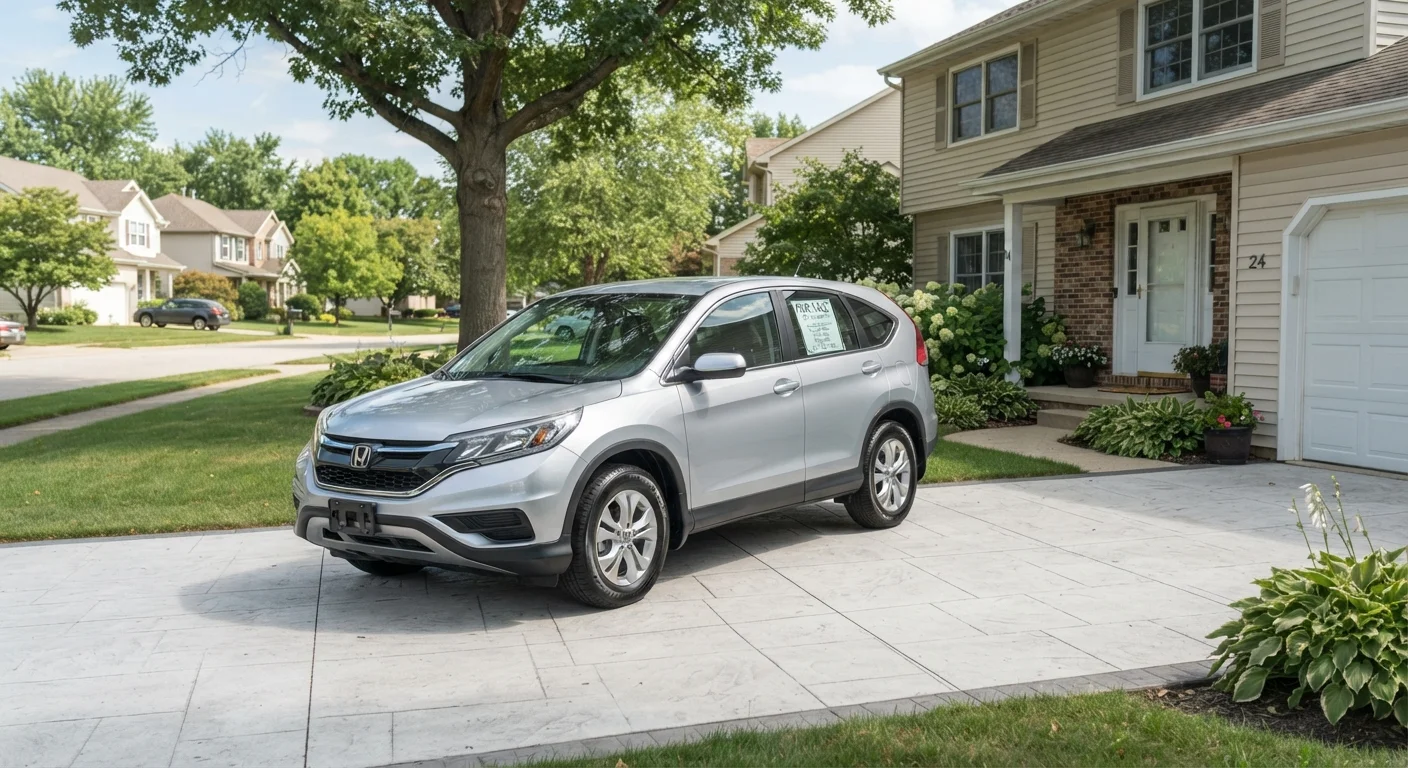
Why private-party sales are worth the extra effort
Selling a car privately almost always puts more money in your pocket than a trade-in - sometimes significantly more. The tradeoff is time and effort: you handle the pricing research, listing, inquiries, test drives, and paperwork yourself. Before you commit either way, it helps to understand the financial difference. Our comparison of trade-in vs. private sale lays out how the numbers typically shake out.
If you decide private sale is right for your situation, the process is straightforward once you know what to expect at each stage. The steps below walk you through everything from setting an asking price to handing over the title.
What you will need
Vehicle History Report
Provides buyers with documented evidence of ownership history, accidents, and title status, increasing buyer confidence.
Bill of Sale Template
A written record of the transaction terms signed by both parties, required or strongly recommended in most states.
Odometer Disclosure Statement
Federally required for most vehicles under ten years old to document the mileage at the time of sale.
Detailing supplies or professional detailing service
A clean interior and exterior meaningfully improves perceived value and the quality of listing photos.
Step-by-step: How to sell your car privately
Research your car's fair market value
Look up your vehicle's current market value using established automotive valuation tools before you decide on an asking price. Factor in mileage, trim level, condition, local demand, and comparable private-party listings in your area - not just trade-in or dealer retail figures. Private-party values typically fall between those two benchmarks. Set your asking price slightly above your target to leave room for negotiation, but avoid pricing so high that you drive away serious buyers.
Gather paperwork and vehicle documentation
Collect everything a buyer will want to see: the title (confirm it's in your name and free of liens), maintenance records, any warranty documentation, and the most recent emissions or inspection certificates if your state requires them. If you still owe money on the vehicle, contact your lender to understand the payoff process - the lienholder must be satisfied and removed from the title before ownership can transfer cleanly.
Clean and photograph the vehicle thoroughly
A clean car photographs better, shows better in person, and signals to buyers that it was well cared for. At a minimum, wash and vacuum the car, clean the windows, and wipe down the interior surfaces. For higher-value vehicles, professional detailing is worth considering. Take photos in good natural light from multiple exterior angles, plus the interior, dashboard, odometer, tires, and any notable flaws you intend to disclose.
Write an accurate and complete listing
Your listing should include: year, make, model, trim, mileage, transmission type, engine, notable features, and an honest account of the car's condition - including any known issues. Vague or overly promotional descriptions attract unserious inquirers. A specific, matter-of-fact listing draws buyers who already know what they want. Post on platforms where your local audience actively searches for private-party vehicles.
Screen inquiries and arrange safe test drives
Respond to serious inquiries promptly and ask qualifying questions: Are they a cash buyer? Do they have a license? When are they looking to purchase? For test drives, meet in a public place during daylight hours, verify the buyer's driver's license before handing over the keys, and consider riding along. Never leave the buyer alone with the vehicle. Trust your instincts - you are not obligated to complete any test drive you feel uncomfortable about.
Negotiate and agree on a price
Be prepared for buyers to negotiate - it's standard in private sales. Know your floor price before the conversation starts and stick to it. If a buyer requests a pre-purchase inspection by an independent mechanic, that's a reasonable request and generally a sign of a serious buyer. You don't have to agree to every concession, but being inflexible can cost you a genuine sale. For context on negotiation dynamics, see our guide to price negotiation.
Accept payment securely
Cash remains the simplest and most fraud-proof option for private sales. If the amount is large, consider meeting at the buyer's bank so they can withdraw funds and you can verify authenticity. Cashier's checks and money orders can be counterfeited - if accepting one, verify it directly with the issuing bank before signing anything over. Avoid personal checks entirely. Some sellers and buyers use bank-to-bank wire transfers for large transactions. Do not accept overpayment schemes of any kind.
Complete the title transfer and bill of sale
Once payment is confirmed, sign the title over to the buyer following your state's specific instructions - including any required notarization. Complete an odometer disclosure statement as required by federal law. Both parties should sign a bill of sale documenting the sale price, vehicle details, date, and both parties' names and addresses. Give the buyer their copies; keep yours. For a detailed breakdown of what title transfer involves, see our title transfer walkthrough.
Don't cancel insurance too early
Canceling your auto insurance the moment you agree on a sale price - before the title actually transfers - can leave you exposed. Until the title is in the buyer's name, you may retain legal liability for the vehicle. Keep coverage in place through the full transfer.
This article provides general educational information about the private vehicle sales process. Title transfer requirements, disclosure rules, and sale-related regulations vary by state. Consult your state's DMV and, if needed, a licensed professional for guidance specific to your situation.
After the sale: Wrap up loose ends
The transaction doesn't fully close the moment you hand over the keys. Notify your insurance company promptly after the sale - but don't cancel your policy until after the title has transferred and the buyer has taken possession. In most states, you are responsible for the vehicle until the title is legally in the buyer's name.
Remove your license plates if your state requires it (requirements vary), return or transfer your registration as applicable, and submit any required seller notification to your state DMV. Keep copies of all paperwork - the bill of sale, title transfer records, and odometer disclosure - for at least a few years in case questions arise later.
Hold onto your paperwork
Keep a copy of the signed bill of sale, your title transfer records, and any DMV notification confirmation for at least three years. These documents protect you if a buyer later disputes terms, or if the vehicle is involved in an incident before they complete their registration.
If you're now in the market for a different vehicle, our full guide to buying a car walks through every stage of that process from budget-setting to registration.