
What Depreciation Actually Means for Car Buyers
Depreciation isn't just an accounting term - it's one of the biggest costs you'll absorb as a vehicle owner, and most buyers never see it coming on a sticker or invoice. In plain terms, it's the money you lose between what you paid and what someone else would pay you for the same car later.
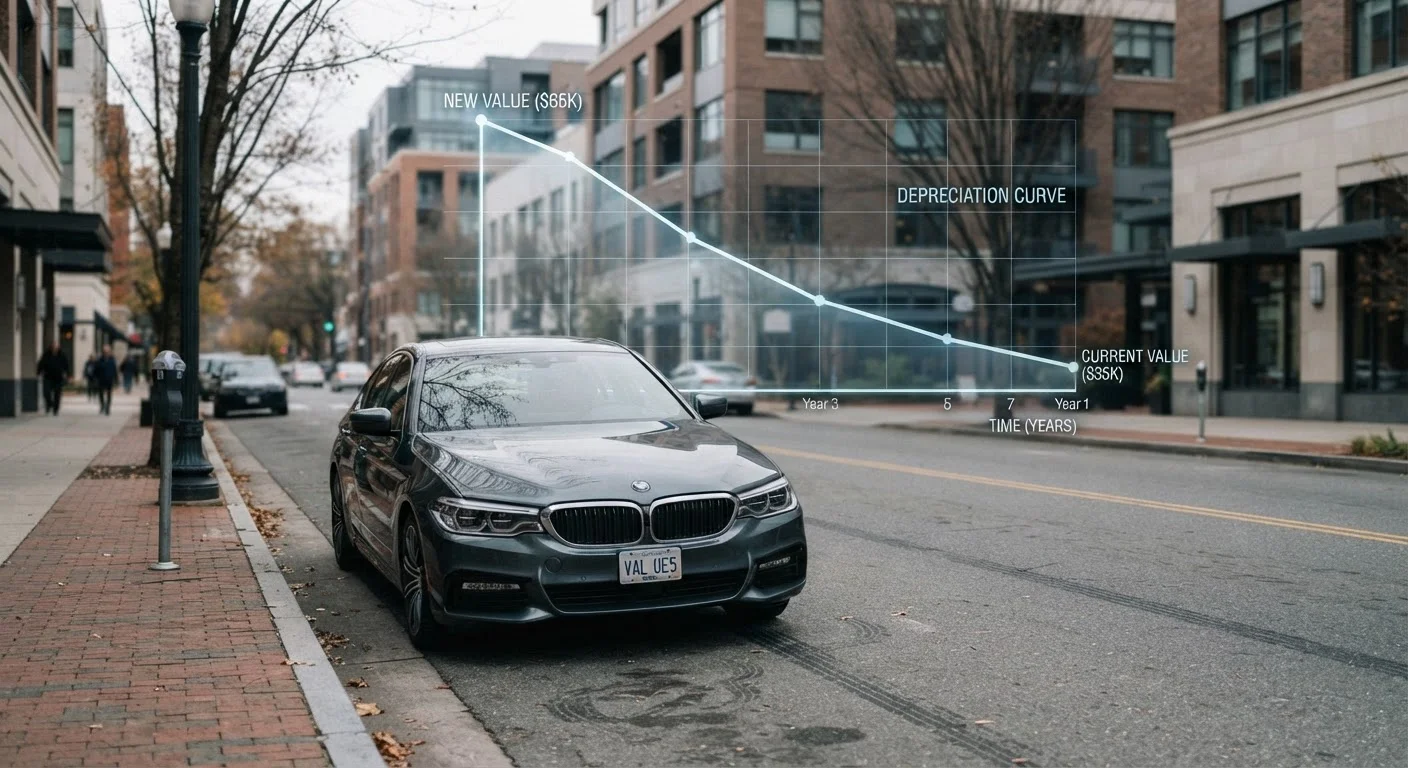
A new vehicle typically sheds a significant chunk of its value in the first 12 months of ownership, often in the range of 15-25%. By the fifth year, many cars have lost 50-60% of their original purchase price. That loss isn't hypothetical - it shows up directly if you try to trade in, sell privately, or need insurance to replace a totaled vehicle.
Understanding depreciation helps you think beyond the monthly payment. The full cost of owning a vehicle includes much more than the sticker price, and depreciation is one of the largest line items most drivers never explicitly budget for.
~20%
Average first-year new car depreciation
Industry valuation analysts broadly estimate new vehicles lose roughly 15-25% of value in their first year, with the average falling near 20% depending on make and model.
~50%
Value lost by year five for many vehicles
Automotive valuation data consistently shows that many new vehicles retain only around 40-60% of their purchase price after five years of typical ownership.
72 months
Common auto loan term length
Longer loan terms have become common in the U.S. auto market, increasing the risk that borrowers remain underwater on a depreciating asset for an extended period.
Why the First Year Hits Hardest
The steepest depreciation curve happens early. The moment a new car is titled and driven off the lot, it transitions from "new" to "used" in the eyes of the market. This shift alone accounts for a notable portion of first-year value loss - buyers who want a new car are competing for new inventory, not your vehicle.
After that first drop, depreciation continues but at a slower pace. Years two through five typically see gradual declines of 10-15% annually. By years six and beyond, many vehicles stabilize into a slower, steadier loss - though high mileage and wear can accelerate the slide at any point.
The One-to-Three Year Sweet Spot
Vehicles between one and three years old have already absorbed their steepest depreciation losses. You're often buying a car with significant remaining life at a meaningfully lower price than new. Just be sure to verify maintenance records and run a vehicle history report before purchasing any used vehicle.
This curve is why vehicles that are one to three years old with moderate mileage often represent a practical middle ground: someone else absorbed the biggest hit, and the car still has significant useful life remaining. For a fuller look at that trade-off, see new car vs. used car considerations.
What Makes Some Cars Hold Value Better
Not all vehicles depreciate at the same rate. Several factors influence how quickly a specific car loses market value:
- Brand reputation for reliability: Vehicles from manufacturers with strong reliability track records tend to hold value longer because buyers trust them in the used market.
- Model popularity and demand: A vehicle with broad consumer appeal and consistent demand will depreciate more slowly than a niche model with a thin resale audience.
- Category: Pickup trucks and certain SUVs have historically depreciated more slowly than sedans - though this reflects market conditions that can shift.
- Mileage and condition: Every mile adds wear, and high-mileage vehicles command lower prices regardless of brand.
- Fuel economy: When fuel prices spike, buyers favor efficient vehicles, which can affect the resale value of less efficient models.
- Color and trim: Unusual colors or feature configurations can narrow your resale audience and push values down.
These variables interact in real ways. A well-maintained, popular-model vehicle from a brand with a reliability reputation can retain value noticeably better than a comparable vehicle without those attributes.
How Depreciation Should Influence Your Purchase Decision
Factoring depreciation into your buying decision isn't about finding a loophole - it's about understanding the true cost of ownership. A vehicle with a lower sticker price but aggressive depreciation may cost more over three years than a slightly pricier option that holds value well.
Here's how to put depreciation to practical use:
- Research expected depreciation before you commit. Automotive valuation resources publish historical depreciation data by make and model. Looking up five-year value retention gives you a clearer picture of long-term cost.
- Consider your financing exposure. Buying a car that depreciates faster than you're paying down your loan can leave you "underwater" - owing more than the car is worth. This matters if you need to sell or if the vehicle is totaled.
- Understand what it means for insurance. Standard auto insurance pays actual cash value in a total loss - the depreciated value of your vehicle. If you financed, gap coverage can protect the difference between the insurance payout and your remaining loan balance.
Depreciation is also one reason first-time car buyers often overpay - they focus on monthly payments without accounting for the total value lost over time. Alongside depreciation, it's worth examining what value actually means in a purchase decision before committing to any vehicle.
“Depreciation is the largest single cost of car ownership for most drivers - larger than fuel, insurance, or maintenance - yet it's invisible at the point of purchase because no one writes you a bill for it.”
— Consumer Financial Education Research, General principle widely cited in automotive cost-of-ownership analysis
This article is for general informational purposes only and does not constitute financial, insurance, or purchasing advice. Consult a licensed financial adviser or insurance professional for guidance specific to your situation.