
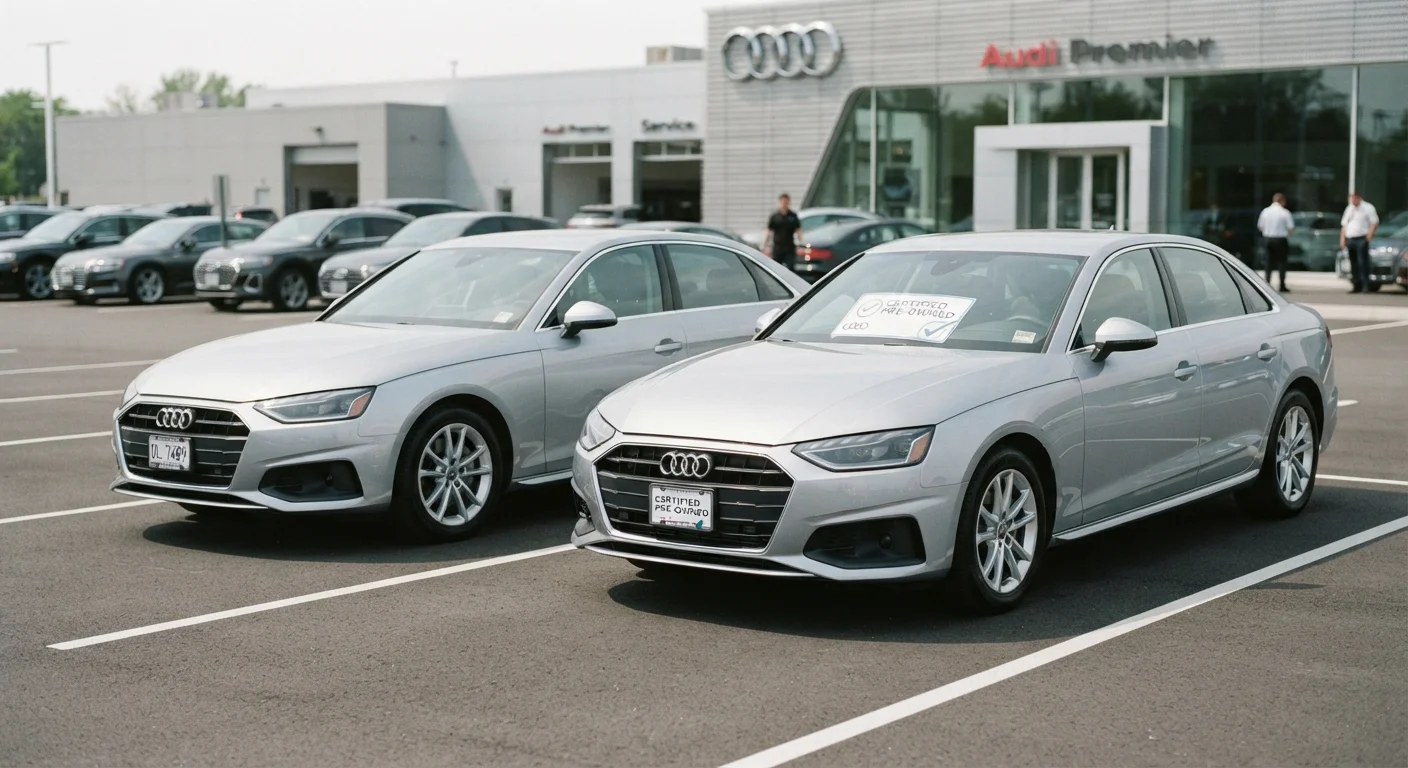
What 'Certified Pre-Owned' Actually Means
The term certified pre-owned (CPO) sounds official, but it doesn't point to a single universal standard. There are two distinct types of CPO programs: manufacturer-sponsored and dealer-sponsored. Understanding which type you're dealing with is the first thing to clarify before assuming what's included.
Manufacturer CPO programs are run by automakers themselves - vehicles must meet specific age and mileage thresholds (commonly under 5-6 years old and under 60,000-80,000 miles), pass a multi-point inspection performed by a factory-trained technician, and come with an extended limited warranty backed by the manufacturer. These programs tend to have consistent, published standards.
Dealer CPO programs are created and managed by individual dealerships. The standards are set internally, the inspections vary in rigor, and any warranty is backed by the dealer - not a manufacturer. The term "certified" here carries less weight and is worth scrutinizing carefully.
When evaluating any CPO vehicle, ask specifically: Who backs this certification - the manufacturer or the dealership? What does the inspection checklist actually cover? And what are the warranty terms in writing?
The Inspection: What It Typically Covers
A CPO inspection is often described as a "multi-point inspection," with point counts ranging from 100 to over 200 depending on the program. More points doesn't automatically mean more thorough - it can reflect how granularly individual items are listed. What matters is the scope of systems examined.
Most manufacturer CPO inspections cover:
- Mechanical systems: Engine, transmission, brakes, suspension, steering, and exhaust
- Electrical systems: Lights, infotainment, sensors, and battery
- Safety components: Airbags, seatbelts, and structural integrity checks
- Interior and exterior condition: Upholstery, glass, body panels, and paint
- Tires: Tread depth and condition
Importantly, a CPO inspection is not the same as an engineering deep-dive. It checks condition at a moment in time, and inspectors can miss latent issues. Vehicles with prior accident history that was properly repaired may still qualify for CPO status. Always review the vehicle history report - and consider whether an independent pre-purchase inspection adds value even on a CPO vehicle.
Ask for the Actual Inspection Checklist
Any reputable CPO program should be able to provide the completed inspection report for the specific vehicle you're considering - not just a brochure describing the program in general. Review which items were inspected, and note whether any required repairs were made. If a dealer can't produce this documentation, treat that as a red flag worth investigating further.
CPO vs. Standard Used: Key Differences at a Glance
Here's how the two options compare across factors that matter most to buyers.
| Certified Pre-Owned | Standard Used | |
|---|---|---|
| Price | Higher - premium over comparable used | Lower - more negotiating room |
| Inspection | Multi-point, documented by program | Varies - none, dealer-performed, or buyer-arranged |
| Warranty | Included (manufacturer or dealer backed) | Not included - buyer bears repair costs |
| Vehicle history transparency | Typically disclosed; report included | Buyer must obtain independently |
| Age/mileage restrictions | Yes - program sets eligibility limits | No restrictions |
| Negotiability | Limited - CPO status affects pricing floor | More flexible, especially private sales |
| Roadside assistance | Often included in manufacturer programs | Not included |
The price gap between a CPO and a comparable standard used vehicle is real - and it varies by brand, model, and market conditions. Whether that premium is justified depends largely on how much value the warranty adds for your situation. For vehicles that are still within the original factory warranty window, the CPO extension matters more. For models nearing the end of typical reliability lifespans, CPO coverage may not extend far enough to change the calculus significantly.
What the Warranty Does - and Doesn't - Cover
The warranty is the cornerstone of any CPO program's value proposition. But like all warranties, CPO coverage has defined limits. See our overview of what warranties actually cover for general framing - the same principles apply to CPO programs.
Typical CPO warranty structures include:
- A powertrain warranty covering the engine, transmission, and drivetrain - usually the longest component
- A bumper-to-bumper or comprehensive warranty covering more systems, often shorter in duration
- A deductible per visit, which varies by program (commonly $0-$200)
What's typically excluded: wear items (brake pads, tires, wiper blades), cosmetic damage, and anything related to misuse or modifications. Roadside assistance is included in many manufacturer programs but not all dealer programs.
Also worth noting: CPO warranties are generally non-transferable or transfer with restrictions, which can affect resale value. And unlike a manufacturer warranty on a new car, CPO coverage may require service at specific locations. Read the terms carefully before assuming broad coverage.
Dealer-Run CPO Programs Aren't Standardized
A vehicle labeled "certified" by a dealership that isn't part of a manufacturer CPO program may have been inspected to very different standards than a manufacturer-backed program. The warranty backing that vehicle also depends entirely on the dealer's financial stability - not a manufacturer's resources. Ask specifically whether the program is manufacturer-sponsored before placing significant weight on the certification label.
When Standard Used Makes More Sense
A standard used car - purchased from a dealership or private seller without CPO status - isn't the riskier choice by default. It depends on how you approach it.
Standard used vehicles have a distinct advantage: price flexibility. Without the CPO premium, there's often more room to negotiate, and that savings can fund a thorough independent inspection, an extended service contract, or simply stay in your pocket.
The risks are real, though. You're taking on more verification responsibility yourself. This means pulling a vehicle history report, budgeting for an independent mechanic inspection, and being realistic about near-term repair costs. A well-maintained used vehicle with a clean history and a good inspection report can be a stronger value than a CPO vehicle at a meaningfully higher price point.
For a broader view of how used vehicles compare to new, see our article on the real trade-offs between new and used cars. And if you've heard that CPO is always worth the price, it's worth reviewing common car-buying myths that can cost consumers money.
$1,000-$3,500
Typical CPO price premium over comparable used
Industry estimates from automotive research organizations suggest CPO vehicles frequently carry this premium range, though it varies by brand and model.
~70%
Share of CPO sales from manufacturer programs
According to automotive industry tracking data, the majority of CPO transactions come through manufacturer-sponsored rather than dealer-only programs.