
What These Terms Actually Mean
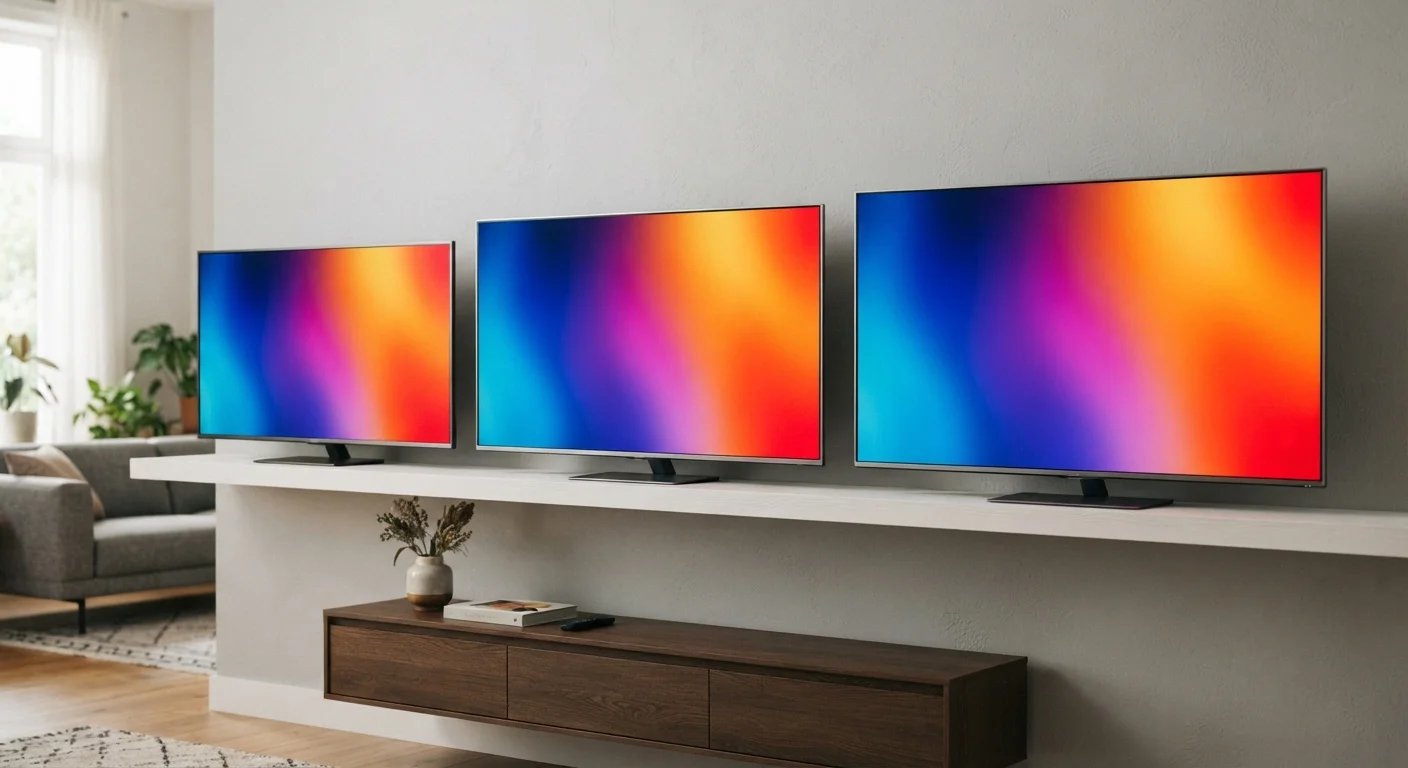
Walk into any electronics section and you'll see LED, QLED, and OLED plastered across TV boxes — often without much explanation. These aren't just marketing tiers. They describe fundamentally different ways a screen produces light and color, and each approach has real consequences for what you watch and where you watch it.
LED (Light Emitting Diode) is the standard technology in most TVs sold today. An LED TV is actually an LCD (Liquid Crystal Display) panel backlit by LEDs. The LEDs illuminate the crystals, which filter color and shape the image. It's reliable, affordable, and widely available.
QLED (Quantum Light Emitting Diode) builds on LED by adding a layer of quantum dots — microscopic semiconductor particles — between the LED backlight and the LCD panel. These dots convert and refine light wavelengths, producing more accurate, vibrant colors and higher peak brightness. QLED is still a backlit LCD at its core.
OLED (Organic Light Emitting Diode) is a completely different architecture. Each pixel produces its own light and can switch off entirely. There is no separate backlight. This is the fundamental reason OLED images look the way they do — and why the technology comes with a distinct set of trade-offs.
For a broader look at how these screens fit into a home setup, see our home entertainment systems explainer.
How They Compare Across the Criteria That Matter
Understanding the specs on paper is one thing — knowing how they translate to your couch is another. Here's how each technology stacks up across the factors most viewers actually care about.
| LED | QLED | OLED | |
|---|---|---|---|
| Light source | LED backlight + LCD | LED + quantum dots + LCD | Self-emissive pixels |
| Black levels / Contrast | Moderate (backlight glow) | Good (local dimming) | Excellent (pixels fully off) |
| Peak brightness | Moderate | High — strong sunlit rooms | Moderate to high |
| Color accuracy | Good | Very good | Excellent |
| Viewing angle | Varies (VA vs. IPS panel) | Varies (typically VA) | Wide, consistent |
| Burn-in risk | None | None | Low but possible |
| Typical price range | Lower | Mid to high | High |
| Best room scenario | Bright or mixed-use rooms | Very bright rooms | Dark or dimmed rooms |
A few of these rows deserve more context. Contrast ratio is arguably the most important factor in perceived image quality. Because OLED pixels go fully dark, its contrast is theoretically infinite — you see true black rather than a dark gray glow. QLED and LED panels use local dimming (grouping LEDs into zones that dim independently) to approximate this, but some blooming — a faint halo of light around bright objects on dark backgrounds — is still common on lower-end sets.
Burn-in is the other frequently misunderstood OLED concern. If a static image (like a news ticker or game HUD) sits on screen for hundreds of hours, it can permanently imprint on the panel. Modern OLED TVs include pixel-refreshing features that significantly reduce this risk for typical viewing habits. It remains a more legitimate concern for people who leave a channel logo frozen on screen for extended periods.
Check Local Dimming Zones on LED Sets
If you're considering an LED or QLED TV, look for the number of local dimming zones listed in the specifications. More zones generally means better contrast control and less blooming around bright objects on dark backgrounds. A set with full-array local dimming — where the dimming zones are spread across the entire backlight rather than just the edges — will consistently outperform edge-lit sets in picture quality.
Which Screen Works Best in Your Room
Panel specs matter less than most buyers think if they're not matched to the room. Here's how to think through your actual environment.
- Dark or light-controlled rooms: OLED's contrast and color accuracy shine brightest here. If you watch movies with the lights low, the difference is immediately visible.
- Bright rooms with windows: Peak brightness matters more than contrast when you're fighting sunlight. QLED panels typically reach higher nit levels, making the image easier to see in daylight conditions.
- Mixed everyday use: Standard LED TVs handle everything from sports to streaming without drama. Midrange LED sets with good local dimming often close the gap considerably.
- Gaming: OLED panels generally offer faster pixel response times, which reduces motion blur — a meaningful advantage in fast-paced games. Some QLED panels match this, but check the specific model's specs.
Viewing angle is another room-dependent factor. OLED screens maintain color and contrast across wide angles, making them better for rooms where people watch from off to the side. Many LED and QLED panels use VA (Vertical Alignment) panels, which can show color shift when viewed from oblique angles — though IPS-based LED panels handle this better at the cost of some contrast.
If you're building out a broader home setup, our Home Tech Setup hub covers everything from Wi-Fi to smart home devices alongside display choices.
~1,000–2,000 nits
Typical QLED peak brightness
High-end QLED panels can sustain brightness levels that significantly outperform most OLED panels in well-lit environments.
Infinite
Theoretical OLED contrast ratio
Because individual OLED pixels switch fully off, true black is achievable — a meaningful difference in dark scene performance.
Practical Considerations Before You Decide
Once you understand the technology, a few practical questions help narrow the decision further.
Screen size: OLED panels are available in a range of sizes but tend to carry a price premium at larger sizes. If you're prioritizing a very large screen, LED and QLED options often provide more screen per dollar.
Content type: If the majority of your viewing is live sports or content in brightly lit conditions, the extra brightness headroom of QLED can be genuinely useful. For streaming services that offer HDR (High Dynamic Range) content — which is increasingly common — both OLED and high-end QLED panels are well-equipped to show it accurately.
Longevity: LED and QLED panels tend to maintain their brightness levels longer and don't carry a burn-in risk. OLED panels can see some brightness reduction over many thousands of hours of use, though this is a long-term consideration rather than something most viewers will notice in the first several years.
For anyone connecting their TV into a larger home entertainment ecosystem, it's also worth reading up on wired vs. wireless home entertainment trade-offs — the display is only part of the picture.
Smart TV features are standard across all three panel types, though the quality of the built-in software varies by manufacturer rather than by panel technology. If you're curious about how your TV fits into a connected home, see what a smart home actually means.