
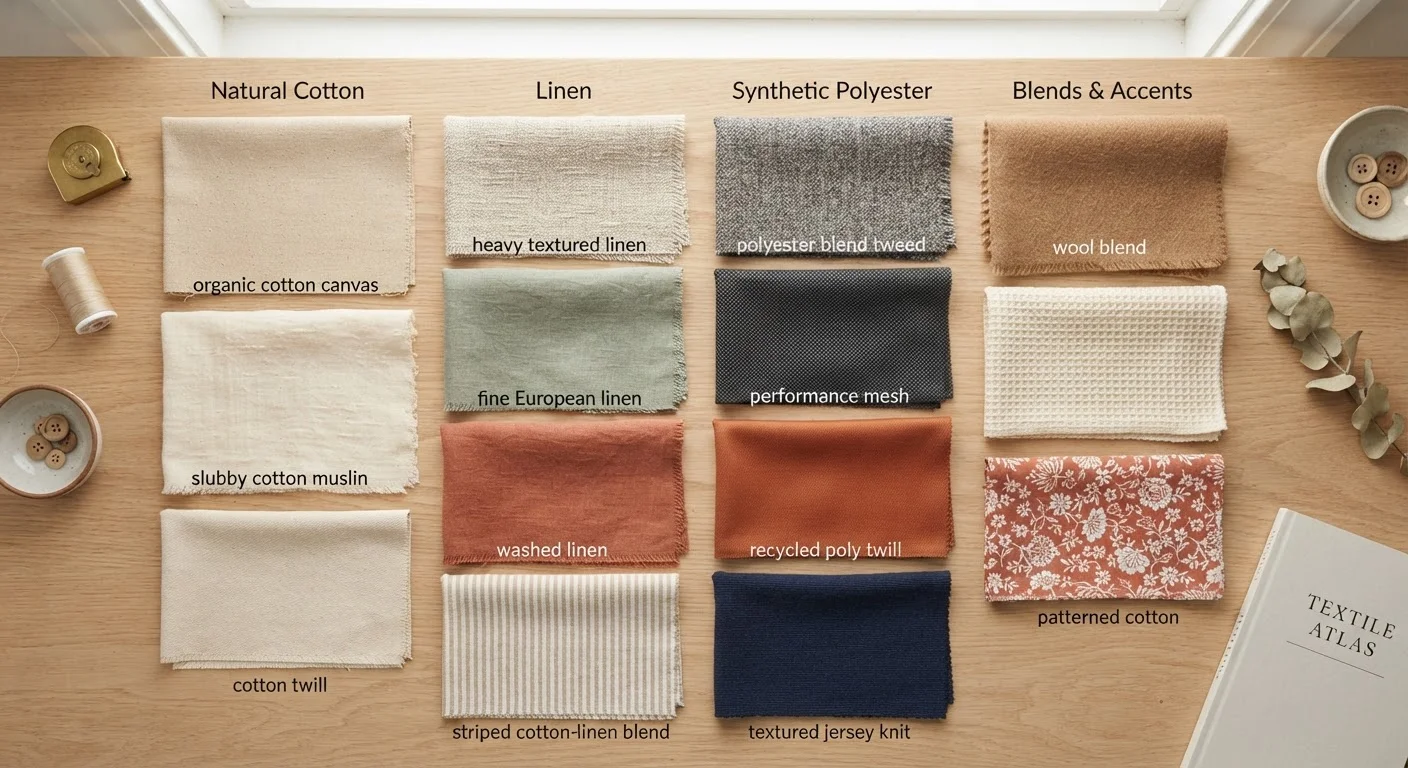
What Makes a Fabric Natural or Synthetic?
At its simplest, natural fibers come from plants or animals — cotton from the cotton plant, linen from flax, wool from sheep, silk from silkworm cocoons. Synthetic fabrics are manufactured from petrochemical processes: polyester, nylon, acrylic, and spandex are all engineered in labs and factories.
That origin story has real consequences for how each fabric performs in daily life. Natural fibers have a cellular structure that allows moisture and air to move through them. Synthetics are typically non-porous, which is why they resist water and dry quickly — but can also trap heat. Understanding this difference is the foundation for smarter fabric choices. As fit, fabric, and finish shape how clothes look on you, fabric is rarely a minor detail.
| Criterion | Natural Fibers | Synthetic Fabrics |
|---|---|---|
| Breathability | High — air and moisture move freely | Lower — can trap heat |
| Wrinkle Resistance | Low to moderate (varies by fiber) | High — holds shape well |
| Moisture Management | Absorbs moisture (can feel damp) | Wicks and dries quickly |
| Durability | Good with proper care | Very good; resists abrasion |
| Care Requirements | More demanding — gentle wash, low heat | Low — machine wash and tumble dry |
| Color Retention | Can fade faster over time | Holds color very well |
| Feel on Skin | Soft, familiar; preferred by sensitive skin | Can feel slick or warm depending on fiber |
| General Cost Range | Varies widely; premium naturals cost more | Often lower cost at comparable quality |
Natural Fibers: Where They Shine and Where They Struggle
Cotton is the most widely worn natural fiber in the U.S. for good reason: it's soft, washable, affordable, and works in nearly every setting. Linen is even more breathable but wrinkles almost aggressively — something wearers either embrace as part of its relaxed character or find frustrating. Wool regulates temperature across seasons and resists odor naturally, though it typically requires gentler care. Silk is lustrous and lightweight but tends to be delicate and expensive.
The consistent challenge with natural fibers is care intensity. Many shrink under high heat, fade faster without proper washing, and can require ironing. Common laundry habits quietly shorten garment life, and this is especially true for naturals — hot water and aggressive spin cycles are particularly hard on them.
~35%
Global fiber production that is cotton
According to Textile Exchange's Preferred Fiber & Materials Market Report, cotton remains one of the most widely produced natural fibers worldwide.
~54%
Share of global fiber output from synthetics
Textile Exchange data indicates synthetic fibers, led by polyester, account for the majority of total fiber production globally.
500,000+
Metric tons of microplastics shed from synthetics annually
Estimates from the International Union for Conservation of Nature suggest washing synthetic textiles is a significant source of ocean microplastic pollution.
Synthetic Fabrics: Practical Wins and Real Trade-Offs
Polyester is the workhorse of the synthetic world. It holds its shape, resists wrinkles, and keeps color vivid wash after wash — which is why it dominates everything from office blouses to casual tees. Nylon is stronger and more abrasion-resistant, making it a staple in activewear, bags, and outerwear linings. Spandex (also called Lycra or elastane) adds stretch and recovery to almost any garment it's blended into.
The trade-offs are real, though. Synthetics tend to trap body heat and can develop odor more readily with active wear. They also generate static and, in some cases, pill more noticeably over time. From an environmental standpoint, synthetic fabrics shed microplastics during washing — a documented concern, though the full impact continues to be studied.
For anyone building a practical work-to-weekend wardrobe, synthetics are often unavoidable — and that's not necessarily a bad thing when you understand what you're working with.
The Case for Blends — and How to Read a Fabric Label
Most clothing you'll actually find on racks is a blend: cotton-polyester, wool-nylon, linen-rayon. Blends are designed to borrow the best from each category — think a cotton-poly shirt that breathes better than pure polyester but resists wrinkles better than pure cotton.
Reading a care label before you buy is one of the most underrated shopping habits. The fabric content list is required on all garments sold in the U.S. under Federal Trade Commission rules, and it tells you exactly what you're getting. A fabric that's 60% cotton and 40% polyester will behave differently than one that's 95% polyester with 5% spandex. Look for content percentages, care symbols, and country of origin — these details matter for longevity and comfort alike. Wardrobe staples that truly earn their keep are often made from thoughtfully chosen blends that balance feel with function.
When comparing options at a similar price point, also consider how that garment fits alongside the rest of your closet. Thrift and fast fashion both involve fabric trade-offs worth understanding before you commit.
A Note on 'Natural' Doesn't Always Mean Better
Some naturally derived fibers undergo heavy chemical processing during manufacturing — rayon and viscose, for example, start from plant cellulose but require significant industrial treatment. Similarly, conventional cotton farming is resource-intensive. The full picture of any fabric's impact goes beyond whether it started as a plant or a petroleum product. When sustainability matters to you, look beyond the fiber type to certifications and production practices.