
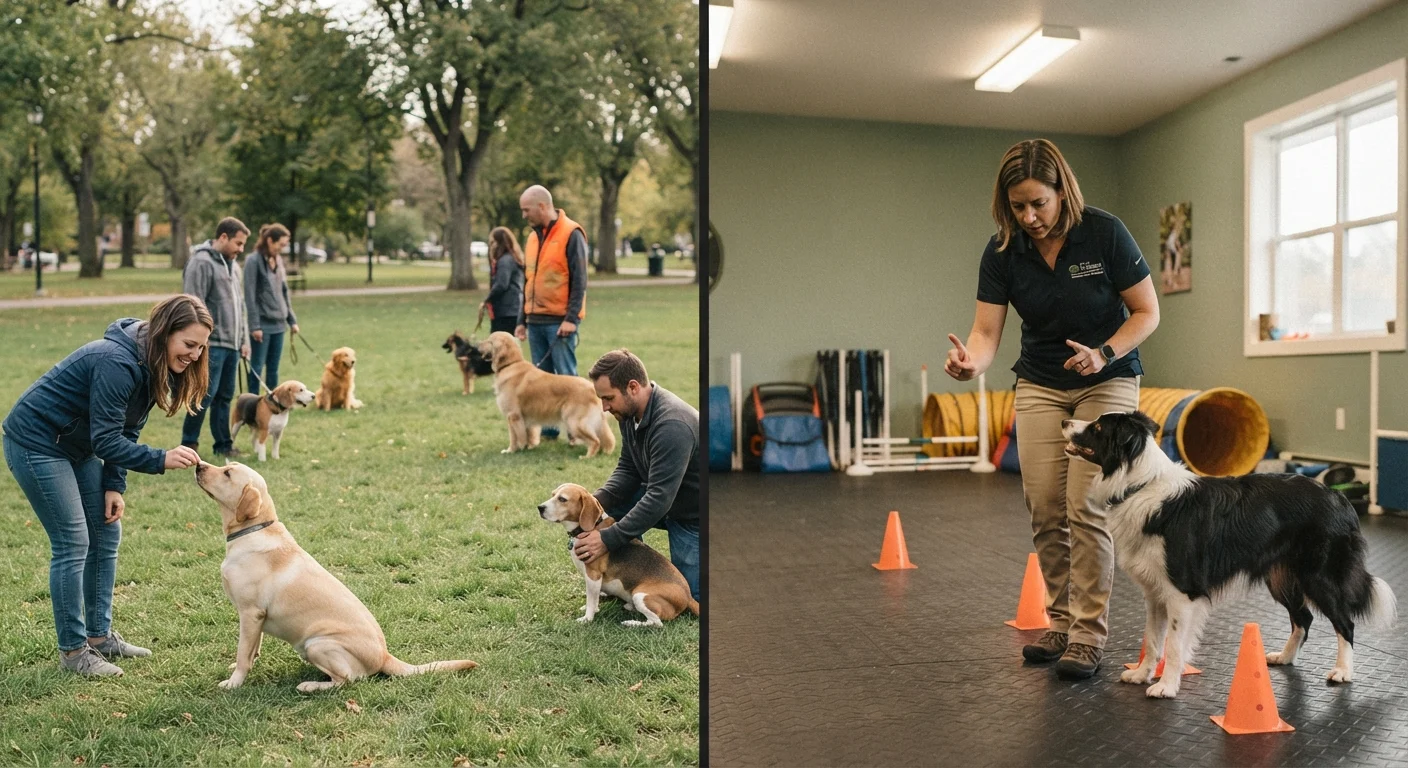
What Each Format Actually Looks Like
Group obedience classes typically bring together four to eight dog-owner pairs in a shared space — often a training facility, pet supply store, or park — led by one or two instructors. Sessions usually run 45 to 60 minutes on a weekly basis over a multi-week course. The curriculum follows a set progression, covering commands like sit, stay, recall, and leash manners in sequence.
Private instruction, by contrast, places one trainer's full attention on you and your dog. Sessions may take place in your home, your yard, a training facility, or in public spaces relevant to your dog's challenges. The trainer sets the agenda based on your specific goals after an initial assessment, meaning no two clients follow the same path.
Understanding the structural difference matters because it shapes everything downstream — from how your dog learns to how you practice at home. Before booking either format, review the preparation steps every owner should complete to get the most from your first session.
Head-to-Head: Key Differences at a Glance
The table below compares both formats across the criteria that matter most to everyday dog owners. No single column wins outright — each row reflects a genuine trade-off.
| Criterion | Group Classes | Private Instruction |
|---|---|---|
| Typical cost | Lower (course-based pricing) | Higher (per-session pricing) |
| Trainer attention | Shared across all participants | Fully focused on your dog |
| Socialization opportunity | High — built into the format | Low — controlled environment |
| Curriculum flexibility | Fixed, sequential progression | Customized to your goals |
| Suitable for reactive dogs | Generally not recommended | Yes — preferred starting point |
| Scheduling | Fixed class times | Flexible by appointment |
| Location options | Facility or designated venue | Home, facility, or public spaces |
Cost is often the deciding factor for many families. Group classes average $100–$200 for a full multi-week course, while private sessions typically range from $75–$150 per individual appointment. However, a dog with entrenched behavioral problems may require many private sessions, making cost comparisons more nuanced than they first appear.
When Group Classes Are the Right Call
Group classes shine in two specific scenarios: socialization and distraction-proofing. Puppies between roughly 8 and 16 weeks are in a developmental window during which positive exposure to other dogs, people, and environments has lasting effects on adult temperament. A well-run group class delivers exactly that — structured exposure with a trainer present to guide appropriate interactions.
For adult dogs that already know basic commands, group classes provide the kind of real-world distraction training that's nearly impossible to replicate at home. Practicing a reliable recall when other dogs are nearby is fundamentally different from practicing it in your living room. That gap in difficulty is where group classes add genuine value.
Group settings also offer something less tangible but meaningful: community. Owners share challenges, celebrate small wins together, and keep one another accountable. If you're curious about the techniques instructors use in these settings, this comparison of lure-based, shaping, and capturing methods explains the approaches you're most likely to encounter.
8–16 weeks
Puppy socialization window
Veterinary behaviorists broadly recognize this developmental period as critical for positive social exposure that shapes adult temperament.
4–8 dogs
Typical group class size
Most professional training programs limit enrollment to maintain a manageable trainer-to-dog ratio and ensure adequate individual attention.
When Private Instruction Is Worth the Investment
Private instruction becomes the more responsible choice when a dog's needs exceed what a group environment can safely accommodate. Leash reactivity — barking, lunging, or fixating on other dogs or people — is one of the most common reasons trainers recommend one-on-one work first. Bringing a reactive dog into a group class before addressing the core behavior can reinforce the problem and create stress for other participants.
Dogs recovering from fearful or traumatic backgrounds also tend to benefit from the lower-stimulus environment a private session provides. A skilled trainer can read subtle stress signals and adjust in real time — something that's harder to do when managing a room full of dogs and owners simultaneously.
Private sessions also work well for owners with complex schedules, multi-dog households, or specific advanced goals like canine sports preparation or therapy dog certification. For a balanced look at what professional trainers bring to these situations — and their limitations — see the case for and against professional dog trainers.
Certification Matters When Choosing a Trainer
Whether you pursue group or private instruction, look for trainers who hold credentials from recognized organizations such as the Certification Council for Professional Dog Trainers (CCPDT) or the International Association of Animal Behavior Consultants (IAABC). These credentials indicate that a trainer has met defined standards for knowledge and humane practice. Certification alone doesn't guarantee a good fit, but it provides a meaningful baseline of professional accountability.
Using Both Formats Together
The group-versus-private decision doesn't have to be permanent or exclusive. Many trainers recommend starting with a few private sessions to address any pressing behavioral concerns, then transitioning into a group class once the dog is ready to learn in a more stimulating environment. The reverse also applies: dogs who graduate from a beginner group class may benefit from targeted private work to refine specific skills.
Whatever format you choose, the consistency of practice between sessions is what determines long-term success. The evidence-backed training principles that help pets learn faster apply equally in both settings — short, frequent practice sessions, clear criteria, and household-wide consistency matter more than the room you're training in.
If you're still deciding which approach fits your situation, consider consulting a certified trainer for a brief evaluation. Most offer an initial consult that can clarify which format makes the most sense before you commit to a full course or package.