
What a Professional Trainer Actually Brings
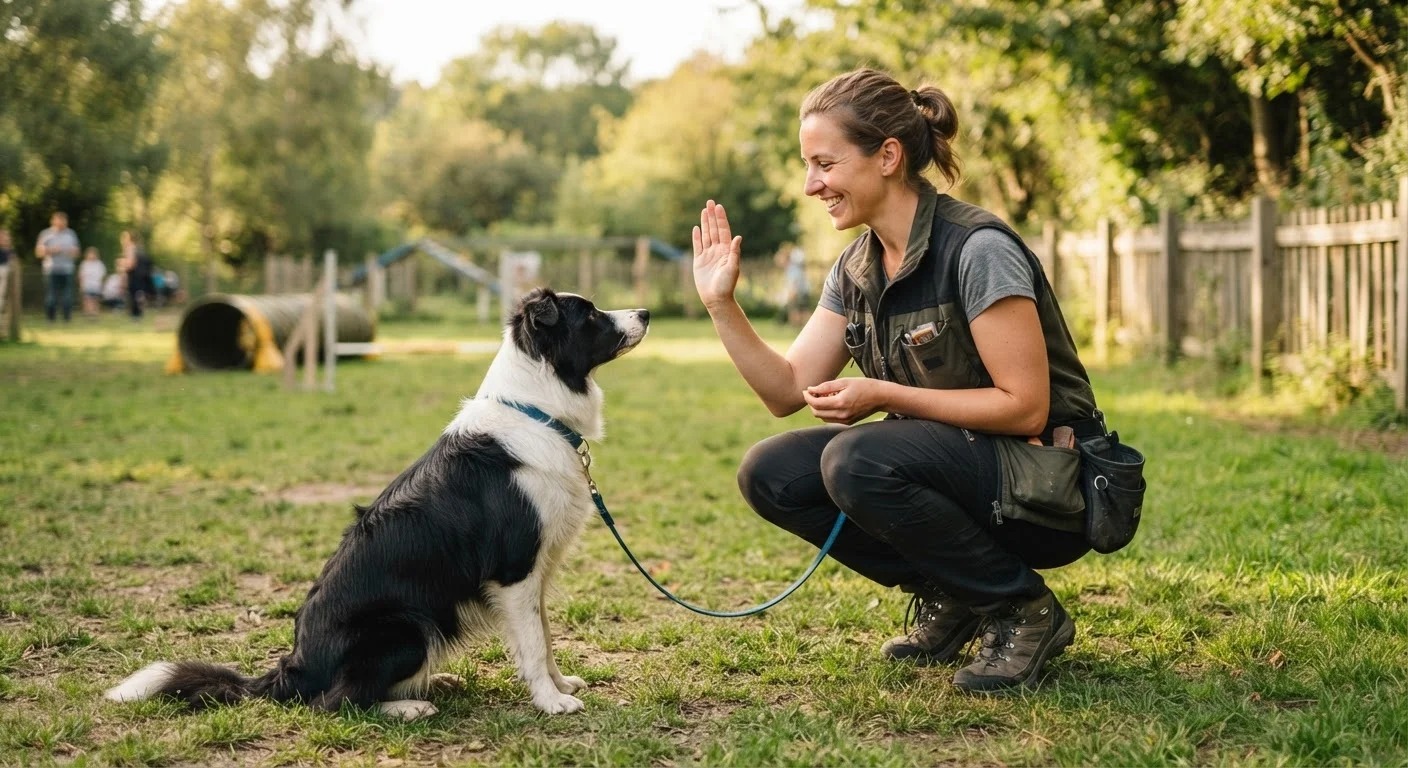
A qualified dog trainer does more than run a dog through sit-stay drills. Experienced trainers read canine body language in real time, identify the root cause of a behavior (anxiety, boredom, incomplete socialization), and design a progression that fits both dog and owner. That diagnostic layer is what separates professional guidance from following a YouTube tutorial.
Credentials matter here. Look for trainers certified through organizations such as the Certification Council for Professional Dog Trainers (CCPDT) or the International Association of Animal Behavior Consultants (IAABC), which require demonstrated knowledge of learning theory and ethical practice. Understanding what methods a trainer uses is equally important — positive reinforcement techniques have the strongest scientific support and the best safety record for dogs and owners alike.
Accurate diagnosis of behavior root causes
Trainers trained in animal behavior can distinguish fear-based reactivity from dominance-related behavior or boredom — distinctions that change the entire training approach and outcome.
Faster progress on complex problems
A professional can condense months of trial-and-error into structured sessions, applying proven progressions that inexperienced owners rarely discover on their own.
Safety management for high-stakes behaviors
For aggression or reactivity, a trainer provides structured protocols that reduce risk during the learning process — something self-directed training rarely accounts for adequately.
Teaches the owner, not just the dog
A good trainer coaches the handler's mechanics — timing, body language, consistency — which transfers to every future dog the owner lives with.
Access to controlled socialization environments
Group classes in particular expose dogs to controlled stimuli (other dogs, strangers, novel environments) that are difficult for individual owners to replicate independently.
The Real Limitations of Hiring a Trainer
Even the most skilled trainer spends a handful of hours with your dog. Your dog spends the other 160-plus waking hours each week with you. That imbalance is the single biggest constraint on professional training: whatever is learned in sessions must be practiced, reinforced, and generalized at home — consistently, by every person in the household.
Behavioral concepts like reward timing and generalization aren't just trainer tools; owners need to understand and apply them daily. A trainer who doesn't teach you alongside your dog is delivering only half the service.
Cost can be a genuine barrier
Private sessions with a certified trainer often run $75–$150 per hour or more depending on location and specialization, making sustained professional involvement inaccessible for many households.
Trainer quality varies enormously
Dog training remains an unregulated field in the United States — anyone can call themselves a trainer. Without verified credentials and a humane methodology, professional help can do more harm than good.
Results depend entirely on owner follow-through
Behaviors learned in sessions deteriorate quickly without consistent reinforcement at home. A trainer's impact is capped by how diligently the owner practices between appointments.
Cannot replace the owner-dog relationship
The bond, trust, and communication your dog develops with you are built through daily interaction — something no third party can provide or substitute, regardless of skill level.
Risk of aversive or outdated methods
Trainers who rely on punishment, physical correction, or dominance-based frameworks can increase fear and anxiety in dogs, making behavior problems worse over time.
When Professional Help Is Worth It
Some situations make professional involvement less optional and more urgent. Aggression toward people or other animals, severe separation anxiety, fear-based reactivity, and resource guarding all carry safety implications that go beyond the scope of self-directed training. In these cases, a certified behavior consultant — not just a basic obedience trainer — is appropriate.
First-time dog owners also tend to get substantially more value from early professional guidance. Starting with correct foundations prevents the need to undo bad habits later. If you're weighing formats, group classes versus private sessions serve different needs: group classes add socialization and distraction-proofing, while private sessions allow for tailored behavior work.
Veterinary Behaviorists vs. Trainers
For dogs with severe anxiety, phobias, or aggression, a board-certified veterinary behaviorist (Diplomate of the American College of Veterinary Behaviorists, or DACVB) offers a higher level of assessment than a trainer alone. Veterinary behaviorists can also evaluate whether medication may be appropriate alongside behavior modification. Ask your veterinarian for a referral if your dog's behavior poses safety risks.
For owners committed to building skills independently, evidence-backed training principles can guide consistent at-home practice between — or instead of — professional sessions.
Making the Decision: A Practical Framework
Start by honestly assessing the problem. Is this a basic manners issue (jumping, leash pulling, recall) or a safety-relevant behavior (snapping, lunging, destructive anxiety)? Basic manners can often be addressed with structured self-study; safety-relevant behaviors generally warrant professional assessment first.
Next, evaluate trainer credentials and methodology before booking. Ask directly: what training methods do you use, and what happens when a dog gets something wrong? Ethical trainers welcome these questions. Avoid any trainer who relies primarily on aversive tools (shock collars, prong collars used as corrections) or who dismisses the importance of owner education.
~$125
Typical cost per private training session
Private dog training sessions in the U.S. commonly range from $75 to $150 per hour, according to pet industry surveys, with specialized behavior consultations running higher.
Unregulated
Legal status of dog training as a profession
There is no federal or state licensing requirement to call oneself a dog trainer in the United States, making voluntary certification the primary quality signal for consumers.
Finally, commit to the follow-through. The trainer sets the map; you and your dog make the journey together every day.
This article is for general informational and educational purposes only and does not constitute professional veterinary or animal behavior advice. For dogs showing aggression or severe anxiety, consult a certified veterinary behaviorist or accredited behavior consultant.