
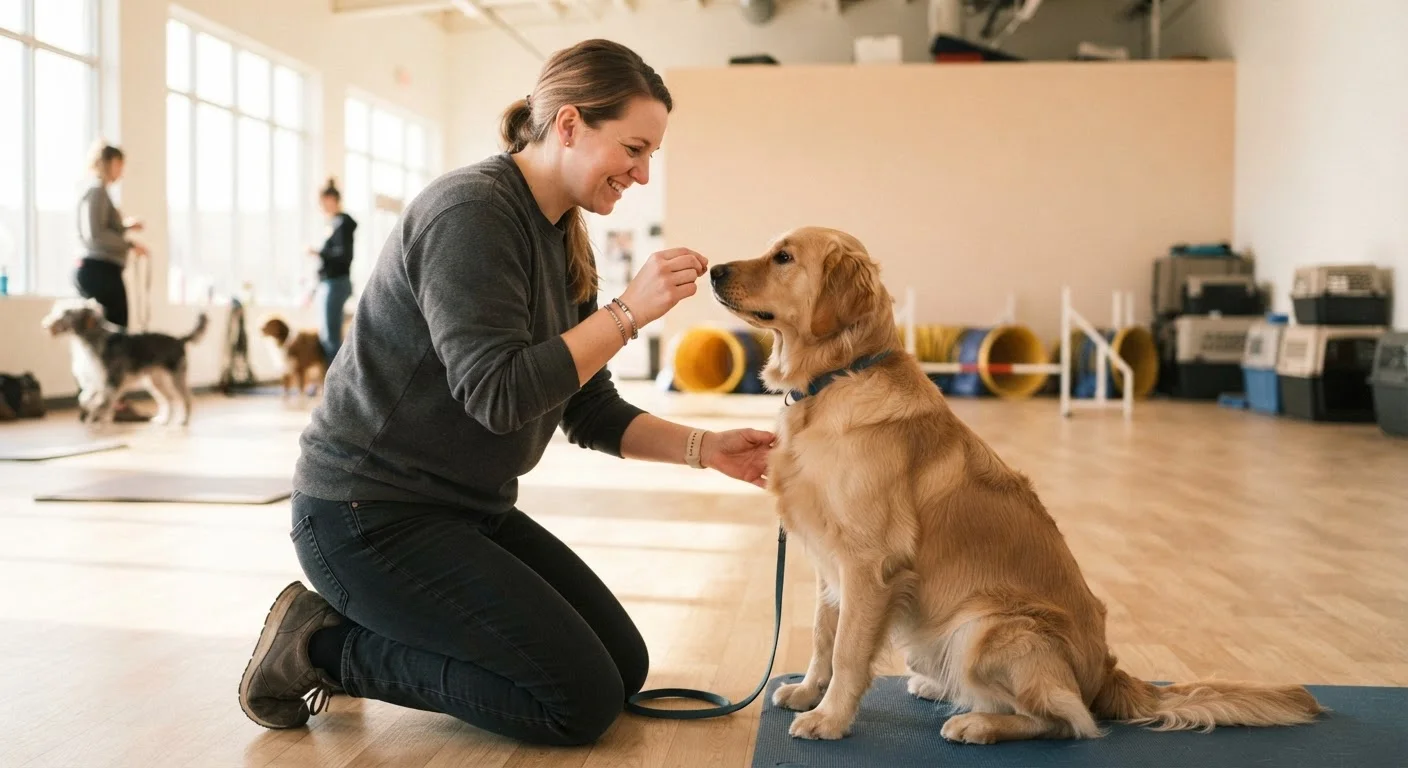
Why These Concepts Matter
Effective pet training isn't about dominance or repetition alone — it's about communication. When owners understand the mechanics behind how animals learn, they become far more consistent and efficient trainers. Three concepts in particular form the foundation of humane, science-based training: reward timing, lure fading, and generalization. Whether you're working with a dog, cat, rabbit, or bird, these principles apply across the board.
This reference guide defines each concept clearly and explains how to apply it in everyday training. For a broader introduction to the underlying science, see our article on positive reinforcement in pet training.
| Optimal reward delivery window | Within 1–2 seconds of the behavior (Applied animal behavior research consensus) |
| Most versatile marker signal | Clicker or consistent verbal marker (e.g., 'yes') |
| Recommended session length for new behaviors | 3–5 minutes per session (Widely recommended by certified animal trainers) |
| Lure fading approach | Mimic gesture with empty hand, reward from separate source |
| Generalization strategy | Change one variable at a time (location, handler, distraction) |
| Applies to species | Dogs, cats, rabbits, birds, and most trainable animals |
Reward Timing: Why the Moment Matters
Animals learn by association. When a reward follows a behavior, the animal's brain links the two — but only if the reward arrives quickly enough. This window is surprisingly narrow, generally within one to two seconds of the desired behavior. Delay the treat by even a few seconds and your pet may associate the reward with whatever it was doing at that moment rather than the behavior you intended to reinforce.
Practical Tips for Better Timing
- Use a marker signal. A short, distinct sound — such as a click from a training clicker or a crisp verbal word like "yes" — bridges the gap between the behavior and the reward. The marker itself becomes meaningful because it reliably predicts reinforcement.
- Prepare rewards in advance. Have treats or a toy ready before asking for a behavior so you're not fumbling at the critical moment.
- Train in short sessions. Fatigue slows your reactions. Five minutes of sharp, focused training beats thirty minutes of inattentive repetition.
Reward Timing
The practice of delivering reinforcement within a narrow window — typically one to two seconds — after a desired behavior occurs. Precise timing helps the animal correctly associate the reward with the intended action.
Marker Signal
A distinct, brief sound or word (such as a clicker click or the word 'yes') used to mark the exact moment a correct behavior occurs. It bridges the gap between behavior and reward delivery.
Lure
A treat or desirable item held in hand and used to physically guide an animal into a target position or movement during early behavior training.
Lure Fading
The systematic process of removing the physical lure after a behavior is learned, so the animal responds to the cue or gesture alone rather than the presence of food.
Generalization
The ability of an animal to perform a learned behavior reliably across different environments, distractions, and handlers — not just in the original training context.
Bribe Dependency
A training pitfall in which an animal will only perform a behavior when food is visibly present, because the lure was never properly faded.
Proofing
The deliberate practice of training a behavior under varied conditions — new locations, different people, and increasing distractions — to strengthen and generalize the response.
Reinforcement
Anything added to or removed from a situation that increases the likelihood that the preceding behavior will occur again. Positive reinforcement adds something desirable, such as a treat or praise.
Lure Fading: Moving Beyond the Food in Your Hand
A lure is a reward — typically a treat — held in front of a pet to guide it into a desired position or movement. Luring is an excellent way to teach new behaviors quickly. However, if the lure is never removed, the pet learns to perform only when food is visible. This creates what trainers call a bribe dependency rather than a learned behavior.
How to Fade the Lure Systematically
- Introduce the lure. Use the food to physically guide the behavior — for example, moving a treat slowly over a dog's nose to prompt a sit.
- Mimic the motion without food. After a few successful repetitions, repeat the same hand movement but with an empty hand. Reward immediately from your other hand or a nearby pouch when the pet responds.
- Reduce the gesture gradually. Shrink the hand signal over several sessions until the pet responds to a minimal cue — or add a verbal cue as the primary signal.
The goal is a pet that understands and responds to the cue itself, not the presence of food. Lure fading is one of the most important transitions in early training and is covered in depth in our guide on training across species.
Don't Confuse Lures With Rewards
A lure guides the animal into position before the behavior happens; a reward is delivered after the correct behavior occurs. Using them correctly is essential — if you give the food before or during the behavior rather than after, you're luring, not rewarding. Both have a place in training, but understanding which you're doing at each moment helps you avoid unintentionally reinforcing incomplete or incorrect responses.
Generalization: Teaching the Behavior Everywhere
A pet that sits perfectly in your living room but ignores you at the park hasn't fully learned to sit — it has learned to sit in that room. Generalization is the process by which an animal learns that a cue means the same thing regardless of location, distraction level, or who is giving the instruction.
Building Generalization Deliberately
- Change one variable at a time. Practice in a new location, then with mild distractions, then with a different family member — not all at once.
- Expect temporary regression. When you move to a new environment, temporarily lower your expectations. Ask for easier behaviors first and reward generously to rebuild confidence.
- Proof across contexts. The more varied the settings in which a pet practices, the more robustly the behavior becomes embedded.
Generalization also applies to the person giving cues. A behavior reliably cued by one family member but not another indicates that generalization to multiple handlers hasn't yet occurred — an important consideration for multi-person households.
Once you've mastered these three concepts, small daily training sessions compound into significant behavioral change. Our article on small wins that lead to big behavior change walks through eight concrete milestones to work toward.
1–2 sec
Critical window for effective reward delivery
Animal learning research consistently shows reinforcement must follow behavior within seconds to form a reliable association.
3–5 min
Ideal focused training session length
Short, high-quality sessions maintain both the trainer's timing accuracy and the animal's engagement and motivation.
Multiple
Environments needed for true generalization
Trainers and behaviorists agree a behavior cannot be considered fully learned until it is demonstrated reliably across varied settings and contexts.