
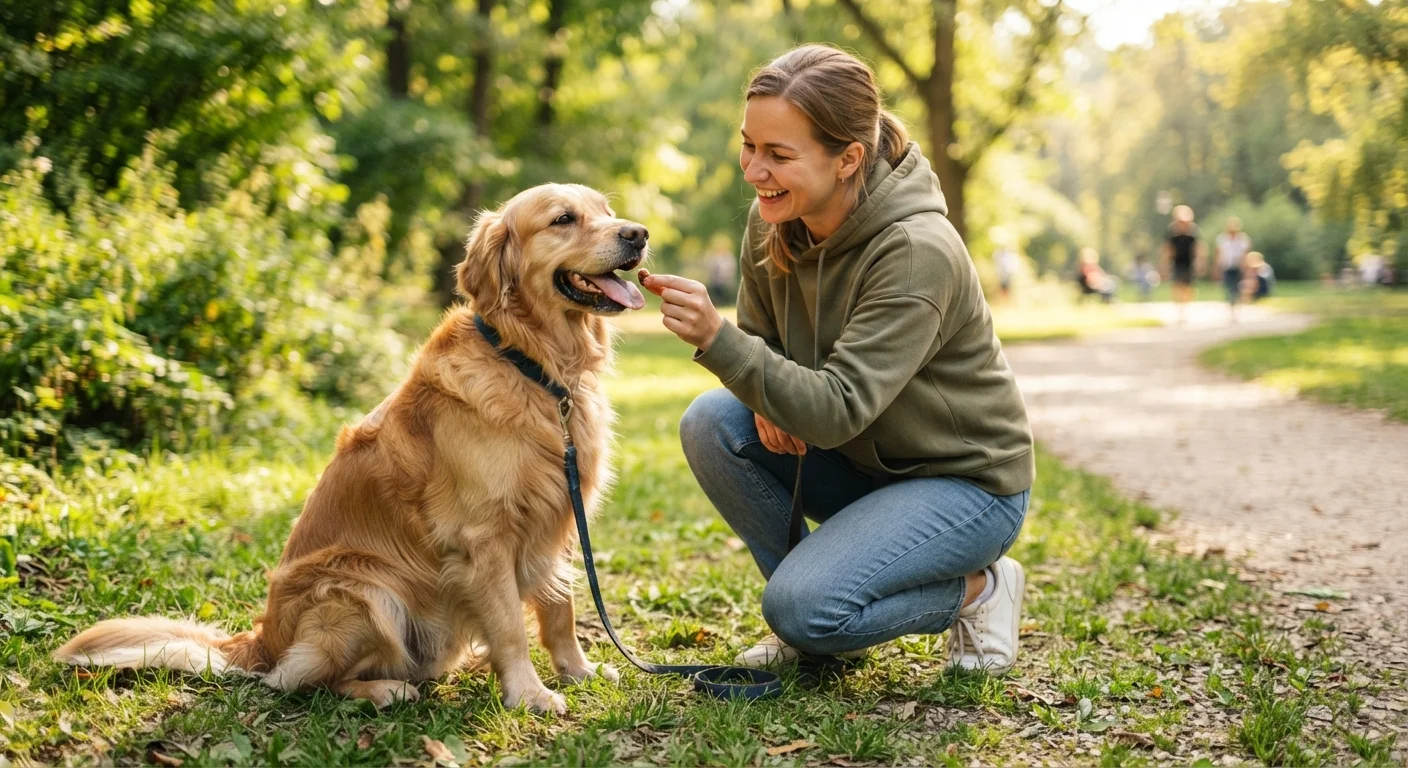
Why Small Training Wins Matter More Than You Think
Most pet owners start training with a big goal in mind — a dog that walks politely on leash, a cat that stays off counters, a rabbit that returns to its enclosure on cue. But lasting behavior change doesn't arrive in a single breakthrough moment. It accumulates through a series of small wins, each one building on the last.
Animal learning science supports this incremental approach. When a pet succeeds at a manageable task and receives timely, meaningful reinforcement, the brain reinforces that behavior pathway. Repeat that enough times — across different situations — and the behavior becomes reliable. Understanding concepts like reward timing and generalization helps owners train more effectively; see our guide to reward timing, lure fading, and generalization for a deeper look at the mechanics behind this process.
The eight milestones below represent the incremental steps that collectively transform how a pet moves through everyday life — from their first reliable response to their name, all the way to calmly holding back when excitement runs high.
Name Recognition
Before any other skill is possible, your pet needs to understand that their name is a signal meaning look at me right now. Practice in a quiet environment first: say the name once in a neutral, upbeat tone, and the instant your pet orients toward you, mark and reward that attention. Avoid repeating the name when ignored — doing so teaches your pet that the first call is optional.
A reliable name response is the gateway to every other skill you'll ever teach.
Voluntary Eye Contact
Once your pet reliably responds to their name, build on that attention by rewarding unprompted eye contact. When your pet glances at you without being asked, quietly reinforce it. This teaches your pet to check in with you habitually — a habit that pays dividends during walks, at the vet, or in any distracting environment. It shifts your pet's default orientation from the environment to you.
Pets that check in voluntarily are easier to guide through any challenging situation.
A Reliable Sit Cue
Sit is often the first formal cue taught, and for good reason: it's incompatible with jumping, lunging, and many other unwanted behaviors. Rather than simply drilling repetitions, practice asking for a sit before every routine good thing — before meals, before the leash goes on, before the door opens. This transforms sit from a party trick into a functional communication tool your pet uses to request things politely.
Teaching sit as a life skill — not just a trick — changes how your pet asks for things.
Recall (Come When Called)
A solid recall may be the single most important safety skill a pet can have. Build it carefully: always reward recall generously, never call your pet to something unpleasant, and practice in controlled environments before testing in distracting ones. The recall cue should predict the best possible outcome every single time — high-value treats, enthusiastic praise, or a brief play session. Reliability comes from hundreds of low-stakes repetitions before you ever need it in a real emergency.
Never call your pet to something unpleasant — the recall cue must always predict something great.
Staying on a Mat or in a Designated Spot
Teaching a pet to settle on a mat gives them a portable safe place and gives you a management tool for meals, visitors, and high-stimulation moments. Start with very brief durations — a second or two — and build duration slowly before adding distance or distractions. A mat behavior trains patience and self-regulation, both of which carry over into general calmness throughout the day.
A well-trained mat behavior is one of the most practical skills for everyday household harmony.
Leash Manners and Loose-Leash Walking
Pulling on leash is one of the most common complaints among dog owners, and it's also one of the most preventable. Loose-leash walking is taught by making forward movement contingent on a slack leash — the moment tension appears, forward progress stops. This requires patience and consistency, but even modest improvements transform daily walks from a physical battle into an enjoyable routine. For multi-pet households, the same patience principle applies to any on-leash species.
Loose-leash walking teaches your dog that staying near you — not pulling — is what moves you forward.
Accepting Handling and Grooming
Many behavior problems at veterinary appointments or during grooming stem from insufficient handling practice at home. Gradually acclimate your pet to having their paws, ears, mouth, and coat touched — pairing each touch with a reward. Building a positive association with handling makes veterinary exams less stressful and makes routine grooming far safer. Our grooming routine guide outlines how to integrate this into your regular care schedule.
Pets that tolerate handling calmly have safer, less stressful vet visits throughout their lives.
Impulse Control (Leave It and Wait)
Impulse control skills — particularly leave it and wait — sit at the top of the behavior-change hierarchy because they require a pet to override a strong internal drive. Start with easy items and low arousal, and build difficulty gradually. A pet with solid impulse control can pass food on the sidewalk, wait at an open door, and disengage from something exciting on cue. These behaviors also reduce reactivity, which is why impulse control complements the work described in understanding and addressing separation anxiety.
Impulse control is the skill that makes every other behavior more reliable under real-life pressure.
Building on Each Milestone Over Time
Every milestone on this list is a foundation for the next. Name recognition makes recall possible. Recall makes off-leash safety achievable. Impulse control makes every other skill more reliable under real-world pressure. None of these skills develops in isolation — they form a connected web of understanding between you and your pet.
Keep Sessions Short and Positive
Five to ten minutes is an ideal training session length for most pets. Ending while your pet is still engaged and succeeding — rather than pushing until they lose focus — reinforces enthusiasm for the next session. Training frequency matters more than session duration: two brief sessions daily will outpace one long session per week in almost every case.
Training also does something that's easy to overlook: it reduces problem behaviors that stem from boredom or confusion. A pet that understands how to earn good things from their environment is less likely to invent their own entertainment at your expense. This connects directly to why mental enrichment matters for home pets — training sessions are themselves a form of enrichment that meets a pet's cognitive needs.
If you share your home with multiple species or are just getting started, training principles vary meaningfully across dogs, cats, rabbits, and birds — knowing what each animal responds to best helps you adapt these milestones appropriately. And if any behavior challenges feel beyond the scope of home training, a certified applied animal behaviorist or veterinary behaviorist can provide tailored guidance.