
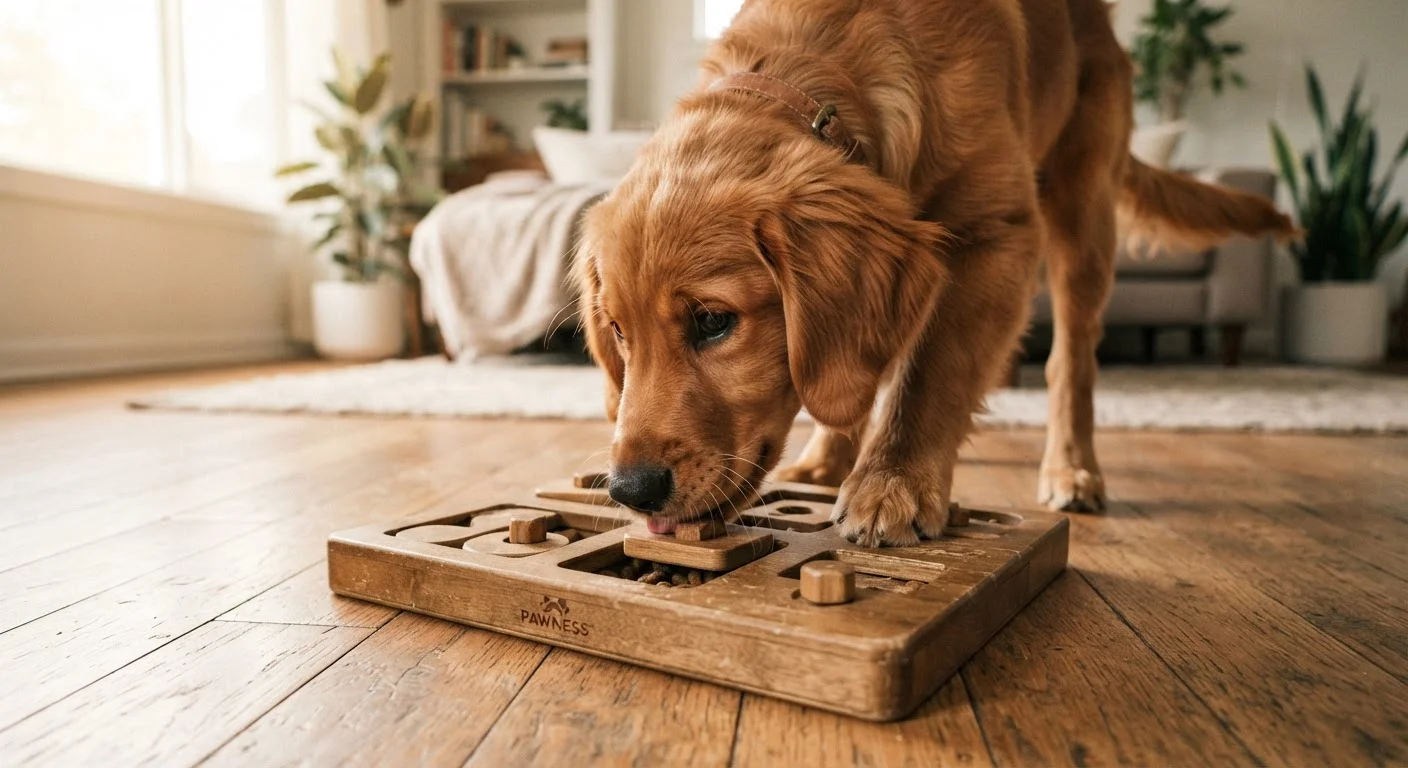
Why Enrichment Belongs at Home, Not Just in Zoos
Zoo enrichment programs make headlines when a panda shreds a cardboard box or a big cat stalks a scent trail. But the science behind those programs applies equally to the animals sharing your living room. Pets kept in unstimulating environments frequently develop what animal behaviorists call displacement behaviors — repetitive or destructive actions that signal unmet cognitive and physical needs. Excessive barking, furniture scratching, over-grooming, and compulsive pacing are rarely about defiance; more often, they're symptoms of a brain with nowhere constructive to go.
Enrichment is the deliberate practice of adding complexity, novelty, and species-appropriate challenge to an animal's environment. It doesn't require expensive gear or hours of your time. It does require understanding what your specific animal is wired to do — and then giving them appropriate outlets for it.
This matters beyond behavior alone. Research in animal welfare consistently links environmental enrichment to lower cortisol levels, improved immune function, and better social behavior. In other words, a mentally engaged pet is generally a healthier one. For a deeper look at the daily habits that support overall wellness, see our guide to home care habits vets recommend.
Food Puzzles and Foraging Opportunities
In the wild, most animals spend a significant portion of their waking hours searching for food. Domestic pets typically receive meals in a bowl in under a minute — a fraction of the mental effort their brains evolved for. Food puzzles, scatter feeding on grass or a snuffle mat, and hide-and-seek feeding games restore some of that cognitive work.
For dogs, spreading kibble across a sniff mat or hiding small portions around the yard engages the olfactory system — which processes an enormous share of a dog's cognitive bandwidth. For cats, placing portions in paper bags or cardboard tubes taps into predatory instincts. Even rabbits and birds benefit from foraging setups that require problem-solving before eating.
Foraging activities restore the mental effort that bowl-feeding removes from a pet's day.
Scent Work and Nose Games
A dog's nose contains hundreds of millions of scent receptors compared to a human's roughly five million. Scent work — teaching a pet to locate a specific odor — is considered one of the most tiring and satisfying activities available to dogs precisely because it harnesses that biological capacity so fully.
You don't need formal nose work classes to begin. Start by hiding a strongly scented treat under one of three upturned cups and encouraging your dog to find it. Cats can be introduced to scent enrichment through herbal bundles of cat-safe plants like valerian or silvervine, which produce compelling olfactory responses without reliance on catnip alone.
Scent work taps directly into a dog's dominant sense, providing deep mental fatigue in short sessions.
Environmental Complexity and Safe Exploration
For cats, vertical space is enrichment. Shelving, cat trees, and window perches allow them to survey territory, exercise, and retreat — all behaviors central to feline wellbeing. Indoor cats in particular need this layered environment to compensate for the reduced stimulation of life without outdoor access.
For dogs, supervised exploration of new environments functions as powerful enrichment. A new park, a different walking route, or time in a safely fenced novel yard introduces a cascade of new smells, sights, and sounds. The debate around indoor and outdoor access is nuanced; our article on indoor vs. outdoor pets covers the safety and enrichment trade-offs worth considering.
Vertical space for cats and novel outdoor routes for dogs are low-cost, high-impact enrichment strategies.
Social and Interspecies Interaction
Many pets are social animals whose enrichment needs include meaningful interaction — with humans, with other animals, or both. Regular structured play with an owner isn't just bonding; it's active cognitive engagement. Teaching a pet a new behavior during playtime doubles the benefit: the animal is problem-solving and interacting simultaneously.
Appropriate socialization with unfamiliar people and animals also functions as enrichment by introducing manageable novelty. This is especially valuable for younger animals building confidence, but older pets benefit too. See our guidance on socializing a pet at any age for a structured approach to introducing your pet to new experiences.
Structured play and socialization deliver enrichment and strengthen the pet-owner bond simultaneously.
Training as Mental Exercise
Training sessions — even five minutes of focused work — are among the most cognitively demanding enrichment activities you can offer. Learning requires a pet to pay attention, make decisions, experience feedback, and adjust behavior. This is precisely the kind of active mental engagement that a quiet afternoon in the house doesn't provide.
Short, frequent sessions are more effective than long, infrequent ones. Teaching a new trick, practicing known behaviors in a distracting environment, or working on impulse control exercises all count. For pets new to training, foundational pet training guidance can help you choose appropriate starting points and avoid common early mistakes.
Five minutes of focused training can be more mentally tiring for a pet than an hour of unsupervised play.
Species-Specific Enrichment for Non-Dog, Non-Cat Pets
Birds, small mammals, reptiles, and fish have enrichment needs that are frequently underestimated. Parrots and other intelligent birds require foraging puzzles, regular out-of-cage time, and novel objects to investigate to prevent feather-destructive behavior and screaming driven by frustration. Rabbits benefit from tunnels, digging boxes, and cardboard structures to manipulate.
Even fish show preferences for environmental complexity — tanks with varied structures, plants, and hiding spots support more natural exploratory behavior than bare enclosures. If you share your home with a less common companion animal, consult a veterinarian with exotic animal experience to identify the specific enrichment strategies best suited to that species.
Every species has cognitive needs — enrichment for birds, rabbits, and reptiles is just as important as it is for dogs.
Building Enrichment Into Everyday Life
The most effective enrichment isn't a single weekly activity — it's a layered routine woven into how you already live with your pet. Start small: swap one regular feeding from a bowl to a food puzzle. Add a new sniff-walk route twice a week. Rotate which toys are available so novelty is maintained without buying new ones constantly.
Rotate, Don't Just Replace
Novelty drives engagement, but you don't need to constantly buy new items. Rotate a set of toys or puzzle feeders on a weekly schedule so each one feels fresh when it reappears. Even rearranging the furniture your cat uses for climbing can reset their interest in a space they had stopped exploring.
If you're using enrichment alongside a training program, understanding how animals learn will help you design better activities. Our overview of core training concepts explains how reward timing and reinforcement principles apply to enrichment challenges. And if your pet is making incremental progress, small behavioral wins can build momentum toward lasting change.
Finally, keep your pet's life stage in mind. Senior animals still benefit from mental stimulation, though the physical intensity should be adjusted. Puppies and kittens need enrichment calibrated to shorter attention spans and still-developing coordination. When in doubt, consult your veterinarian — they can help you tailor enrichment to your pet's health status and temperament.