
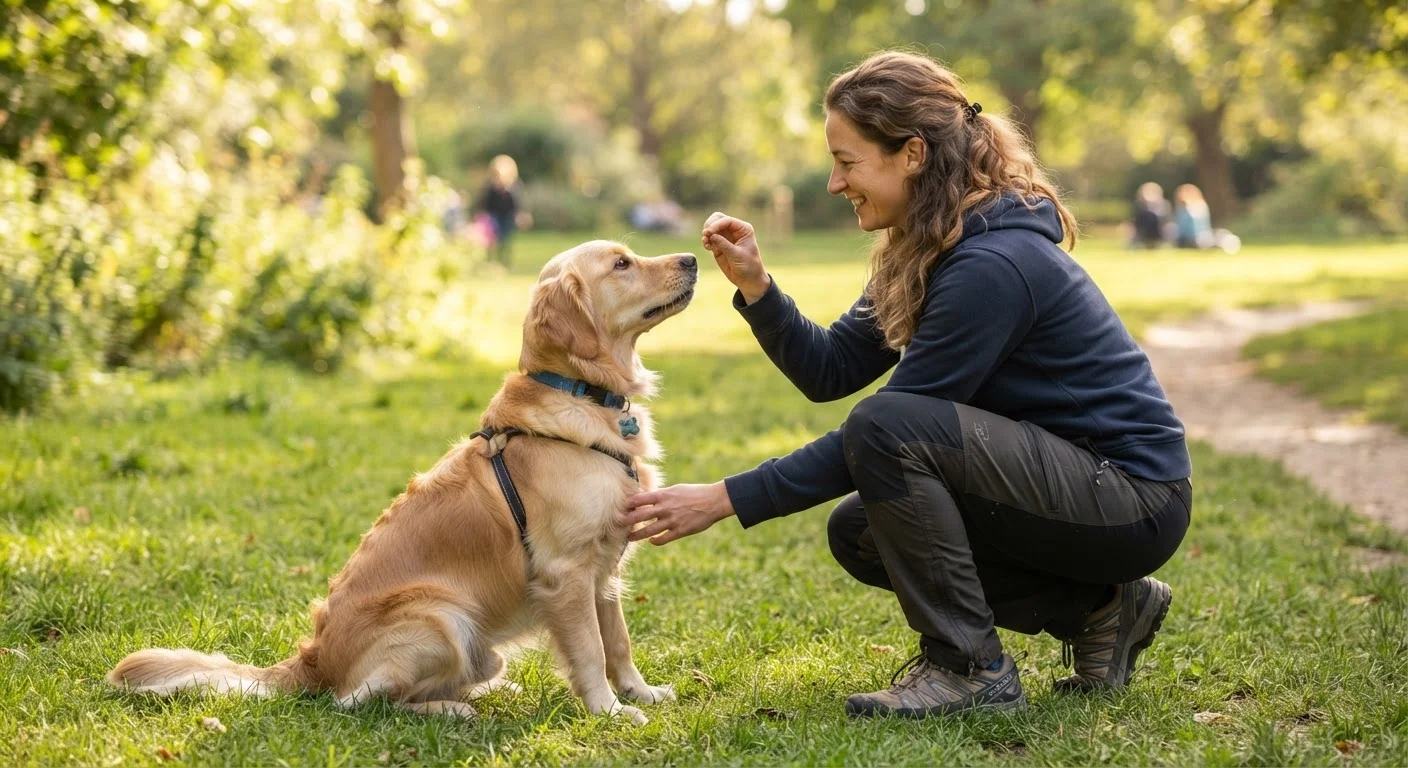
How Each Method Works
All three methods fall under the umbrella of positive reinforcement training, meaning the pet receives something it values—usually food, play, or praise—when it performs the target behavior. What differs is how the trainer elicits that behavior in the first place.
Lure-Based Training
The trainer holds a reward (most often a small food treat) and uses its movement to physically guide the animal into the desired position. For example, moving a treat slowly upward over a dog's nose causes the head to lift and the hindquarters to lower into a sit. The behavior happens quickly because the animal is following the prompt rather than puzzling out what's wanted.
Shaping
Shaping breaks a final behavior into tiny incremental steps. The trainer reinforces each small approximation until the animal reaches the complete behavior. Teaching a dog to close a drawer, for instance, might begin by rewarding any glance toward the drawer, then a nose touch, then pushing it slightly, and finally closing it fully. This process, sometimes called successive approximation, can take many sessions but produces precise, solid behaviors.
Capturing
Capturing means waiting for the pet to perform a behavior naturally—without any guidance—and marking and rewarding it the instant it occurs. If your cat stretches and yawns on its own, you mark that moment with a click or a word like "yes" and deliver a reward. Over repetitions, the pet learns the behavior is valuable and begins offering it deliberately. See our guide to reward timing and lure fading for a deeper look at the mechanics behind all three approaches.
Comparing the Three Methods
Each approach has a distinct speed-to-reliability tradeoff. The table below summarizes how luring, shaping, and capturing compare across the criteria that matter most to everyday owners.
| Lure-Based | Shaping | Capturing | |
|---|---|---|---|
| Speed to first response | Very fast | Slow to moderate | Slow (depends on opportunity) |
| Trainer skill required | Low to moderate | Moderate to high | Moderate (timing is critical) |
| Best behavior type | Positional and movement cues | Complex or multi-step behaviors | Naturally occurring behaviors |
| Risk of prompt dependence | High if lure not faded | Low | Very low |
| Suitable for fearful pets | Sometimes (if food motivated) | Yes — pet-led pace | Yes — no physical guidance |
| Equipment needed | Treats or toy | Marker (clicker or word) | Marker (clicker or word) |
One nuance worth noting: luring produces fast initial results but can create prompt dependence if the lure isn't systematically removed. Shaping takes longer upfront but often yields more durable, flexible behavior. Capturing is highly naturalistic but only works for behaviors the animal already performs spontaneously.
When to Use Each Approach
Choosing the right method depends on the behavior you're teaching, your pet's experience level, and your own training skills.
- Use luring when introducing a brand-new behavior to a novice pet or owner, when speed matters, or when you need the animal to move through space in a specific way (such as walking through a tunnel or stepping onto a platform). Always plan to fade the lure within a few repetitions so the cue—not the food in your hand—becomes the signal to act. For more on communication tools that pair well with luring, see Clicker Training vs. Verbal Cues.
- Use shaping for behaviors that are difficult or impossible to guide physically—such as a dog pushing a specific button, a parrot retrieving an object, or a cat spinning in a circle. Shaping also suits shy or fearful animals, because nothing is done to them; they choose each step at their own pace.
- Use capturing for behaviors your pet already performs reliably on its own: yawning, stretching, sneezing, or lying down. It's especially valuable for behaviors owners find difficult to prompt manually. Capturing also builds an animal's confidence because the pet discovers the behavior itself earns reinforcement.
Keep a Marker Consistent Across All Methods
Whether you're luring, shaping, or capturing, a consistent marker—a clicker click or a short word like "yes"—tells your pet exactly which moment earned the reward. Introducing the marker before you try any method dramatically speeds up learning. Charge the marker by pairing it repeatedly with a treat before your first real training session.
For guidance on how these methods apply across different species in your household, Training Across Species covers dogs, cats, rabbits, and birds side by side.
Combining Methods for Better Results
Skilled trainers rarely limit themselves to one technique. A common workflow is to lure a dog into a new position, reward a handful of repetitions, then fade the lure and begin waiting for the dog to offer the behavior independently—shifting naturally into capturing. When the behavior is somewhat reliable but still rough at the edges, brief shaping sessions can sharpen precision.
The right blend also shifts as the pet's skill level grows. What worked as a lure for a puppy may become an unnecessary crutch for an adult dog who already understands the game. Revisiting your approach periodically helps maintain progress and keeps training sessions engaging for both of you.
If you're deciding how to structure your sessions—at home versus in a class—Group Classes vs. Private Instruction can help you choose the format that fits your goals. And for the foundational principles that make any method more effective, Pet Training Done Right is a strong next read.
This article is for general educational purposes. For pets with significant behavioral concerns or anxiety, consult a certified professional trainer or veterinary behaviorist.