
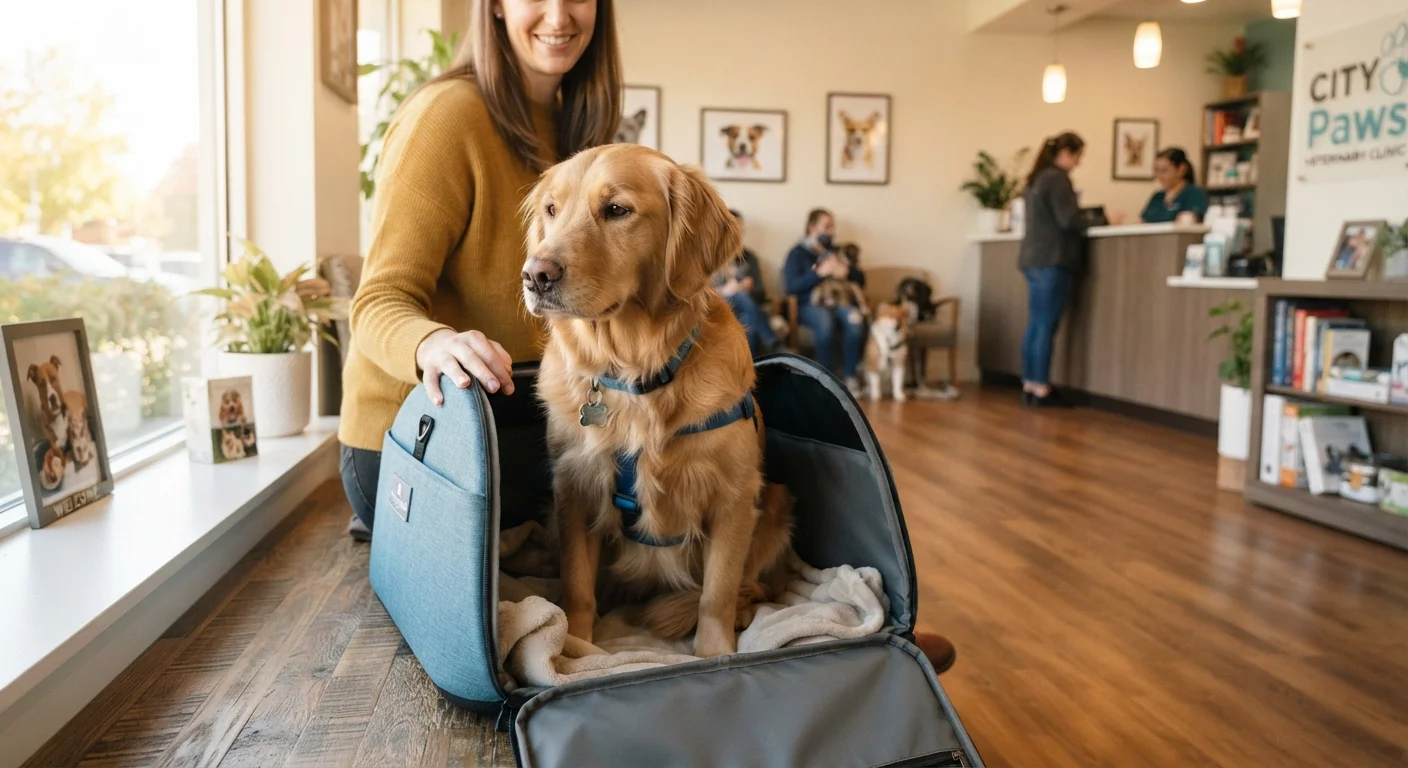
Why Vet Anxiety Happens — and Why It Matters
Most pets aren't born fearful of veterinary clinics. The anxiety develops through repeated pairing of unfamiliar stimuli — strange smells, handling by strangers, occasional discomfort — with no predictable positive outcome. Over time, even the sight of the carrier can trigger a stress response. To understand more about how anxiety physically affects your pet's body, see our article on what stress does to pets.
An anxious animal is also harder to examine accurately. Elevated heart rate from fear, tense muscles, and reactive behavior can obscure findings and make routine procedures more difficult. Preparing your pet isn't just about comfort — it directly improves the quality of the medical assessment your animal receives.
What you will need
Hard-sided or soft pet carrier
Provides a secure, familiar space for transport and reduces environmental overstimulation during travel.
High-value treats
Used to create positive associations with the carrier, car, and handling exercises.
Pheromone spray or calming collar
Species-specific synthetic pheromones (such as those mimicking feline facial pheromones for cats) can help reduce anxiety during travel.
Pet health records folder
Keeps vaccination history, medication lists, and previous exam notes organized for the vet.
Non-slip mat or familiar blanket
Placed inside the carrier or on the exam table to provide comfort and traction for your pet.
Step-by-Step: Reducing Stress Before and During the Visit
The following steps work best when started at least one to two weeks before a scheduled appointment. For pets with established fear responses, a longer runway — several months — may produce more durable results. Consistency matters more than intensity; short, repeated positive exposures outperform any single preparation session.
Introduce the carrier well before the appointment
Leave the carrier out in a common living area at least one to two weeks before the visit — not just on appointment day. Place your pet's favorite blanket inside and occasionally drop treats near or inside it without forcing entry. The goal is for your pet to associate the carrier with neutral or positive experiences, not the single stressful event of a vet trip.
Practice short car rides to non-vet destinations
Many pets learn to associate the car exclusively with the clinic. Counter-condition this by taking brief rides that end somewhere pleasant — a park walk for dogs, or simply arriving home with a treat reward for cats. Keep early rides to five minutes and gradually extend duration. Secure the carrier with a seatbelt loop or place it on the floor behind the front seat to minimize movement.
Conduct gentle handling exercises at home
Veterinary exams involve touching ears, paws, gums, and abdomen — areas many pets find uncomfortable when handled by a stranger. Begin brief, calm handling sessions during relaxed moments at home. Gently lift each paw, look in each ear, and open the mouth slightly, pairing every touch with a treat. Keep sessions under two minutes and stop before your pet shows signs of frustration.
Schedule the appointment at a low-stress time
Request the first appointment of the day or the first after lunch — these slots typically mean a quieter waiting room and shorter hold times. Many clinics now offer fear-free or low-stress handling appointments; ask when booking whether this is available. Separate waiting areas for cats and dogs, or the option to wait in your car, can also reduce ambient stress before the exam even begins.
Withhold food lightly before the visit (if safe to do so)
A mildly hungry pet is more treat-motivated, which helps veterinary staff use positive reinforcement during the exam. A light fast of two to three hours before the appointment is generally well-tolerated by healthy adult dogs and cats. Always confirm with your veterinarian whether fasting is appropriate for your specific animal, particularly if your pet has a medical condition, is very young, or is on medication.
Arrive calm and prepared
Bring your pet's health records, a list of any current medications, and written notes about behavioral or physical changes you've observed. Arriving five minutes early — rather than rushing — lets you settle before the appointment. Stay relaxed; pets read human body language and vocal tone closely. Once the exam is over, reward your pet warmly at home to close the experience on a positive note.
Fear-Free Visits Are a Real Option
Many veterinary practices now train staff in fear-free or low-stress handling techniques. These approaches use minimal restraint, allow pets to move at their own pace, and lean heavily on positive reinforcement. If your clinic doesn't offer this, asking about it may prompt them to adopt these methods — or help you find a practice that does.
Severe Anxiety May Need Professional Support
If your pet becomes aggressive, shuts down completely, or shows extreme distress signs (uncontrolled elimination, frantic escape attempts), preparation steps alone may not be sufficient. Speak with your veterinarian about whether pre-visit medication or a referral to a veterinary behaviorist is appropriate. Forcing a traumatic exam can worsen long-term anxiety.
Never Skip Vet Visits Due to Pet Anxiety
It can be tempting to delay appointments when an animal is visibly distressed by them. However, skipping routine care creates real health risks — conditions caught early are far easier to treat. Work with your veterinary team to find accommodations that make visits manageable, but don't let anxiety become a reason to forgo essential care.
Building Long-Term Calmness Between Visits
Reducing vet anxiety isn't a one-appointment project — it's an ongoing practice. Between visits, continue occasional carrier exposure, handling exercises, and short car rides so none of these experiences remain exclusively associated with the clinic. The home care habits that support long-term pet health include regular handling as a baseline routine that pays dividends at exam time.
If your pet struggles with broader anxiety — not just vet visits — the same desensitization principles apply in other contexts. Our guide on separation anxiety and gradual desensitization outlines how this approach works for dogs experiencing distress when left alone. Similarly, if travel itself is part of the challenge, traveling with a pet without the stress covers car and transport preparation in greater depth.
Each positive vet experience — or even neutral one — becomes a new baseline for your pet's expectations. Over time, the cumulative effect of calm preparation creates an animal that is genuinely easier to care for across its entire life.
This article provides general pet care information and is not a substitute for veterinary advice. Always consult a licensed veterinarian for guidance specific to your pet's health and behavior.