
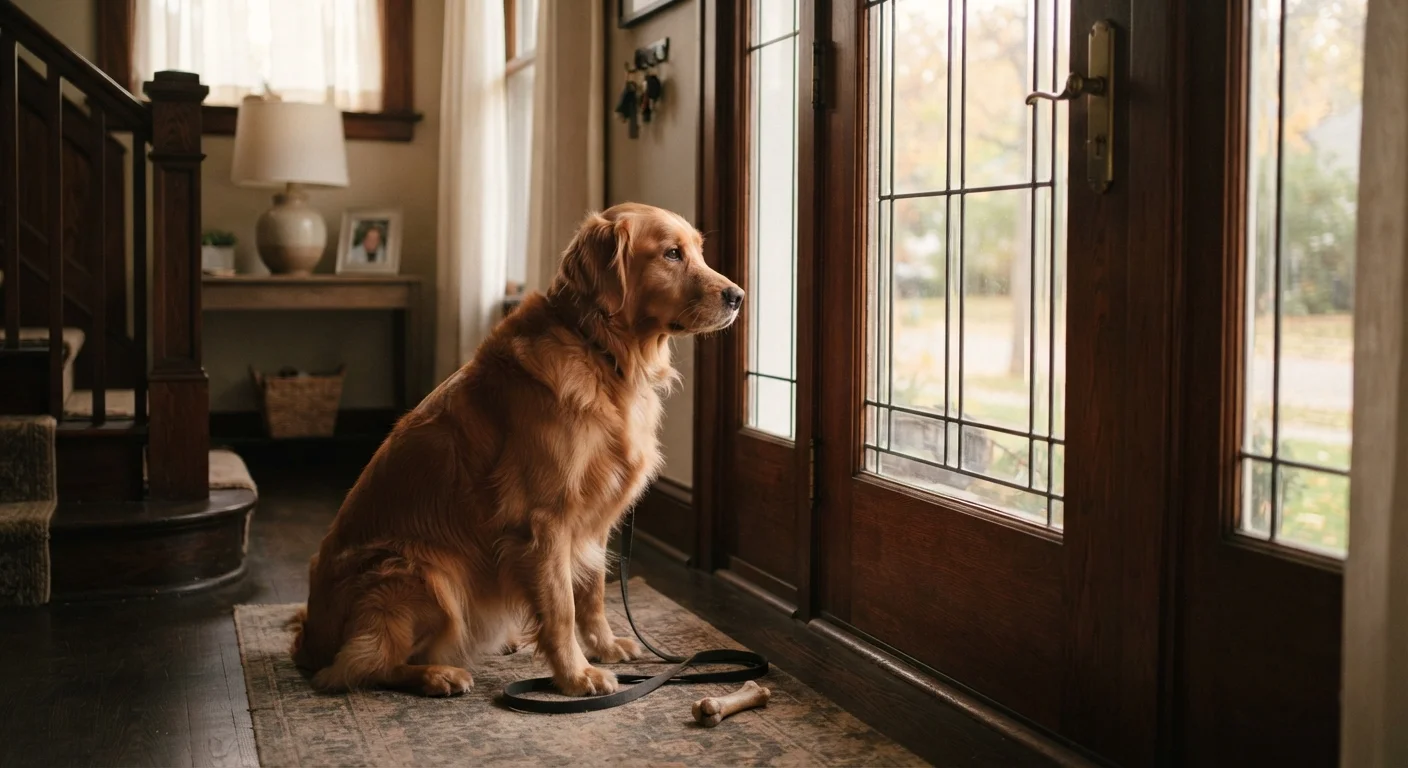
Recognizing the Real Signs of Separation Anxiety
Many owners first notice something is wrong through a neighbor's complaint, a shredded sofa cushion, or a puddle on the floor — problems that appear only when the dog is alone. Those context-specific clues matter. Separation anxiety doesn't look like general misbehavior; it looks like distress triggered by isolation.
Common signs include:
- Destructive behavior focused near exit points — doors, windows, and baseboards
- Excessive vocalization — howling, barking, or whining that begins at or shortly after departure
- House-soiling in a dog that is otherwise reliably house-trained
- Pacing, circling, or trembling — often captured on home cameras
- Self-directed behaviors such as excessive licking or chewing at paws
- Refusal to eat treats or food left behind while alone
Equally telling is pre-departure anxiety: a dog that begins panting or shadowing you the moment you pick up your keys is already reacting to learned departure cues. To understand what's happening physically during these episodes, see our article on why anxiety affects a dog's body.
Recording Your Dog Can Reveal a Lot
One of the most useful steps an owner can take is setting up a phone or camera to record the dog for 20–30 minutes after leaving. Many owners are surprised to discover the anxiety begins within seconds of departure. This footage also helps a veterinarian or behaviorist assess severity and tailor a plan.
What Separation Anxiety Is Not
Owners are sometimes told their dog is "acting out" or being "vindictive" for leaving messes or destroying belongings. This framing is inaccurate and counterproductive. Dogs do not have the cognitive capacity to plan revenge, and punishment after the fact — which arrives long after the behavior — teaches the dog nothing useful and can worsen anxiety.
Separation anxiety should also be distinguished from confinement distress (discomfort with being crated or restricted), boredom (general under-stimulation), and incomplete house-training. Each requires a different response. If you are unsure which you are dealing with, recording your dog shortly after leaving the home is one of the most practical diagnostic tools available to any owner.
How Desensitization Training Works
The evidence-based treatment for separation anxiety is graduated desensitization — systematically exposing the dog to being alone for very short durations and gradually increasing the time as the dog remains calm. The goal is to keep the dog consistently below its anxiety threshold so no fear response is triggered.
A simplified progression looks like this:
- Practice departure cues (picking up keys, putting on shoes) without actually leaving — until the dog stops reacting to them.
- Step outside for 5–10 seconds, return calmly before distress begins.
- Slowly extend absences in small increments over days or weeks, never pushing faster than the dog's comfort allows.
- Vary return times so the dog cannot predict when you'll arrive back.
The critical principle is: never leave the dog long enough to trigger a full anxiety response during training. Each panicked episode can reinforce the fear and set progress back. This makes patience the most important tool in the process.
Keep Departures and Arrivals Low-Key
Dramatic goodbyes and enthusiastic greetings can unintentionally signal that departures are significant events, heightening anticipatory anxiety. Practice leaving and returning with minimal fanfare — a calm, matter-of-fact manner helps the dog learn that your coming and going is routine and safe.
Skills like a reliable stay command can support early desensitization work by building the dog's capacity to remain calm while separated by distance inside the home — a helpful stepping stone before full departures.
When to Involve a Professional
Mild to moderate separation anxiety often responds to consistent owner-led desensitization over several weeks. However, some dogs — particularly those who cannot tolerate even a two-minute absence, or who injure themselves trying to escape — need more structured support.
A certified applied animal behaviorist (CAAB) or a veterinary behaviorist can design a tailored behavior modification plan and, when appropriate, discuss whether veterinary support may complement training. This decision is always best made in consultation with your dog's veterinarian, who can also rule out medical contributors to anxiety.
If you are building a training routine from scratch, our guide on the first week with a new dog and the principles behind small training wins offer useful context for understanding how gradual progress compounds over time.
~17%
Dogs estimated to have separation anxiety
Research published in veterinary behavioral literature suggests roughly 14–20% of dogs presented to veterinary clinics show signs consistent with separation anxiety.
Weeks to months
Typical timeframe for desensitization progress
Behavior modification for separation anxiety is a gradual process; most behavior specialists advise owners to plan for a multi-week to multi-month commitment depending on severity.
This article is for general informational and educational purposes only and is not a substitute for professional veterinary or behavioral advice. If your dog is showing signs of significant anxiety, consult a licensed veterinarian or certified animal behaviorist.