
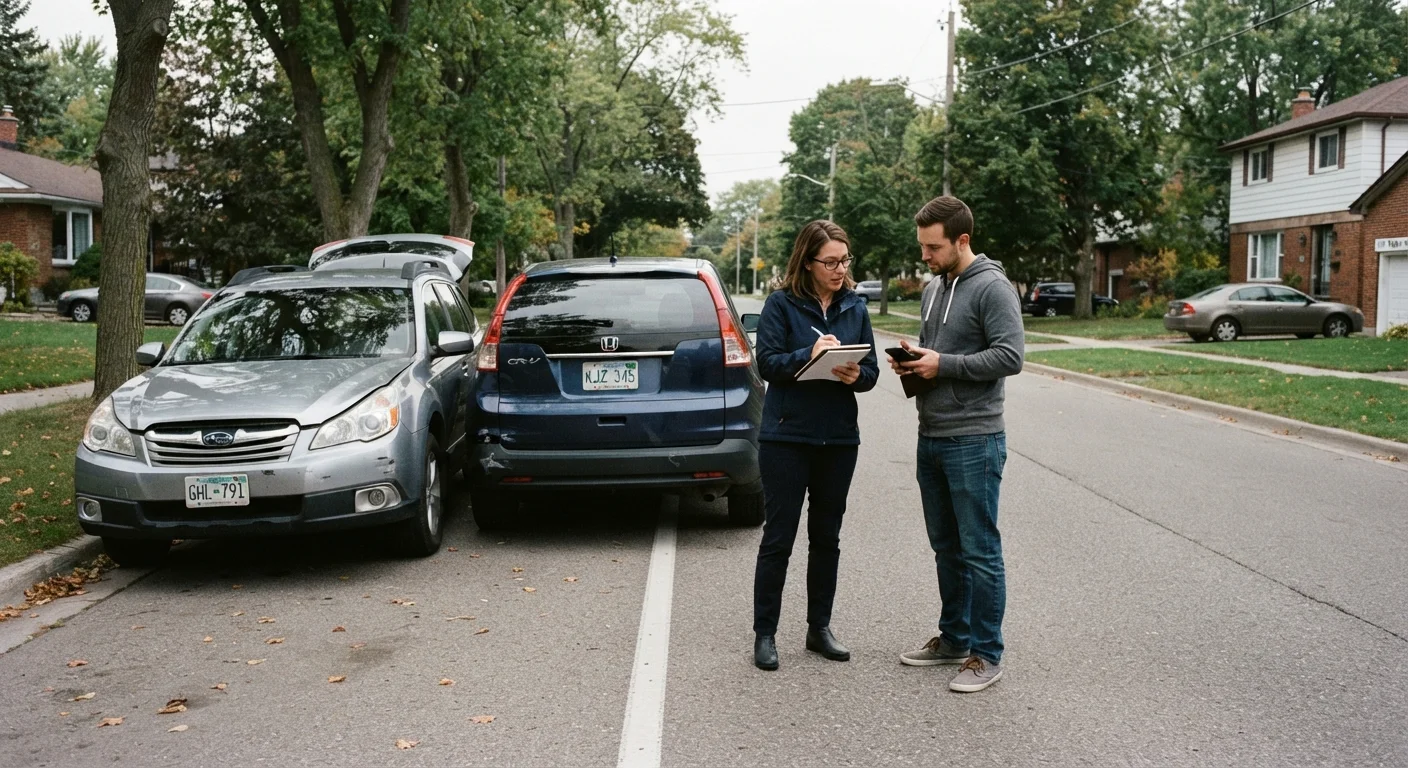
Why Getting This Right Matters
A minor fender-bender can feel like an inconvenience rather than a serious event - but how you handle the next 30 minutes can have real legal and financial consequences. Skipping steps, making offhand comments, or trying to settle things informally can leave you exposed to unexpected liability down the road.
Before you get behind the wheel, it's worth understanding the basics of what car ownership entails - including how insurance fits in. Our article What Every New Car Owner Should Know Before Hitting the Road covers that full picture. If you're unclear about your coverage types going into an incident, see our primer on Liability, Collision, and Comprehensive: The Core Coverage Types Explained.
The steps below apply to low-speed, minor-damage situations where no one is seriously hurt. If there are injuries, significant damage, or any dispute, treat it as a major accident and call 911.
What you will need
Step-by-Step: What to Do at the Scene and After
Follow these steps in order. Each one builds on the last - don't skip ahead or rearrange them based on how minor the damage looks.
Move to Safety
If your vehicle is drivable and it's safe to do so, move it out of active traffic - to the shoulder, a parking lot, or a side street. Turn on your hazard lights immediately. Staying in a live lane creates additional risk for everyone involved.
Check for Injuries
Ask everyone involved - yourself, passengers, and the other driver - if they're hurt. Some injuries, like whiplash, may not be obvious immediately. If anyone feels pain, dizziness, or is uncertain, call 911. Don't assume minor damage means minor impact on the body.
Call the Police If Needed
Many states require a police report for any accident involving property damage above a certain dollar threshold - often $500 to $1,000. Even when not required, a police report creates an official record that can protect you if the other party later disputes what happened. When in doubt, call.
Exchange Information
Collect the following from every other driver involved:
- Full name and contact number
- Driver's license number
- License plate number
- Insurance company name and policy number
- Vehicle make, model, and year
If there are witnesses, ask for their names and phone numbers as well.
Document the Scene
Before anyone moves the vehicles (if possible), photograph:
- All visible damage on every vehicle
- License plates
- The overall scene, including road conditions, signage, and skid marks
- Any traffic signals or environmental factors that may be relevant
More photos are better than fewer. Storage is cheap; missing documentation isn't recoverable later.
Notify Your Insurance Company
Contact your insurer as soon as possible - ideally the same day. Most policies require prompt notification of accidents as a condition of coverage. Report the facts objectively. You don't have to decide right now whether you'll file a claim; you're simply fulfilling your obligation to report.
Keep Records and Follow Up
Create a dedicated folder - physical or digital - for everything related to the incident: photos, the police report, repair estimates, correspondence with your insurer, and any medical receipts. Insurance claims can take time to resolve, and organized documentation makes the process smoother and protects you if disputes arise.
One Common Mistake Worth Avoiding
At the scene, avoid saying 'I'm sorry' or making any statement that could be interpreted as accepting fault. Liability is determined by insurers and, if necessary, courts - not by what you say in the moment. Stick to factual exchanges: contact info, insurance details, and a description of what you observed.
Once everything is documented and you're home, review your policy details before deciding whether to file. Our walkthrough on Filing an Auto Insurance Claim explains what to expect through the entire claims process. And if you're wondering which coverage actually applies - collision or comprehensive - check out Collision vs. Comprehensive Coverage: Knowing Which Applies After an Incident.
Don't Settle Informally at the Scene
Agreeing to pay for damage directly, without involving insurance, may seem like the easier path - but it can leave you vulnerable. The other party could later report undisclosed injuries or additional damage, and without a formal record, you have limited protection. Understand your coverage and common pitfalls before making that call; our article on Where Drivers Go Wrong With Auto Insurance is a useful reference.