
Why the Distinction Matters
When something goes wrong with your car, your first instinct might be to call your insurer and say, "I need to file a claim." But which type of claim you file - and whether it's covered at all - depends entirely on what caused the damage, not how bad it looks.
Collision and comprehensive are two separate coverage types that protect your vehicle against damage to itself. They're often sold together and bundled into what's loosely called "full coverage," but they respond to completely different triggering events. Filing under the wrong one - or not knowing which applies - can slow down your claim or lead to an unexpected denial.
For a broader look at how these two fit alongside liability and other protections, see our breakdown of core coverage types. And if you're newer to auto insurance overall, this plain-language primer covers the fundamentals.
| Criterion | Collision Coverage | Comprehensive Coverage |
|---|---|---|
| Primary trigger | Impact with another vehicle or object | Non-collision event (weather, theft, animals) |
| Fault relevance | Applies regardless of fault | Fault not applicable |
| Animal strikes | Not covered | Covered |
| Theft | Not covered | Covered |
| Weather damage | Not covered | Covered |
| Rollover accident | Covered | Not covered |
| Deductible | Yes - set separately | Yes - set separately |
| Required by law | No (most states) | No (most states) |
| Required by lenders | Typically yes | Typically yes |
Collision Coverage: What It Is and When It Applies
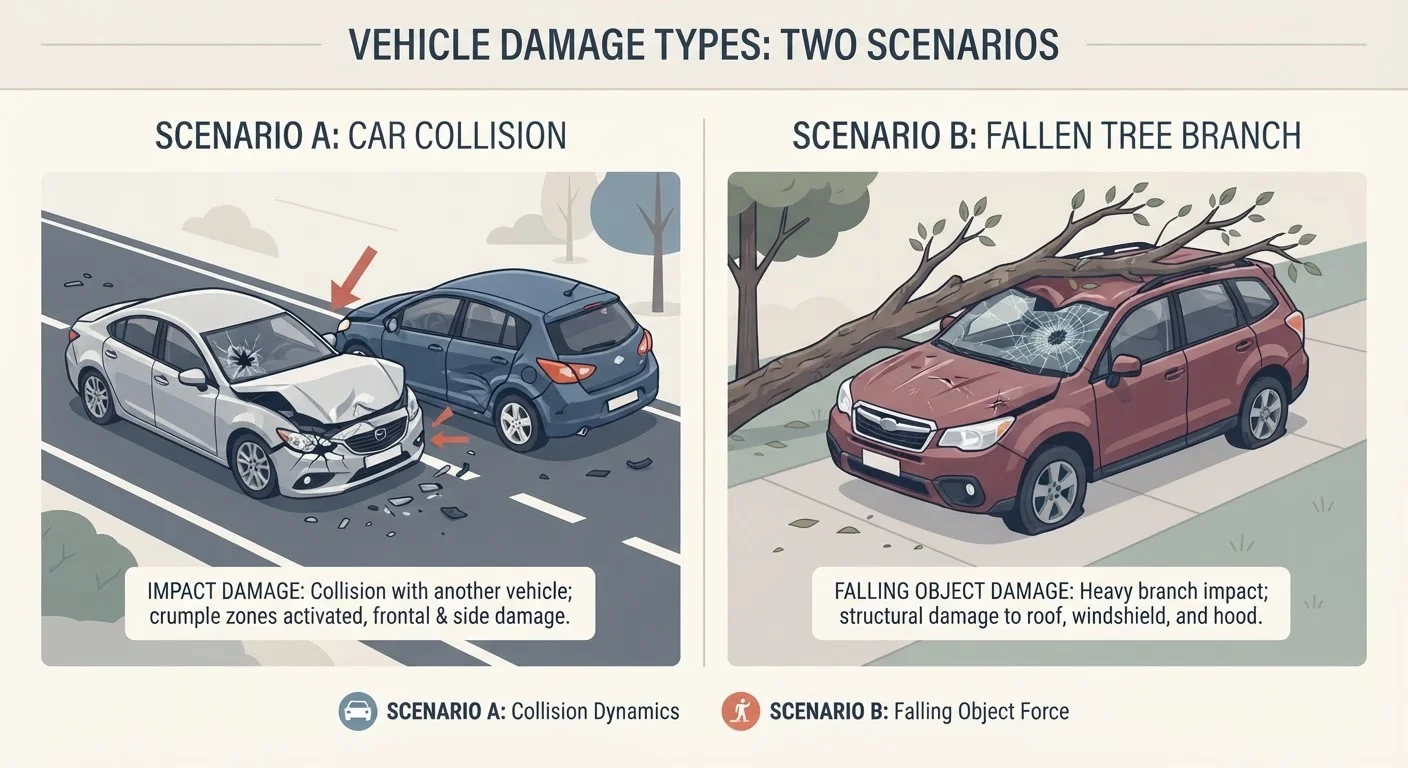
Collision coverage pays for damage to your vehicle when it makes physical contact with another object. That includes:
- Hitting another car, whether you're at fault or not
- Striking a guardrail, fence, or utility pole
- Running into a pothole that causes structural damage
- Your car rolling over
The key word is impact. If your car physically collided with something, collision coverage is almost certainly the right filing category - regardless of fault. Even if another driver caused the accident, you can file under your own collision coverage if you don't want to wait on their liability insurer to process the claim.
Collision coverage comes with a deductible - an amount you pay out of pocket before the insurer covers the rest. Common deductibles range from $250 to $1,500. A higher deductible generally means a lower monthly premium, but more exposure when a claim arises.
~75%
Drivers carrying collision coverage
According to the Insurance Information Institute, roughly three in four U.S. insured drivers carry collision coverage on their vehicles.
~80%
Drivers carrying comprehensive coverage
The Insurance Information Institute reports comprehensive coverage is slightly more common than collision among insured American drivers.
$500
Most common collision deductible
Industry data consistently shows $500 as the most frequently chosen deductible level for both collision and comprehensive coverage.
Comprehensive Coverage: What It Is and When It Applies
Comprehensive coverage handles damage to your vehicle from causes that don't involve a collision. It's sometimes described as "other than collision" coverage, which is arguably a more accurate name. Events typically covered include:
- Theft or attempted theft
- Hail, flooding, or other weather events
- Fire damage
- Falling objects - trees, debris, ice
- Vandalism
- Striking an animal (yes, even if your car was moving)
That last point surprises many drivers. If a deer runs into your path and you hit it, most insurers categorize that as a comprehensive claim, not collision - because the primary cause is an animal, not a vehicle-on-object impact.
Like collision, comprehensive carries its own deductible. The two deductibles are set independently, so you might carry a $500 collision deductible and a $250 comprehensive deductible, or any other combination your policy allows.
If you're still deciding whether carrying both types makes financial sense for your situation, understanding what "full coverage" actually includes is a useful next step.
When Your Vehicle Is Financed or Leased
If you're making loan or lease payments on your vehicle, your lender almost certainly requires both collision and comprehensive coverage for the duration of the agreement. This is separate from state law - it's a contractual condition of the financing. Dropping either coverage without the lender's consent can trigger a forced-placed insurance policy, which is typically more expensive and offers less protection than a standard policy you'd choose yourself.
Gray Areas and Common Missteps
A few scenarios genuinely confuse drivers - and sometimes even claims adjusters:
- Flood damage after parking
- If your parked car is flooded by heavy rain, that's comprehensive. But damage from driving through a flooded road may be evaluated differently - always call your insurer before assuming coverage.
- Hitting a pothole
- Pothole damage is generally treated as a collision claim because your vehicle made contact with a road hazard.
- A hit-and-run
- If someone hits your parked car and drives off, your collision coverage typically applies - not comprehensive. Uninsured motorist property damage coverage, where available, may also play a role.
Getting coverage wrong at claim time can cost you time and money. For a look at broader mistakes drivers make with their policies, this guide on common auto insurance missteps is worth reading.
Also, if you're financing your vehicle, your lender likely requires both collision and comprehensive. Dropping either one without refinancing or paying off the loan can put you in breach of your loan agreement. Gap insurance is another layer some financed drivers carry alongside both.
After any incident - even a minor one - taking the right steps matters. See what to do after a minor fender-bender for a practical walkthrough.
This article is for general informational purposes only and does not constitute insurance or legal advice. Coverage terms, exclusions, deductibles, and eligibility vary by insurer, policy, and state. Always review your actual policy documents and consult a licensed insurance agent for guidance specific to your situation.