
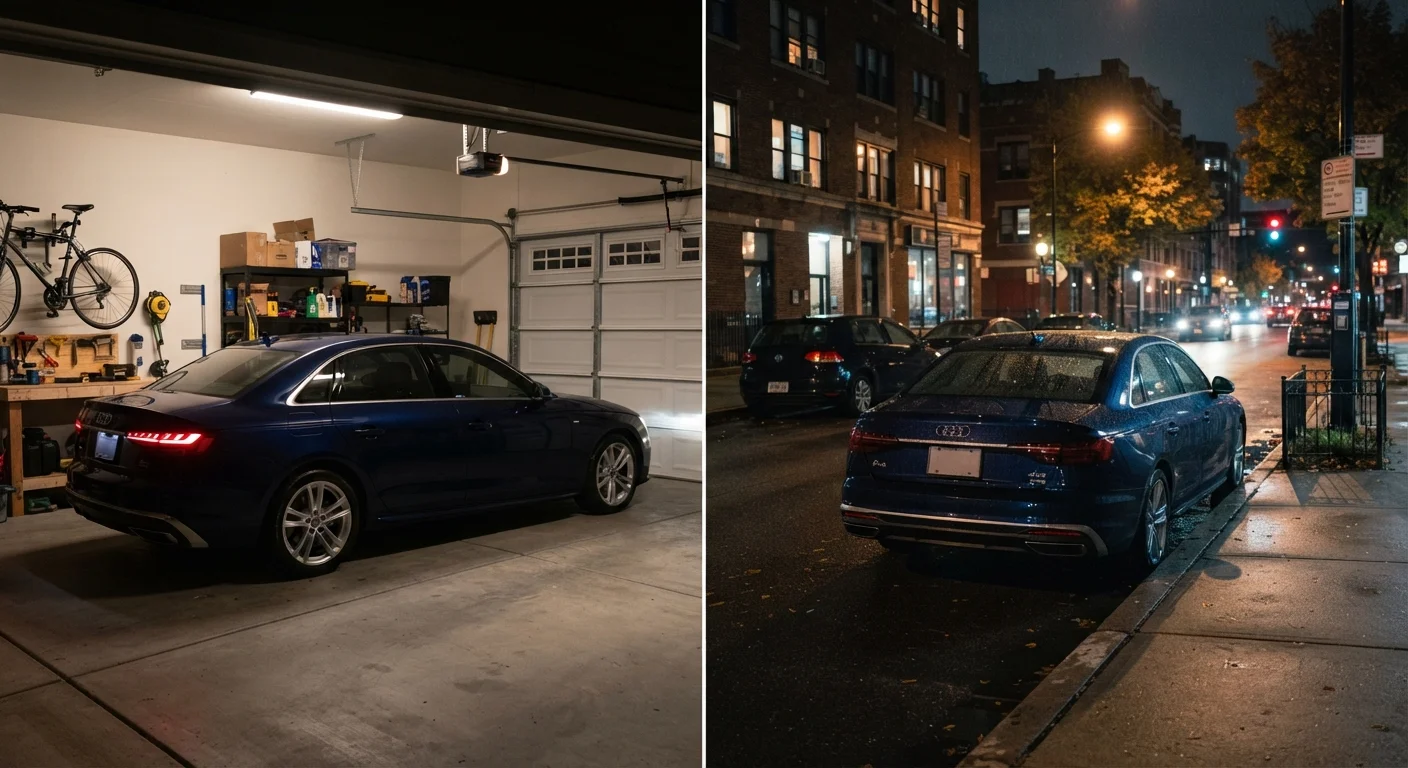
How Parking Location Affects Your Car's Physical Condition
The place your car rests every day is not a trivial detail. Over months and years, consistent exposure to outdoor elements accelerates wear that indoor storage largely prevents.
UV radiation is one of the most underappreciated sources of vehicle degradation. Direct sunlight fades paint, cracks dashboard plastics, and deteriorates rubber seals and trim. A garage - even an unheated one - blocks the majority of that exposure. Street-parked cars, especially in sun-belt states, typically show visible fading and cracking years sooner than their garaged counterparts.
Moisture and temperature swings drive rust and corrosion. Cars parked outdoors accumulate condensation, ice, and road-salt residue more readily. Over time, wheel wells, undercarriages, and door seams on consistently street-parked vehicles are more vulnerable to rust - particularly in Northern states that use road salt heavily in winter.
Garage storage also means your engine starts in a warmer environment. Cold starts - when the engine runs briefly on a richer fuel mixture before reaching operating temperature - are harder on engine components. Frequent cold starts in sub-zero conditions can accelerate wear on piston rings, cylinders, and oil seals. See our maintenance schedule guide for how climate affects service intervals.
Shields paint and trim from UV damage
Direct sunlight degrades clear coat, fades paint, and cracks rubber and plastic trim. Garage storage significantly slows this process, keeping the car looking newer longer.
Reduces rust and corrosion risk
Eliminating overnight moisture accumulation and reducing road-salt contact lowers the odds of rust forming on undercarriage panels, wheel wells, and door edges.
Warmer starts protect engine components
An enclosed garage stays meaningfully warmer than outdoor air in winter, reducing the frequency and severity of cold starts that stress engine oil and internal components.
Lowers theft and vandalism exposure
A locked garage removes the car from public view and access, eliminating the casual opportunistic risk that drives the majority of vehicle break-ins and catalytic converter thefts.
Supports stronger resale value
Garaged vehicles typically show less exterior wear, which appraisers and buyers can observe directly - often translating into a higher private-sale or trade-in offer.
Security, Theft, and Vandalism Risk
Street parking puts your vehicle in publicly accessible space around the clock. That increases exposure to several risks that a locked garage largely eliminates.
Catalytic converter theft has climbed sharply in many U.S. metro areas, and vehicles parked on public streets overnight are the primary targets. Break-ins for visible belongings, keying, and minor collision damage from passing vehicles are also statistically more common for street-parked cars.
A private garage doesn't eliminate all risk - garages can be burglarized - but it removes the casual, opportunistic element that accounts for the majority of vehicle-related theft and vandalism incidents.
Urban garage costs can be substantial
Monthly parking in a private urban garage can run $150-$400 or more depending on the city, adding meaningfully to total ownership costs over a multi-year period.
Not everyone has reliable garage access
Apartment dwellers, renters, and many urban homeowners simply don't have a usable enclosed garage - making street or lot parking the only practical option regardless of preference.
Street parking increases hail and weather damage risk
Vehicles parked outdoors are fully exposed to hail, falling branches, and flood runoff - damage types that comprehensive auto insurance covers but that still involve deductibles and claims.
Higher theft and break-in vulnerability
Publicly accessible parking locations see far more opportunistic theft and vandalism than enclosed private spaces, which can translate into comprehensive insurance claims over time.
More frequent washing and detailing needed
Bird droppings, tree sap, and airborne debris degrade paint more rapidly on street-parked vehicles, requiring more consistent cleaning and protective treatments to maintain condition.
If you're evaluating auto insurance coverage options, it's worth understanding how your parking situation factors into your risk profile. Comprehensive coverage, which handles theft and non-collision damage, is one area where your parking location has a direct influence.
The Insurance Connection: What Changes and What Doesn't
Many drivers assume that having a garage automatically translates into noticeably cheaper insurance. The reality is more nuanced.
Garage Parking Doesn't Guarantee Lower Premiums
Insurers primarily price auto coverage based on your ZIP code's overall risk profile, your driving history, and the vehicle itself - not solely whether you have a garage. While parking location can influence comprehensive coverage pricing at the margin, it is rarely the dominant factor. Always compare full quotes rather than assuming a garage will produce significant savings.
Your ZIP code matters more than your driveway. Insurers primarily price based on the broader neighborhood's claims history, traffic density, and theft rates - not solely whether you have a garage. That said, where you park can still be a contributing factor.
When you provide your home address to an insurer, you're implicitly conveying your parking situation. Some insurers do ask directly whether you park in a private garage, and the answer can modestly affect your comprehensive premium. What it's unlikely to change significantly is your liability or collision rate, which are driven by driving behavior and location.
Factors that influence your auto insurance premium include your driving record, vehicle type, annual mileage, credit score in most states, and the coverage levels you choose - parking situation is one input among many.
~$8,000
Average catalytic converter replacement cost
Catalytic converter theft targets street-parked vehicles disproportionately; replacement parts and labor frequently exceed several thousand dollars per incident.
10-15%
Paint life reduction from daily sun exposure
Automotive finishing experts generally estimate that consistent UV exposure without protection can reduce clear-coat lifespan by roughly 10-15% compared to sheltered storage.
Resale Value and Long-Term Financial Impact
If you plan to sell your vehicle, parking history becomes a tangible financial factor. A car with consistent garage storage typically shows less exterior wear, which appraisers and private buyers can see at a glance. Paint condition, interior preservation, and the absence of rust can all support a stronger resale position.
This matters especially if you financed or leased. Leased vehicles are subject to excess wear charges at turn-in, and cosmetic damage from hail, door dings, or sun fading can result in fees that offset any convenience of street parking. Our guide to buying vs. leasing covers what wear and tear standards typically look like under a lease agreement.
For drivers buying a used vehicle, asking about the car's parking history is a reasonable due diligence step - similar to asking about service records. See our new vs. used car trade-offs article for more on what to evaluate before purchase.
Parking costs themselves are also part of the ownership equation. Urban garages can run hundreds of dollars monthly - a cost that should be factored into your total annual car ownership budget alongside insurance, fuel, and maintenance.
This article is for general informational purposes only and does not constitute financial, insurance, or legal advice. Insurance premiums, coverage terms, and eligibility vary by provider and state. Consult a licensed insurance agent for guidance specific to your situation.