
Why Maintenance Schedules Exist
Every vehicle is engineered with predictable wear patterns. Fluids degrade, filters clog, belts stretch, and brake pads thin - all on roughly measurable timelines. A maintenance schedule is simply the manufacturer's best guidance on when to intervene before those wear patterns cause damage or failure.
Following that schedule is not about squeezing money out of drivers. It's about protecting components that are far cheaper to service than to replace. As our guide on why deferred car maintenance gets more expensive explains, small neglected items compound quickly into larger repair bills.
For a broader view of what car ownership actually costs - maintenance included - see annual car ownership costs that drivers often underestimate.
Severe vs. Normal Driving Conditions
Most owner's manuals list two maintenance schedules: one for normal driving and one for severe conditions. Severe conditions include frequent short trips under five miles, stop-and-go city driving, towing, extreme temperatures, or driving on dusty unpaved roads. If your driving fits that description, the shorter intervals apply to you - even if your car looks and feels fine.
Core Services and Their Typical Intervals
Intervals vary by vehicle make, model, engine type, and driving conditions. Always consult your owner's manual first. That said, these general ranges apply to most modern passenger vehicles:
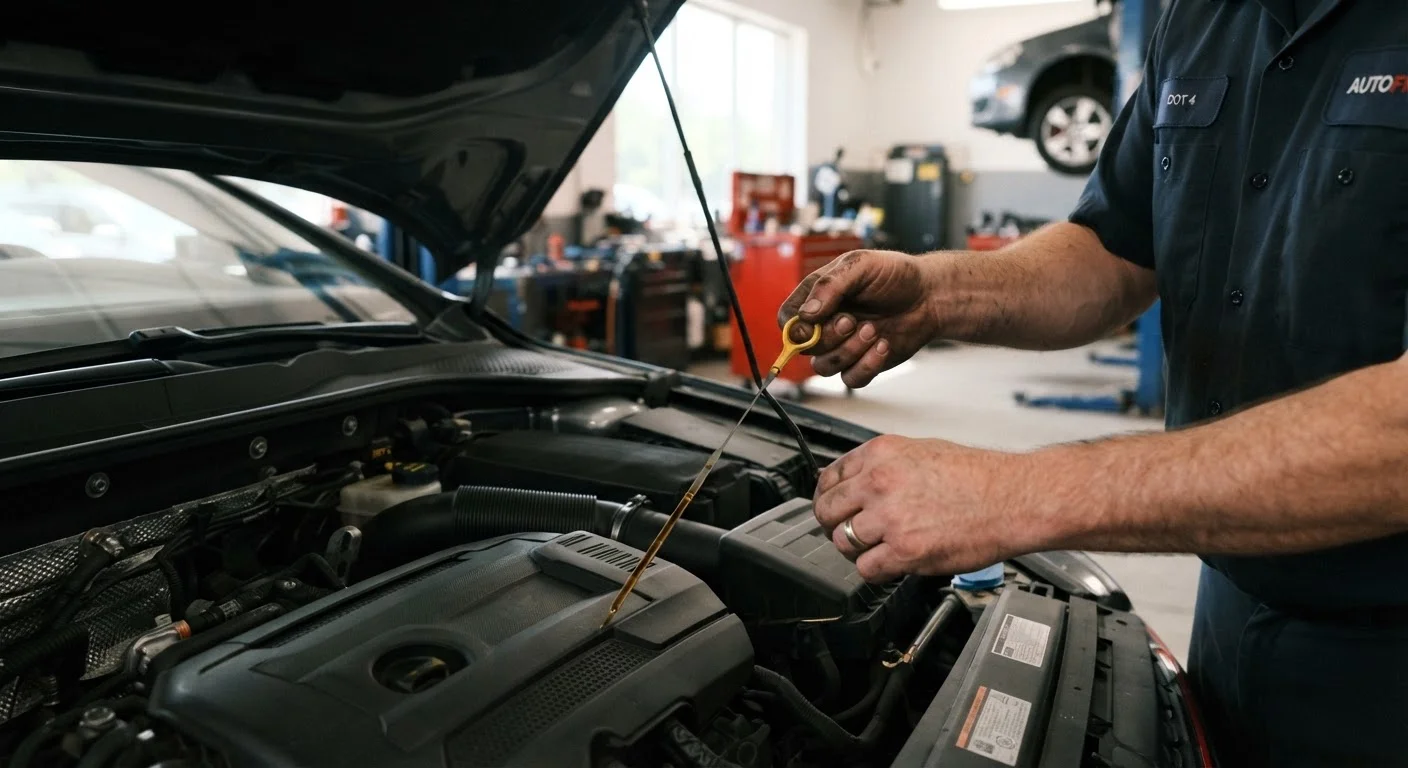
Change engine oil and filter on your manufacturer's recommended schedule
Oil lubricates and cools engine components. As it ages it breaks down, loses viscosity, and accumulates contaminants that accelerate wear. Many modern vehicles call for changes every 5,000-10,000 miles depending on oil type; older vehicles or severe driving conditions may require more frequent changes.
Rotate tires every 5,000-8,000 miles to even out tread wear
Front and rear tires wear differently depending on drivetrain and braking load. Regular rotation extends the usable life of a full set of tires and preserves predictable handling - especially in wet or emergency situations.
Have brake pads and rotors inspected at least annually or every 12,000 miles
Brake system wear is gradual and often silent until it becomes urgent. A technician can measure pad thickness and rotor condition before the system reaches a safety threshold. Catching worn pads early prevents rotor damage, which costs significantly more to address.
Replace cabin and engine air filters on schedule - typically every 15,000-30,000 miles
A clogged engine air filter restricts airflow to the engine, affecting performance and fuel efficiency. A dirty cabin filter degrades interior air quality. Both are inexpensive parts that are frequently overlooked between other services.
Check tire pressure monthly and before long trips
Tires lose roughly one PSI per month under normal conditions, and temperature swings accelerate that loss. Under-inflated tires wear unevenly, reduce fuel efficiency, and handle poorly. Over-inflated tires reduce contact patch and can be prone to damage from road hazards.
Follow the coolant flush interval in your owner's manual, typically every 30,000-50,000 miles
Coolant (antifreeze) prevents both overheating and freezing, but it also degrades over time and can become acidic, corroding the cooling system from within. A flush replaces old fluid and protects the radiator, water pump, and hoses.
Drivers who want to handle some of these checks themselves will find practical guidance in our article on fluid levels every driver should know how to check.
Quick Wins: Start Here Today
You don't need a service appointment to take meaningful action right now. Several maintenance-related tasks require nothing more than a few minutes and basic observation.
Tracking Services and Protecting Your Records
A car with documented maintenance history is easier to sell, easier to diagnose when problems arise, and simpler to manage over time. Keep receipts or a simple log - even a notes app on your phone - recording the date, mileage, and service performed each time you have work done.
~$0.09/mile
Average maintenance cost per mile for a typical passenger car
According to AAA's annual Your Driving Costs study, routine maintenance and tire costs average around 9 cents per mile for a typical sedan, underscoring the importance of budgeting for these services.
35%
Drivers who delay recommended maintenance
Industry surveys consistently find a significant share of drivers postpone at least one recommended service annually, often citing cost - a pattern that tends to result in higher expenses over time.
If you're new to ownership and want a fuller picture of what to expect, what every new car owner should know before hitting the road covers registration, insurance, and routine upkeep in one place.
Maintenance records also matter when buying used. A vehicle history report can show some service records, but it's an incomplete picture - our article on what a vehicle history report actually tells you and what it misses explains the gaps.
This article provides general vehicle maintenance information for educational purposes only. Service intervals, procedures, and safety requirements vary by vehicle. For tasks involving safety systems - brakes, steering, suspension - consult a qualified mechanic rather than attempting repairs without appropriate training and tools.