
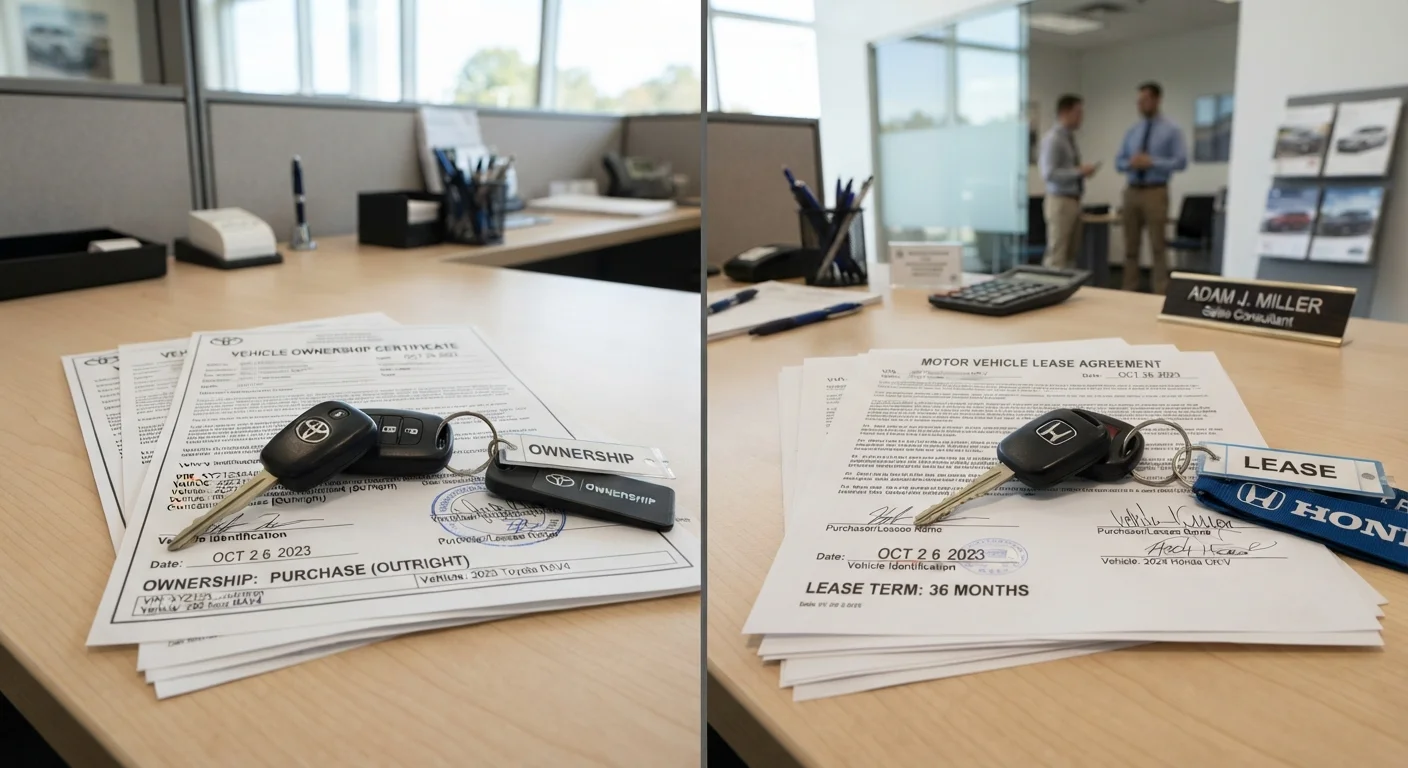
What You Actually Own - And When
The most fundamental difference between buying and leasing isn't the payment amount - it's the title. When you purchase a vehicle, ownership transfers to you (or you and your lender jointly, until the loan is paid). When you lease, the dealer or leasing company retains the title throughout the term. You're paying for use, not ownership.
This distinction ripples through every aspect of how you interact with the car. Buyers can sell, trade in, or refinance their vehicle at any point. Lessees work within the boundaries set in their contract. That's not inherently bad - but it's a different kind of relationship with the vehicle, and understanding it upfront prevents surprises later. Before signing either agreement, see our pre-signing checklist for what to review carefully at the dealership.
| Criterion | Buying | Leasing |
|---|---|---|
| Who holds the title | You (or lender until paid off) | Leasing company throughout |
| Mileage restrictions | None | Annual cap, typically 10-15k miles |
| Customization | Allowed | Generally prohibited |
| Early exit | Sell or trade in anytime | Early termination fees apply |
| Insurance requirements | Lender minimums | Often stricter; gap often required |
| End-of-term options | Keep, sell, or trade in | Return or buy out at residual value |
| Equity built over time | Yes | No |
Day-to-Day Rules: Mileage, Wear, and Modifications
Once you drive off the lot, lessees operate under a set of contract conditions that buyers simply don't face. The two most consequential are mileage limits and wear-and-tear standards.
Mileage limits are written into almost every lease - commonly 10,000 to 15,000 miles per year. Exceed them and you'll pay a per-mile fee at lease return, which can add up significantly over a three-year term. Buyers have no such restriction; they can drive as much or as little as their life requires.
Wear and tear is the other lever. Leasing companies expect the vehicle returned in a condition consistent with normal use. That standard is defined in the contract, and what qualifies as "excessive" wear - a larger-than-specified scratch, worn tires, an interior stain - can result in charges. Buyers experience depreciation instead, but they also decide what condition they're willing to accept for themselves.
Modifications are essentially off the table for lessees. Even small cosmetic changes - window tinting, aftermarket wheels - may need to be reversed before return. Buyers can modify their vehicle as they see fit, though it's worth noting that some modifications can affect resale value or insurance coverage. See our guide on how parking choices affect your car over time for another angle on vehicle condition management.
~57%
Share of new vehicles financed by purchase loans
According to Experian's State of the Automotive Finance Market data, the majority of new vehicle transactions involve a purchase loan rather than a lease.
10-15k
Typical annual mileage cap in a standard lease
Most lease agreements set a mileage allowance in this range; exceeding it typically triggers per-mile charges at lease return.
~20%
Average new-car depreciation in the first year
Industry data generally estimates new vehicles lose roughly 15-25% of their value in the first year, a cost borne directly by buyers, not lessees.
Insurance, Maintenance, and What the Contract Requires
Both buyers and lessees are required to carry auto insurance, but lease agreements typically mandate higher coverage minimums than a standard lender might require. Most leases specify comprehensive and collision coverage with low deductibles, and many require gap insurance - which covers the difference between the vehicle's market value and what's owed if it's totaled. Buyers can often negotiate or select their own coverage levels within their lender's minimum requirements.
Maintenance obligations also differ. Lease contracts usually require service to be performed on schedule - and documented. Skipping an oil change and having it surface in the vehicle's service records at return could be treated as a contract violation. Buyers are responsible to themselves; there's no third party checking whether they followed the maintenance schedule.
For a broader picture of what car ownership entails day-to-day, the new car owner overview covers registration, insurance setup, and routine maintenance in practical terms.
Getting Out Early - And What It Costs
Life changes, and sometimes the vehicle agreement you signed no longer fits. How easy it is to exit depends entirely on which path you took.
If you bought with a loan, you can sell the car at any time. If the sale price covers the remaining loan balance, you walk away clean. If the car is worth less than you owe - common in the first few years due to depreciation - you'll need to cover the gap. This is a real cost, but it's manageable and within your control.
Exiting a lease early is more complicated. Most leases include an early termination fee, which can be substantial. Some contracts allow lease transfers - where another driver takes over your agreement - but this requires approval and carries its own administrative process. Understand these terms before signing, not after. The trade-in vs. private sale comparison can help buyers think through exit options when the time comes.
This article provides general information about vehicle financing and leasing and is not personalized financial or legal advice. Terms, costs, and conditions vary significantly by lender, lessor, state, and individual circumstances. Consult a licensed financial professional or read your specific contract carefully before making any decisions.